
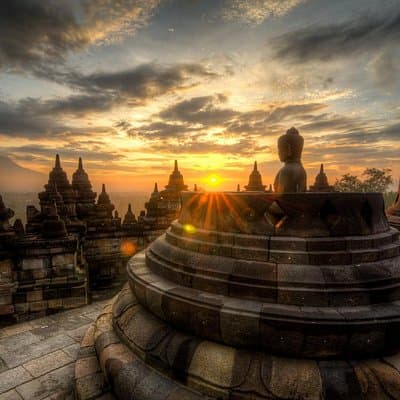
Excursion d'une journée complète au lever du soleil de Borobudur depuis la colline de Setumbu, le volcan Merapi et Prambanan
4.91 128 avis12h
dès 90 €
Voir les disponibilités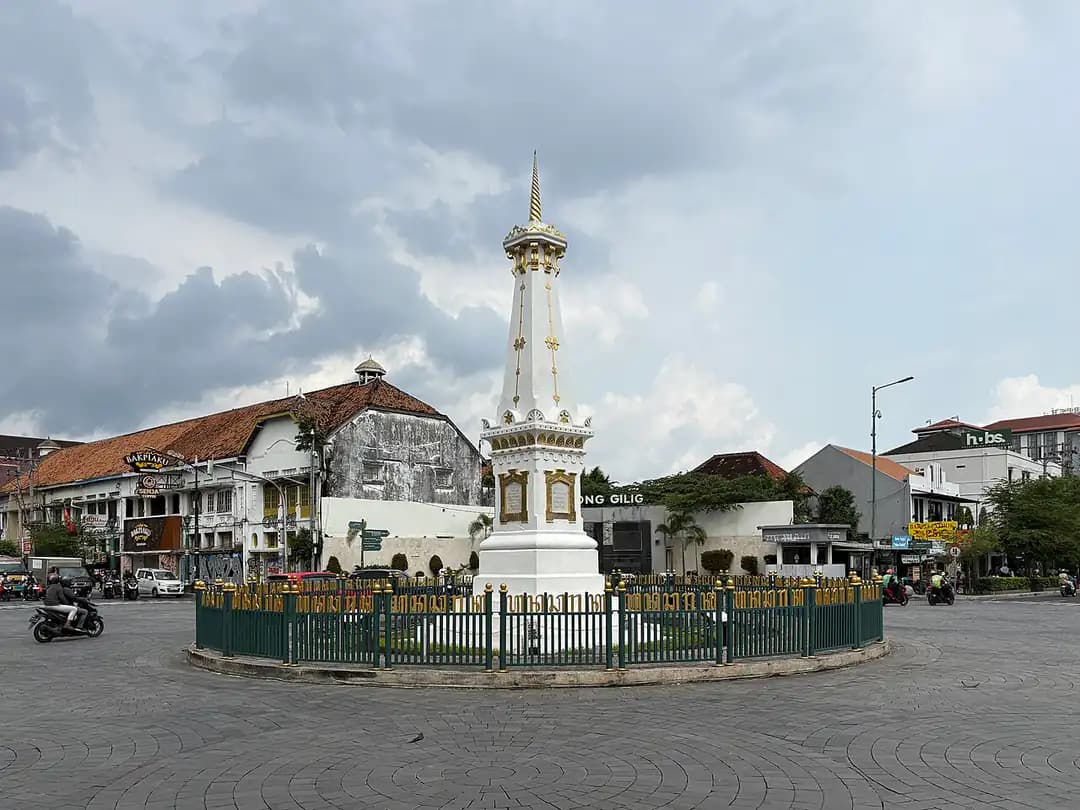
Indonesia
Yogyakarta isn't just a city; it's a living museum of Javanese culture where ancient traditions breathe alongside modern creativity. Here, you can watch master craftsmen hand-stamp intricate batik patterns in the workshops of Taman Sari, then witness the hypnotic Ramayana ballet performed against the illuminated backdrop of Prambanan Temple at night. The city's soul is palpable in the quiet courtyards of the Kraton, where the Sultan still resides, and in the chaotic energy of Malioboro Street, where becak drivers weave through a sea of shoppers hunting for silver and shadow puppets.
What truly defines Yogyakarta is its profound spiritual and artistic landscape. At dawn, pilgrims and travelers alike climb the volcanic stone steps of Borobudur, the world's largest Buddhist temple, to watch the mist lift from the surrounding rice fields and volcanoes. This deep reverence for heritage coexists with a dynamic contemporary arts scene in neighborhoods like Kotabaru, where indie galleries and coffee shops fill colonial-era buildings. The city's magic lies in this seamless blend—a place where every alleyway holds a story, every meal is a ritual, and the legendary Javanese hospitality makes every visitor feel like a guest of honor.
To witness unparalleled ancient wonders: Stand in awe before the 9th-century stone mandala of Borobudur, a UNESCO site with over 2,600 relief panels, and explore the towering Hindu shrines of Prambanan, especially magical during the evening ballet performances.
For an authentic immersion in living royal culture: Tour the working palace of the Kraton to see gamelan rehearsals and royal heirlooms, and visit the Taman Sari Water Castle to discover the Sultan's hidden bathing pools and underground mosque.
To master traditional Javanese arts: Participate in a hands-on batik workshop in the Kampung Taman district, learn to craft a wayang kulit (shadow puppet) from a dalang (puppet master), or take a silver-smithing class in Kotagede.
For a legendary street food and shopping adventure: Navigate the sensory overload of Malioboro Street, bargaining for handcrafted goods by day and sampling iconic street food like gudeg (young jackfruit stew) and sate klatak (iron skewer satay) from night vendors.
To experience breathtaking natural landscapes just beyond the city: Trek up Mount Merapi at sunrise for volcanic views, explore the underground river and chambers of Jomblang Cave, or relax on the black sand beaches of Parangtritis, steeped in local myth.
To connect with Indonesia's friendliest people in a city of resilience: Engage with local artists at the vibrant Beringharjo Market, share stories with students at Universitas Gadjah Mada, and feel the city's creative, welcoming spirit that famously rebuilds after challenges like the 2006 earthquake and Merapi eruptions.
Prêt à explorer Yogyakarta?
The historic royal heart of the city, centered around the Sultan's Palace. This area is a labyrinth of narrow alleys (kampung) where traditional Javanese court culture is preserved in daily life, from gamelan music to palace ceremonies.
Highlights:
Best for:
The bustling, noisy, and exhilarating commercial center. By day it's a shopper's paradise; by night, it transforms into a massive open-air street food court and performance space, pulsating with energy until late.
Highlights:
Best for:
The original capital of the Mataram Kingdom, now a peaceful, historic suburb famous for its silver industry. The atmosphere is serene, with wide streets, ancient walls, and a strong sense of community.
Highlights:
Best for:
The cosmopolitan and trendy hubs for travelers. Prawirotaman is packed with boutique hotels, international restaurants, and yoga studios, while Kotabaru offers a leafy, colonial-era vibe with chic cafes and art spaces.
Highlights:
Best for:
Les visites et billets les plus réservés par les voyageurs, avec les notes et avis Viator.
dès 90 €
Voir les disponibilités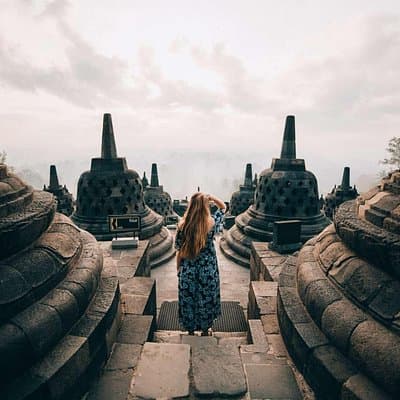
dès 44 €
Voir les disponibilités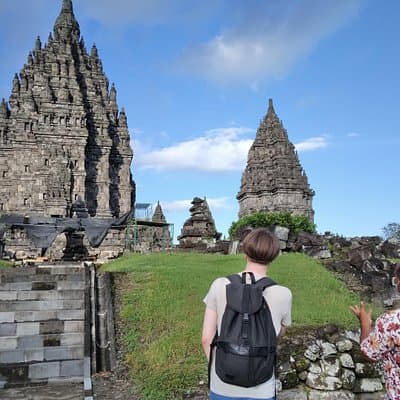
dès 61 €
Voir les disponibilités
dès 29 €
Voir les disponibilitésVisites et prix de Viator, une société Tripadvisor. Les prix varient selon vos dates. Nous pouvons percevoir une commission si vous réservez, sans frais supplémentaires.
Yogyakarta's food is a direct reflection of its culture: sweet, complex, and deeply comforting. The cuisine is centered around gudeg, the city's signature sweet stew of young jackfruit, but extends to a vibrant world of street-side sate, savory soups, and fiery chili pastes (sambal). Eating is a communal, round-the-clock affair here.
Order 'gudeg kering' (dry) or 'gudeg basah' (wet/saucy). A complete plate (gudeg komplit) includes rice, jackfruit, chicken egg, tempeh, and crispy beef skin (krecek).
For angkringan, try 'nasi kucing' (tiny rice packet), 'sate usus' (chicken intestine satay), and 'teh poci' (tea in a clay pot). It's incredibly cheap, often under 20,000 IDR for a meal.
Point to what you want in the glass display case. A typical meal of rice, a protein (ayam/ chicken, ikan/ fish), vegetables, and tempeh costs 25,000-40,000 IDR.
The Prawirotaman and Kotabaru areas are filled with cafes perfect for digital nomads, offering strong WiFi, Western breakfasts, and high-quality Indonesian coffee.
Spring (March-May) sees the end of the rainy season, with landscapes lush and green. Temperatures are warm, and rainfall decreases significantly, making it ideal for outdoor exploration.
Pros:
Cons:
Summer (June-August) is the peak dry season with abundant sunshine and minimal rain. This is the most popular time to visit, perfect for sunrise viewings and hiking.
Pros:
Cons:
Autumn (September-October) remains firmly in the dry season, with hot, sunny days. The crowds begin to thin slightly after August, offering a good balance.
Pros:
Cons:
Winter (November-February) is the rainy season. Days are still warm, but heavy, predictable downpours occur, usually in the afternoons and evenings.
Pros:
Cons:
Comparez les prix des trains, bus et vols vers Yogyakarta
Entrez votre ville de départ pour voir les prix

1 hour by car or tour bus from Yogyakarta
A pilgrimage to the world's largest Buddhist temple, a stunning 9th-century stone mandala. Combine it with a visit to the smaller but exquisite Mendut Temple nearby, which houses a magnificent Buddha statue.
1-1.5 hours by car or motorbike north of the city
An encounter with one of Indonesia's most active volcanoes. Explore the devastated landscapes from the 2010 eruption, visit a museum, and enjoy the cool mountain air of the Kaliurang resort area.
30-45 minutes by car or train east of Yogyakarta
A journey into Hindu heritage at the breathtaking Prambanan temple complex, followed by a visit to the atmospheric hilltop ruins of Ratu Boko Palace for sunset views over the plains.
Yogyakarta is one of Indonesia's most affordable major destinations. Budget travelers can live very cheaply on street food and hostels, while luxury offers exceptional value with high-end hotels and private guides.
Budget
$20-35 per day for hostels, street food, local transport, and temple entry.
per day
Mid-Range
$50-100 per day for comfortable boutique hotels, restaurant meals, private car hire for day trips, and guided tours.
per day
Luxury
$150+ per day for 5-star hotels, fine dining, private chauffeurs, and exclusive cultural experiences.
per day
A stunning vertical sinkhole cave where a beam of sunlight pierces the darkness at midday, illuminating the ancient forest below.
It offers a truly otherworldly experience, often called 'Heaven's Light,' and is far less known than the main temples. Requires a guided rappelling adventure.
A world-class private museum located on the slopes of Mount Merapi, dedicated to Javanese culture and the royal courts of Solo and Yogyakarta.
Its curation is exceptional, with beautiful gardens, and it provides deep, nuanced insight into Javanese history and art that you won't find elsewhere.
The former home, gallery, and final resting place of Indonesia's most famous impressionist painter, Affandi, built in his unique organic architectural style.
It's a deeply personal and artistic space where you can see his paintings, his eccentric car collection, and even his custom-designed helix-shaped studio by the river.
A community-managed ecotourism park in the Menoreh Hills, offering iconic wooden platform photo spots with panoramic views over lakes and forests.
It provides breathtaking vistas rivaling those in Bali, supports local villages, and is a great escape into nature just 90 minutes from the city.
A massive, interactive 3D illusion museum where you can become part of fantastical and humorous scenes for creative photos.
It's pure, lighthearted fun—a great break from temple-hopping, especially for families or on a rainy afternoon. It's surprisingly extensive and well-executed.
Yogyakarta is a Special Region, governed by a Sultan who is also the governor, making Javanese court culture the bedrock of daily life. Respect for hierarchy, community (gotong royong), and subtlety (halus) are paramount. Art is not just decoration but a spiritual practice, evident in wayang puppet philosophy and the symbolic patterns of batik.
Yes, Yogyakarta is considered one of Indonesia's safest and most welcoming cities for solo travelers, including women. Violent crime is rare. Standard precautions apply: be aware of petty theft in crowded areas, use reputable transport at night, and respect local customs.
A minimum of 3 full days is recommended: one for Borobudur and surrounding temples, one for Prambanan and the city center (Kraton, Taman Sari, Malioboro), and one for a chosen day trip (Merapi, caves) or deeper cultural immersion. 4-5 days allows a more relaxed pace.
The most flexible and common way is to hire a private car with driver for the day (approx. 500,000 IDR). For budget travelers, public buses (TransJogja to Jombor terminal, then switch to a local bus) take 1.5-2 hours each way. Many hostels also offer affordable shared minivan tours.
It's not mandatory but highly recommended to appreciate the sites fully. Official guides are available at the entrances (negotiate a price, ~150,000 IDR/hour). They explain the profound Buddhist and Hindu narratives carved into the stones, transforming the visit from sightseeing to a cultural education.
Major hotels, high-end restaurants, malls, and some larger tour agencies accept credit cards. However, the vast majority of transactions—especially at markets, warungs, street stalls, for transport, and at small shops—are cash-only. Always carry sufficient Indonesian Rupiah.
Wear comfortable, modest clothing that covers shoulders and knees. Light, breathable fabrics are best due to the heat. You will be required to remove your shoes before climbing the upper levels of Borobudur, so wear easy-to-remove footwear. Sarongs are often provided or can be rented if needed.
No, do not drink tap water in Yogyakarta. Always drink bottled or filtered water. Ice in established restaurants and cafes is generally safe as it's made from purified water, but be cautious with ice from street stalls. Use bottled water for brushing your teeth to be safe.
They are vastly different. Jakarta is the massive, fast-paced, modern capital of Indonesia. Yogyakarta is a much smaller, traditional city known as the cultural and artistic soul of Java. Visitors come to Yogyakarta for ancient temples, royal heritage, and arts, not for skyscrapers and nightlife.
Coûts quotidiens habituels pour un voyageur, d'après les prix moyens dans le pays (Indonesia).
| Petit budget | Milieu de gamme | Confort | |
|---|---|---|---|
| Hébergement (par nuit) | 18 € | 50 € | 120 € |
| Repas et boissons (par jour) | 7 € | 16 € | 35 € |
| Visites et activités (par jour) | 5 € | 14 € | 32 € |
| Total par jour | 30 € | 80 € | 187 € |
Les estimations n'incluent pas les vols ni les transports longue distance. Comparer les coûts quotidiens entre villes
Des hôtels proches du centre de Yogyakarta, du petit budget au luxe. Les prix sont des tarifs par nuit habituels lors de notre dernière vérification.
 Petit budget
 Petit budget
 Milieu de gamme
 Milieu de gamme
 Haut de gamme
 Haut de gamme
 Luxe
 Luxe
Les prix des hôtels proviennent de Traveloka, vérifiés pour la dernière fois le 4 février 2026, et varient selon vos dates. Nous pouvons percevoir une commission si vous réservez via nos liens, sans frais supplémentaires pour vous.
Laissez l'IA créer l'itinéraire parfait pour votre voyage à Yogyakarta. Décrivez simplement ce que vous voulez vivre.
Planifier Yogyakarta

