Beyrouth en 5 jours
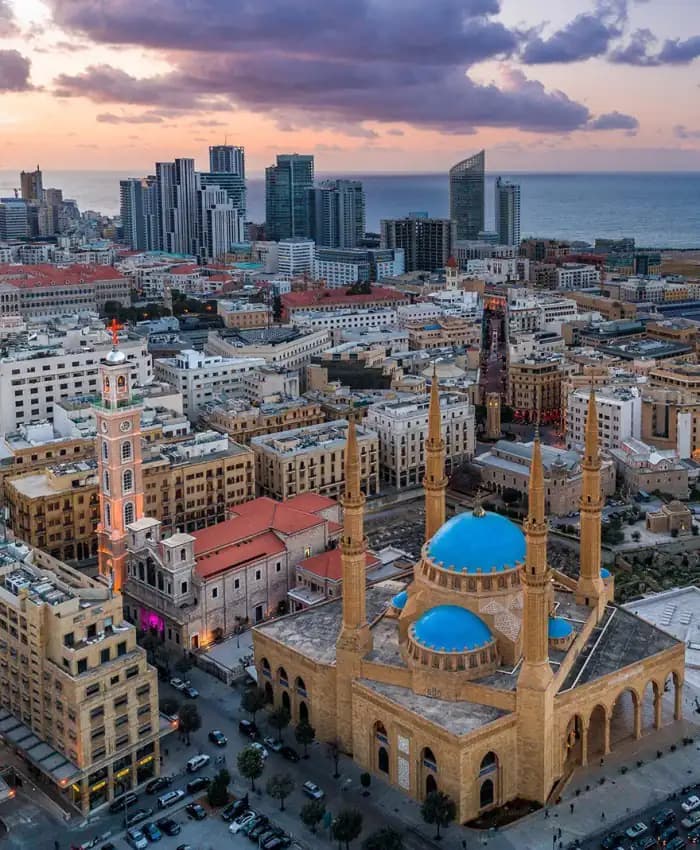
National Museum of Beirut, Mohammad Al-Amin Mosque et Corniche Beirut le jour 1, Pigeon Rocks at Raouché et Gemmayzeh & Mar Mikhael le jour 2 et une excursion à Byblos le jour 3. Les 2 autres jours ajoutent une excursion à Baalbek et Downtown.
Meilleurs mois : mars, avril ou novembre.
Jour 1 : National Museum of Beirut, Mohammad Al-Amin Mosque et Corniche Beirut
Matin
National Museum of Beirut
Fin de matinée
Mohammad Al-Amin Mosque
Quartier : Downtown.
Pour manger
Traditional Mezze
Go with a group to sample as many dishes as possible. Don't fill up on bread—pace yourself for the 20+ plates that may arrive.
Où aller : Em Sherif (full experience), Tawlet (farm-to-table collective), Le Chef (iconic, no-frills spot in Gemmayzeh)
Après-midi
Corniche Beirut
Soir
AUB Archaeological Museum
A small but exquisite museum on the American University of Beirut campus, housing one of the region's most important collections of Levantine artifacts.
Quartier : Hamra.
Jour 2 : Pigeon Rocks at Raouché et Gemmayzeh & Mar Mikhael
Matin
Pigeon Rocks at Raouché
Pour manger
Street Food & Bakeries
Try 'kaak' from a street vendor for breakfast—it's a sesame bread ring often filled with cheese or za'atar, perfect for eating on the go.
Où aller : Barbar (for manousheh and shawarma), Furn Al Sabaya (for kaak sesame bread rings), Semsom (for fresh falafel sandwiches)
Après-midi
Gemmayzeh & Mar Mikhael
The epicenter of Beirut's hipster renaissance, these adjacent districts are a maze of narrow streets, Ottoman-era houses, and vibrant street art.
Soir
Bourj Hammoud Flea Market
A sprawling, chaotic market district across the river from Achrafieh, known as Beirut's 'Little Armenia'.
Jour 3 : excursion à Byblos
40 min by car/taxi north.
One of the oldest continuously inhabited cities in the world, Byblos is a UNESCO site where Phoenician, Roman, Crusader, and Ottoman ruins sit beside a picturesque fishing harbor and souk.
À voir : Crusader Castle, Ancient Phoenician ruins, Old Souk for shopping, St. John the Baptist Church
Jour 4 : excursion à Baalbek
1.5-2 hours by car/taxi east.
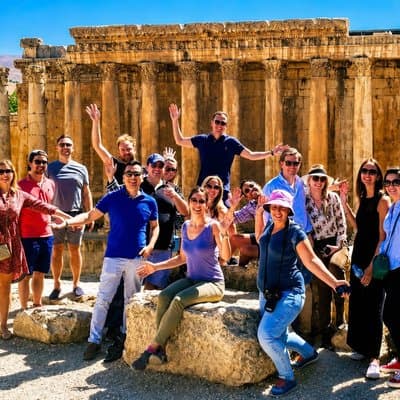
Home to the most impressive Roman ruins in the Middle East, the colossal temples of Jupiter and Bacchus at Baalbek are a breathtaking testament to imperial Roman engineering and ambition.
À voir : Temple of Jupiter, Temple of Bacchus, The Stone of the Pregnant Woman, Nearby Temple of Venus
Jour 5 : Downtown et Sanayeh Garden
Matin
Downtown (Solidere)
The meticulously reconstructed city center, a blend of archaeological sites and ultra-modern architecture. It's polished, upscale, and home to high-end shopping, luxury hotels, and restored historical landmarks surrounding Martyrs' Square.
Aussi dans le coin : Roman Baths archaeological garden, Saifi Village for designer boutiques, The iconic Martyrs' Statue
Après-midi
Sanayeh Garden
A historic public park in the heart of the city, dating back to the Ottoman era.
Soir
The Egg (Al Bourj)
The haunting, unfinished concrete shell of a 1960s cinema and entertainment complex, left ruined since the civil war.
Avant de partir
Depuis l'aéroport
Beirut–Rafic Hariri International Airport (BEY) is 9km south of the city. A pre-booked private taxi costs $15-25. Official airport taxis charge $20-30. There is no direct train or reliable bus service; taxis are the standard option.
Se déplacer
Central neighborhoods like Gemmayzeh, Mar Mikhael, Hamra, and Downtown are very walkable and best explored on foot. Distances between these districts may require a short taxi ride.
Conseils sur place
- Carry cash (USD and LBP). Lebanon's economy is heavily cash-based, and while cards are accepted in some places, USD is widely preferred and often gives a better rate.
- Download the 'Bolt' or 'Careem' app for taxis. Negotiate the fare before getting in a regular taxi, or use these ride-hailing apps for fixed, fair prices.
- Tipping ('baksheesh') is customary. Round up taxi fares, leave 10% in restaurants if service isn't included, and tip small change to porters and bathroom attendants.