
Legjobb Időszak
May to September
Pénznem
Euro (€)
Nyelv
Portuguese
Időzóna
AZOT (UTC-1)
Discover Azores
The Azores sit in the middle of the North Atlantic, about 1,400 kilometres from mainland Portugal, a scattering of nine volcanic islands where the landscape is shaped by craters, hot springs and endless shades of green. Hydrangeas line the country roads in summer, cows graze on pastures divided by black stone walls, and steam rises from the ground in the village of Furnas.
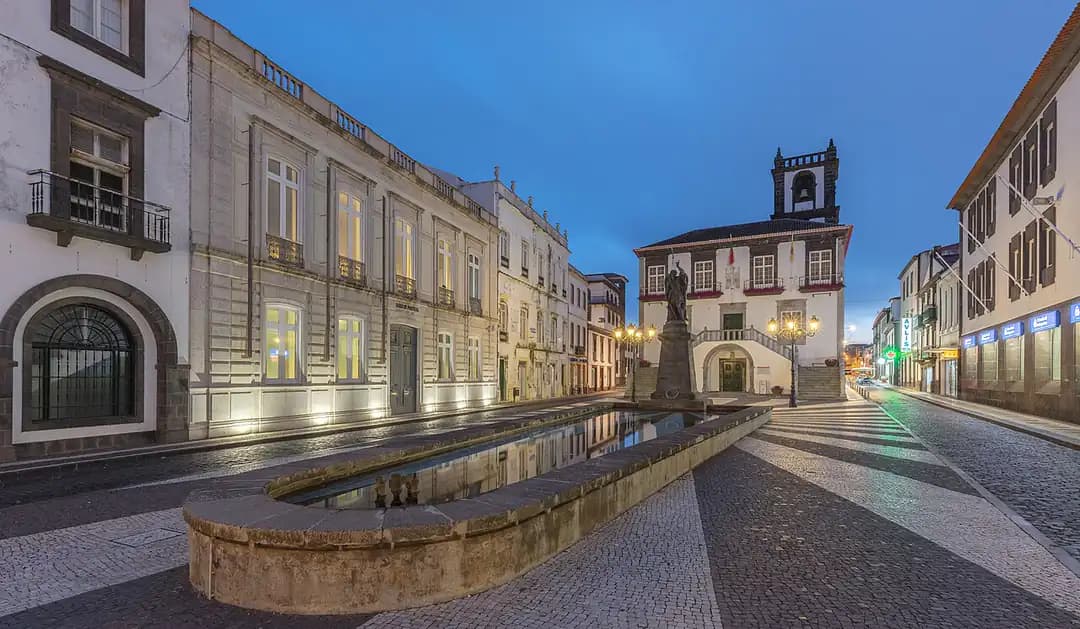
Most visitors start on São Miguel, the largest island, whose capital, Ponta Delgada, has black-and-white basalt architecture, churches and a lively harbour. From there, it is a short drive to the twin blue and green lakes of Sete Cidades, the wild crater lake of Lagoa do Fogo, and Furnas, where locals cook a stew called cozido in volcanic holes in the ground.
The islands are one of the best places in the world for whale and dolphin watching, with many species passing through or living here year-round. Hiking, canyoning, diving and bathing in warm, iron-rich thermal pools complete an adventure destination that remains refreshingly uncrowded.
Why Visit Azores?
See the twin lakes of Sete Cidades and the wild crater lake of Lagoa do Fogo.
Soak in warm thermal pools in Furnas, surrounded by lush gardens.
Go whale and dolphin watching in one of the best places in the world for it.
Taste cozido das Furnas, a stew slow-cooked by volcanic heat underground.
Hike green crater rims, coastal cliffs and waterfalls with few crowds.
Visit Europe's only commercial tea plantations at Gorreana and Porto Formoso.
Azores Híres
Készen állsz felfedezni Azores-t?
Azores Neighborhoods
Ponta Delgada
São Miguel's capital, with a waterfront promenade, the iconic city gates, basalt churches, restaurants and most hotels.
Highlights:
Best for:
Furnas
A village in a volcanic valley known for hot springs, steaming fumaroles, thermal pools and cozido cooked in the ground.
Highlights:
Best for:
Sete Cidades
A village inside a huge volcanic crater surrounded by the famous blue and green lakes, with hiking trails around the rim.
Highlights:
Best for:
Ribeira Grande and the North Coast
The north coast of São Miguel, with surf beaches, tea plantations and the thermal river at Caldeira Velha.
Highlights:
Best for:
Fő Látnivalók
Local Tips & Insider Knowledge
- •Rent a car on São Miguel; public transport to the natural sights is limited.
- •Check webcams and weather before visiting viewpoints like Sete Cidades and Lagoa do Fogo, which are often covered in cloud.
- •The weather changes quickly; carry a rain jacket and layers every day.
- •Wear dark swimwear in thermal pools: the iron-rich water can stain light fabrics.
- •Book whale-watching tours with operators that follow responsible wildlife guidelines.
- •Order cozido in advance in Furnas restaurants at lunchtime.
- •Some popular natural sites now require booking or a small fee; check before you go.
- •Allow time to visit a second island, such as Pico, Faial or Terceira, if you can.
- •Hydrangeas bloom from June to August, peaking in July.
- •Drive carefully on narrow rural roads, where cows may be crossing.
Azores Food Scene
Azorean food is based on excellent local produce: grass-fed beef, dairy, cheese, seafood, and fruit such as pineapples grown in greenhouses. Dishes are simple and hearty.
Must-Try Dishes
Traditional Azorean
- • Cozido das Furnas
- • Alcatra (Terceira pot roast)
- • Bolo lêvedo (sweet muffin bread)
Cozido is usually served at lunch in Furnas restaurants after cooking for hours underground.
Seafood
- • Lapas
- • Grilled fish
- • Octopus stew
Limpets grilled with garlic butter and lemon are a classic Azorean starter.
Local Products
- • São Jorge cheese
- • Gorreana tea
- • Pineapple liqueur
Visit a tea factory and a pineapple greenhouse for tastings.
Wine
- • Pico Island wines
- • Verdelho
The vineyards of Pico are a UNESCO World Heritage Site, and their wines are worth trying.
Népszerű
Best Time to Visit Azores
Spring
Spring brings green landscapes and the start of the blue whale migration season, with changeable weather.
Pros:
- + Whale migration
- + Lush scenery
- + Fewer tourists
Cons:
- - Frequent rain
- - Cool temperatures
- - Cloud at viewpoints
Summer
Summer is the warmest and driest time, with hydrangeas in bloom and calm seas.
Pros:
- + Best weather
- + Hydrangeas
- + Warm sea for swimming
Cons:
- - Busier
- - Higher prices
- - Humidity
Autumn
Autumn keeps mild temperatures and a warm sea, with fewer visitors.
Pros:
- + Warm sea
- + Fewer crowds
- + Good whale watching
Cons:
- - More rain
- - Shorter days
- - Some storms
Winter
Winter is mild but wet and windy, and ideal for thermal pools and quiet exploration.
Pros:
- + Low prices
- + Very few tourists
- + Thermal pools
Cons:
- - Rain and wind
- - Flight disruptions possible
- - Some activities limited
Olcsó utazás Azores városába
Hasonlítsd össze a vonatok, buszok és repülők árait Azores városába
Add meg az indulási várost az árak megtekintéséhez

Foglalj Programokat Azores városában
Kerüld el a sorban állást előre foglalt túrákkal és látnivalókkal
Day Trips from Azores
Nordeste
About 1.5 hours by car from Ponta Delgada
The remote eastern corner of São Miguel, with manicured viewpoints, waterfalls and the Ponta do Arnel lighthouse.
Pico Island
About 45 minutes by flight from Ponta Delgada
Home to Portugal's highest mountain and UNESCO-listed vineyards on lava, Pico is best visited for at least one night.
Vila Franca do Campo and its Islet
About 30 minutes by car from Ponta Delgada
The island's first capital, with a volcanic islet offshore that forms a natural circular swimming pool.
Azores Budget Guide
The Azores are moderately priced, cheaper than mainland Portugal's hotspots for food, with accommodation and car hire rising in summer.
Budget
€50-80 for budget travelers (guesthouse, local restaurants, some walks)
per day
Mid-Range
€100-170 for mid-range (hotel, car hire, whale watching)
per day
Luxury
€250+ for luxury (boutique hotel, fine dining, private tours)
per day
Money-Saving Tips
- •Book car hire early for summer; availability runs out.
- •Many viewpoints and hikes are free.
- •Eat lunch specials in local cafés.
- •Travel in May, June or September for better prices.
- •Consider inter-island flights booked in advance.
Azores Hidden Gems
Poça da Dona Beija
A series of small, warm thermal pools in Furnas set among ferns and lit at night.
It is a magical place for an evening soak after a day of exploring.
Salto do Prego Waterfall
A waterfall in the east of São Miguel, reached on a walking trail from the village of Faial da Terra.
It is a peaceful hike through forest and an abandoned hamlet.
Lagoa do Congro
A small crater lake hidden in a forest, reached by a short walking trail.
It is quieter than the famous lakes and feels secret.
Ponta da Ferraria
A natural ocean pool on the west coast heated by a volcanic hot spring, where you can swim in warm seawater at low tide.
Bathing in the Atlantic warmed by a volcano is a unique experience.
Miradouro da Grota do Inferno
A viewpoint above Sete Cidades showing several crater lakes at once, reached by a short trail.
It offers one of the most spectacular panoramas in the Azores.
Azores Culture & Customs
Azoreans are warm, religious and deeply connected to the sea and land. Festivals of the Holy Spirit and Senhor Santo Cristo dos Milagres are central, and whaling history is still remembered in museums.
Cultural Etiquette
- •Greet people with 'bom dia' or 'boa tarde'.
- •Close farm gates behind you on walking trails.
- •Respect wildlife rules on whale-watching trips.
- •Tipping is appreciated but not expected.
- •Dress modestly in churches.
Useful Phrases
Frequently Asked Questions about Azores
Which Azores island should I visit first?
São Miguel is the best introduction, with the most flights, the famous lakes and Furnas. Add Pico, Faial or Terceira if you have more time.
How many days do you need in the Azores?
Four to five days on São Miguel is ideal, and a week or more lets you visit a second island.
When is the best time to visit the Azores?
May to September offers the best weather, with hydrangeas blooming in summer.
Can you swim in the Azores?
Yes. The sea is warmest from July to October, and thermal pools are warm all year.
Do you need a car in the Azores?
Yes, for the best experience. Buses are limited, and many sights are rural.
Is whale watching good in the Azores?
Excellent. Sperm whales live in the area year-round, and blue and fin whales pass in spring.
What time zone are the Azores in?
The Azores are one hour behind mainland Portugal and the UK, at UTC-1 (UTC+0 in summer).
Is the Azores or Madeira better?
The Azores are greener, wilder and cooler, with lakes and whales, while Madeira offers warmer weather, dramatic hikes and a larger capital.
Azores Útvonalak
Útikalauzok



Összehasonlítás Más Városokkal
Tervezd meg Azores kalandodat
Hagyd, hogy az AI megtervezze a tökéletes útvonalat Azores utazásodhoz. Csak írd le, mit szeretnél átélni.
Azores utazás tervezése


