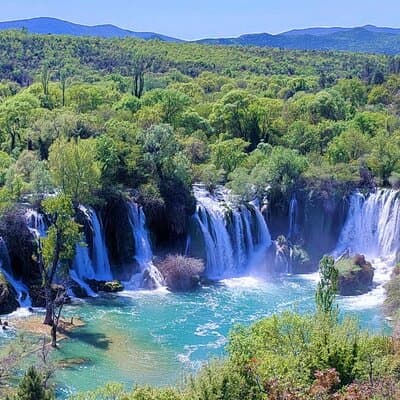
Discover Herzegovina Day Tour from Mostar: Kravice Waterfalls, Blagaj, Počitelj
5.01064 értékelés8h
17 200 Ft-tól
Elérhetőség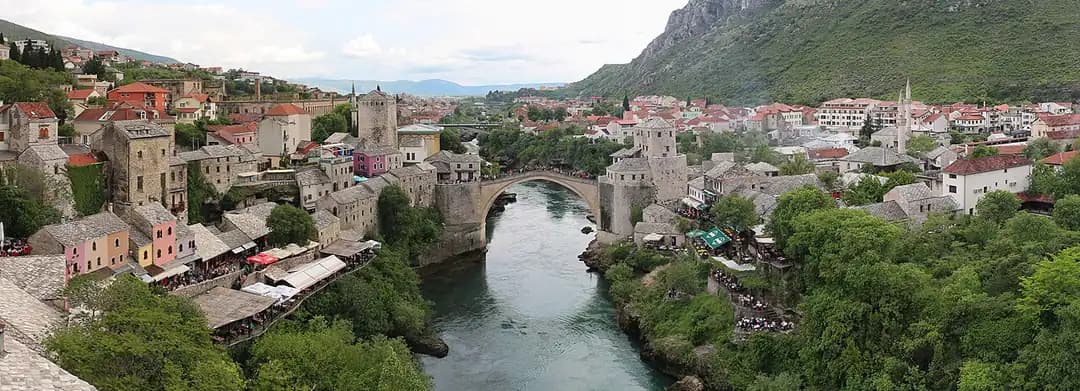
Bosnia and Herzegovina
Mostar isn't just a postcard of its famous bridge; it's a living, breathing palimpsest of history where the 16th-century Ottoman Empire meets the scars and resilience of the 1990s. The true magic unfolds in the cobblestone labyrinth of the Old Bazaar, where the scent of strong coffee and grilled ćevapi mingles with the hammering of coppersmiths, and the call to prayer from the Koski Mehmed Pasha Mosque minaret echoes over the emerald Neretva River.
This is a city best experienced through its contrasts: watching the heart-stopping leap of a bridge diver from the Stari Most, then descending to its banks to see the poignant 'Don't Forget' stone. Mostar demands you feel its layers, from the ornate Turkish houses and bustling market stalls to the hauntingly beautiful, bullet-riddled buildings that stand as silent memorials, offering a powerful and unforgettable lesson in cultural coexistence and recovery.
Witness the Iconic Stari Most: More than a bridge, it's the city's soul. Watch the famous divers leap from 24 meters, walk its smooth, ancient stones at sunset for breathtaking views, and learn about its meticulous 2004 reconstruction, a symbol of reconciliation.
Immerse in Ottoman History: Step back centuries in the Old Town (Stari Grad). Explore the Koski Mehmed Pasha Mosque for panoramic views, shop for handmade copper in the Kujundžiluk bazaar, and visit the Turkish House (Bišćevića Ćošak) to see authentic Ottoman architecture.
Experience Powerful Recent History: Confront the poignant legacy of the Bosnian War. See the 'Sniper Tower' (former bank), walk the divided Boulevard, and visit the Museum of War and Genocide Victims to understand the city's resilient spirit.
Indulge in an Affordable Culinary Journey: Enjoy incredible value. Feast on plates of ćevapi (grilled minced meat) at local buregdžinicas, savor slow-cooked Bosnian pot (bosanski lonac), and experience the ritual of Turkish coffee in a traditional kafana.
Use as a Gateway to Natural Wonders: Mostar is the perfect base for stunning day trips. Swim under the majestic Kravice Waterfalls, explore the medieval fortress town of Počitelj, or take a scenic train ride to the coastal gem of Sarajevo.
Capture Unforgettable Photographs: From the perfect arch of Stari Most framing the river and minarets to the dramatic light on the Old Bazaar's cobblestones and the stark beauty of abandoned buildings, it's a photographer's paradise at every turn.
Készen állsz felfedezni Mostar-t?
The historic heart of Mostar, a UNESCO-listed maze of cobblestone streets, Ottoman-era shops, and bustling cafes centered around the Stari Most bridge. The vibe is tourist-friendly yet authentically atmospheric, filled with the sounds of craftsmen and the smell of grilled food.
Highlights:
Best for:
This wide, leafy avenue was the former frontline during the war, physically and symbolically dividing the city. Today, it's a vibrant commercial strip and a living museum, where modern cafes sit beside bullet-scarred buildings, representing Mostar's ongoing journey.
Highlights:
Best for:
Primarily a residential area with a more modern, Croatian Catholic character, offering a different perspective of the city. It's calmer than the tourist-centric east, with local markets, parks, and significant religious sites.
Highlights:
Best for:
Located just south of the city center, this area is defined by the stunning natural spring of the Buna River. It's a peaceful, green escape famous for the historic Dervish monastery (Tekija) built into a cliff face at the river's source.
Highlights:
Best for:
A legtöbbet foglalt túrák és jegyek, a Viator értékeléseivel.
17 200 Ft-tól
Elérhetőség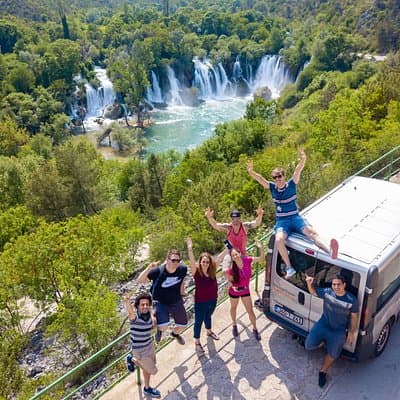
17 200 Ft-tól
Elérhetőség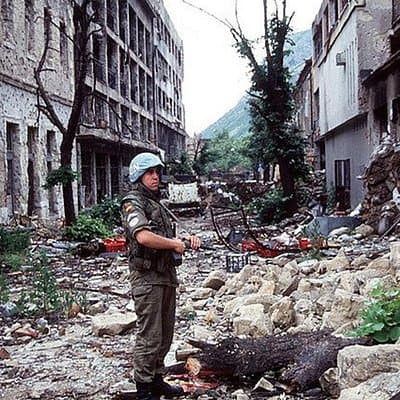
14 000 Ft-tól
Elérhetőség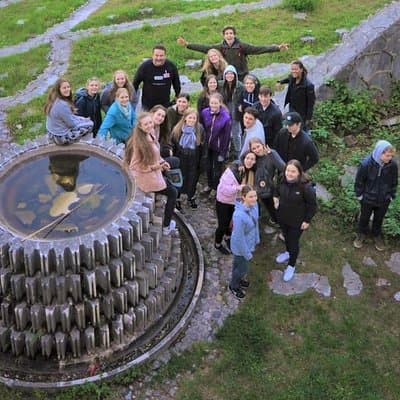
Túrák és árak a Viatortól (a Tripadvisor cége). Az árak dátumtól függően változnak. Foglalás esetén jutalékot kaphatunk, önnek ez nem kerül többe.
Mostar's cuisine is a hearty fusion of Ottoman, Mediterranean, and Slavic influences, centered around grilled meats, savory pastries, and rich stews. Dining is a social, affordable affair, with meals often enjoyed in garden courtyards or bustling traditional eateries.
Order a 'porcija' (portion) of ćevapi which typically comes with somun (flatbread), onions, and kajmak (creamy dairy spread).
When your Turkish coffee grounds settle, you can have your fortune told from the patterns in the cup (a local tradition called 'kafa sa falom').
The trout from the Buna river spring in Blagaj is exceptionally fresh and best enjoyed at a restaurant overlooking the water.
Burek is traditionally eaten with a glass of yogurt ('jogurt'). Ask for it 'sa jogurtom' for the authentic experience.
Spring (April-May) brings mild temperatures, blooming flowers, and gushing waterfalls from melting snow. The crowds are manageable, and the countryside is lush and green.
Pros:
Cons:
Summer (June-August) is peak season with hot, sunny days perfect for swimming at Kravice and watching the famous bridge divers. The city is vibrant but crowded.
Pros:
Cons:
Autumn (September-October) offers golden light, warm days, and cool nights. The summer crowds dissipate, making it an ideal time for photography and relaxed exploration.
Pros:
Cons:
Winter (November-March) is quiet, cold, and often rainy, with a rare dusting of snow. It's a time for introspective travel, focusing on museums, cafes, and the city's poignant atmosphere.
Pros:
Cons:
Hasonlítsd össze a vonatok, buszok és repülők árait Mostar városába
Add meg az indulási várost az árak megtekintéséhez

40 min by car or organized tour
A stunning natural oasis where the Trebižat River cascades over a 25-meter high travertine barrier into an emerald green pool. It's a popular spot for swimming, picnicking, and enjoying the powerful beauty of the falls.
30 min by car or bus
A beautifully preserved medieval Ottoman village built into a cliffside overlooking the Neretva River. Its stone houses, historic mosque, and fortress offer a step back in time and incredible views.
15 min by car or local bus
The source of the Buna River, one of Europe's largest and most powerful karst springs, gushing from a cliff face next to a 16th-century Dervish monastery (tekija). It's a place of profound natural beauty and spiritual significance.
Mostar is an exceptionally affordable destination by European standards, offering great value for accommodation, food, and attractions, especially outside the peak summer months.
Budget
€30-45 per person for hostels, street food, free walking tours, and public transport.
per day
Mid-Range
€60-90 per person for private rooms/guesthouses, restaurant meals, museum entries, and occasional taxis.
per day
Luxury
€120+ per person for boutique hotels, fine dining, private guides, and rental cars for day trips.
per day
A magnificent 16th-century mosque located just outside the main tourist bustle, known for its elegant architecture and serene courtyard.
It's less crowded than Koski Mehmed Pasha Mosque but equally beautiful, offering a more peaceful spiritual experience and excellent photo opportunities of its grand dome.
A striking, abstract WWII memorial on a hillside overlooking the city, designed by the renowned architect Bogdan Bogdanović.
This architectural masterpiece is often overlooked by tourists. It offers panoramic views and is a powerful, contemplative space dedicated to Yugoslav Partisans.
A stunning example of Ottoman residential architecture that now operates as a museum and a luxury heritage hotel.
You can tour the museum section to see exquisite period furnishings and gardens, experiencing the grandeur of a wealthy Ottoman family's home without staying the night.
The rooftop parking area of the modern Mepas Mall in West Mostar.
It provides a unique, elevated, and completely free panoramic view of the entire city and the iconic Stari Most from a distance, especially beautiful at sunset.
A historic mosque located on the east bank, known for its beautiful interior calligraphy and peaceful atmosphere.
It's tucked away in a residential area, rarely visited by tourists, allowing for an authentic glimpse into local religious life and a quiet moment of reflection.
Mostar's culture is a complex tapestry woven from Ottoman, Slavic, and Mediterranean threads, marked by both deep historical traditions and the profound impact of the 1990s war. Hospitality ('gostoprimstvo') is paramount, and social life revolves around coffee, shared meals, and lively conversation.
Yes, Mostar is very safe for tourists. Violent crime is rare. Standard precautions apply: be aware of your belongings in crowded areas and use licensed taxis. The city is still visibly divided, but this does not pose a safety risk to visitors.
Citizens of the EU, UK, US, Canada, Australia, and New Zealand do not need a visa for tourist stays of up to 90 days within a 180-day period. Your passport must be valid for at least 3 months beyond your planned departure date.
The official currency is the Convertible Mark (BAM or KM), which is pegged to the Euro (1 EUR ≈ 1.95 BAM). Some tourist shops, hotels, and restaurants may accept Euros, but you will almost always get a worse exchange rate. It's best to use local currency.
We recommend 2 full days to explore Mostar itself: one for the Old Town, bridge, and museums, and another for the Partisan Cemetery and West Mostar. Add an extra 1-2 days if you plan to take day trips to Kravice, Počitelj, and Blagaj.
Yes, English is widely spoken in the tourist industry (hotels, restaurants, tour guides). Younger generations are particularly fluent. In more local shops or with older residents, you may encounter limited English, but people are generally helpful.
Mostar is well-connected by bus from regional hubs like Sarajevo (2-2.5 hours), Dubrovnik (3 hours), and Split (4 hours). It also has a small international airport (OMO) and a train station with a famously scenic route to Sarajevo.
Yes, tap water in Mostar is safe to drink and is of very good quality, sourced from mountain springs. Locals drink it regularly. This also means you can confidently order drinks with ice.
Unfortunately, the historic Old Town with its steep, uneven, and slippery cobblestone streets and many steps is very challenging for wheelchair users. Some newer parts of the city and major hotels are more accessible, but overall access is limited.
Jellemző napi költségek egy főre, az országos átlagárak alapján (Bosnia and Herzegovina).
| Takarékos | Közepes | Kényelmes | |
|---|---|---|---|
| Szállás (éjszakánként) | 11 200 Ft | 26 000 Ft | 46 000 Ft |
| Étel és ital (naponta) | 3600 Ft | 8000 Ft | 15 200 Ft |
| Látnivalók és programok (naponta) | 1600 Ft | 4800 Ft | 10 000 Ft |
| Összesen naponta | 16 400 Ft | 38 800 Ft | 71 200 Ft |
A becslések nem tartalmazzák a repülőjegyet és a távolsági közlekedést. Napi költségek összehasonlítása városonként
Szállodák a központ közelében (Mostar), a pénztárcabaráttól a luxusig. Az árak az utolsó ellenőrzéskor jellemző éjszakai árak.
 Olcsó
 Olcsó
 Középkategória
 Középkategória
 Felső kategória
 Felső kategória
A szállodaárak a Travelokától származnak (utolsó ellenőrzés: 2026. február 4.), és az időponttól függően változnak. Ha a linkjeinken keresztül foglalsz, jutalékot kaphatunk, neked ez nem jelent többletköltséget.
Népszerű vonat-, busz- és repülőjáratok menetidőkkel és árakkal.
Hagyd, hogy az AI megtervezze a tökéletes útvonalat Mostar utazásodhoz. Csak írd le, mit szeretnél átélni.
Mostar utazás tervezése