Nuremberg Old Town and Nazi Rally Grounds Tour with Lunch Break
4.6547 értékelés4h
14 800 Ft-tól
Elérhetőség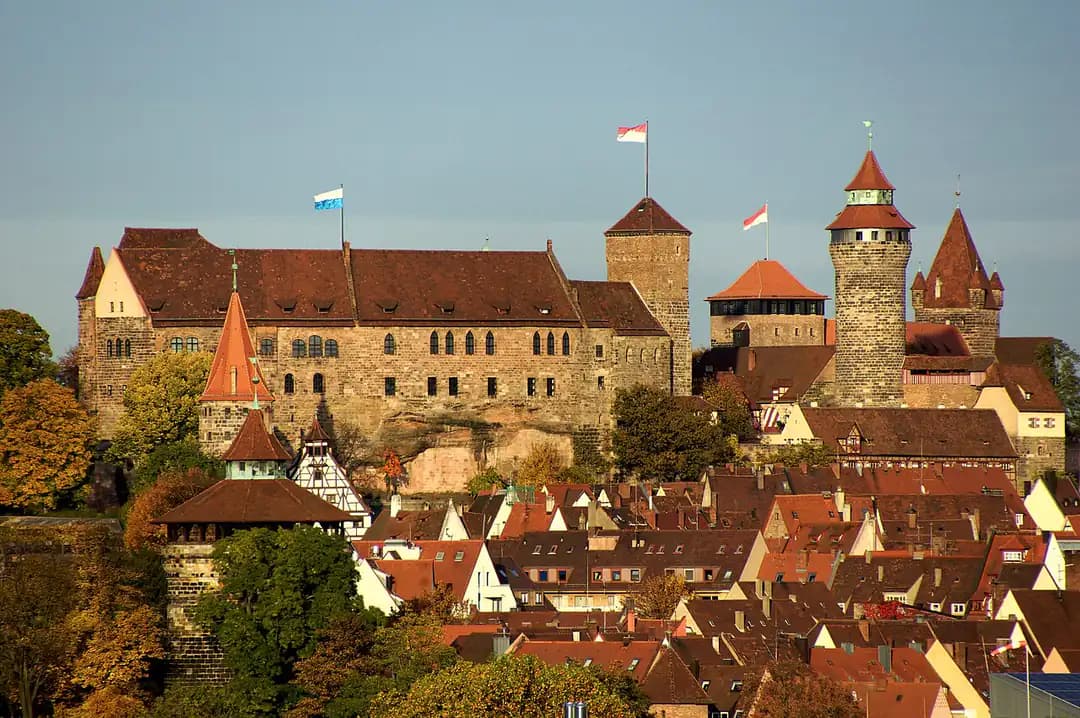
Germany
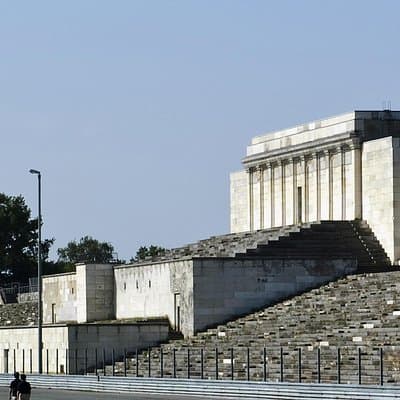
Nuremberg isn't just a city; it's a living timeline where the weight of history is palpable on its cobblestone streets. Your first glimpse is often the formidable Kaiserburg (Imperial Castle), its silhouette dominating the skyline from its sandstone perch, a symbol of the Holy Roman Empire's power. Yet, just a short U-Bahn ride away, the stark concrete remains of the Nazi Party Rally Grounds and the profound Documentation Center force a confrontation with the 20th century's darkest chapter, creating a powerful, thought-provoking duality.
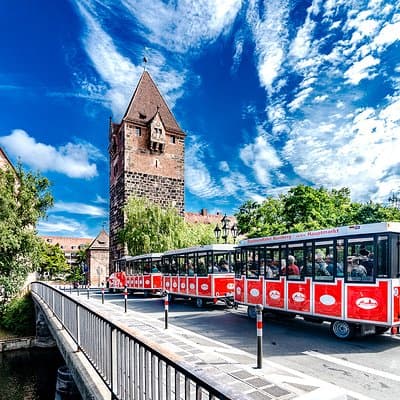
Between these historical bookends lies the enchanting Altstadt (Old Town), encircled by 5km of intact medieval walls and watchtowers. Here, you can lose yourself in the scent of roasting almonds and Lebkuchen (gingerbread) wafting from the Hauptmarkt, trace the life of Albrecht Dürer in his half-timbered home, and stroll across the picturesque Pegnitz River on the Heilig-Geist-Spital bridge. Nuremberg masterfully weaves its somber legacy with a warm, Franconian charm, best experienced with a mug of local Rotbier in a cozy beer garden.
Walk Through Imperial History: Stand in the Imperial Castle's double chapel where emperors were crowned, explore the deep well and Sinwell Tower, and enjoy panoramic views that once surveyed the empire's heartland.
Experience the World's Most Famous Christmas Market: The Christkindlesmarkt transforms the Hauptmarkt into a winter wonderland with hundreds of wooden stalls, the opening proclamation by the Christkind, and the scent of Glühwein and grilled sausages.
Confront 20th-Century History: Visit the sobering Documentation Center at the Nazi Party Rally Grounds, a brilliant architectural counterpoint to the colossal remains, and the Courtroom 600 at the Memorium Nuremberg Trials.
Savor Unique Franconian Flavors: Indulge in Nuremberg's iconic finger-sized Rostbratwurst (must be grilled over beechwood), spicy Lebkuchen from traditional bakeries like Lebkuchen Schmidt, and the unique cloudy-red Rotbier.
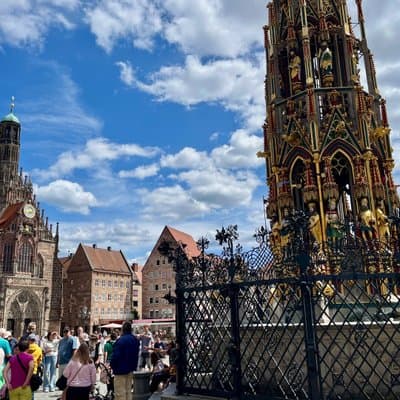
Explore a Perfectly Preserved Medieval Core: Wander within the complete city walls, discover the intricate Schöner Brunnen fountain, admire the Frauenkirche's mechanical clock, and cross the charming half-timbered bridges over the Pegnitz.
Discover Artistic Heritage: Step into the world of Renaissance master Albrecht Dürer at his authentic home, and view his works alongside medieval treasures at the Germanisches Nationalmuseum, Germany's largest museum of cultural history.
Készen állsz felfedezni Nürnberg-t?
The historic heart, completely encircled by the medieval city walls and moat. This is the picture-postcard Nuremberg of half-timbered houses, grand churches, and bustling market squares, dense with major landmarks and tourist energy.
Highlights:
Best for:
A more residential and elegant area just outside the southern walls, offering green spaces, historic cemeteries, and a slightly quieter, upscale vibe with excellent dining options.
Highlights:
Best for:
A formerly working-class district now known as Nuremberg's trendy, multicultural hub. It's packed with independent boutiques, street art, international eateries, and hip cafes, offering a vibrant, youthful contrast to the Altstadt.
Highlights:
Best for:
A vast area south of the center defined by its heavy 20th-century history and post-war reconstruction. It's home to the monumental, unsettling Nazi-era architecture and important documentation centers, set around the Dutzendteich lake.
Highlights:
Best for:
A legtöbbet foglalt túrák és jegyek, a Viator értékeléseivel.
14 800 Ft-tól
Elérhetőség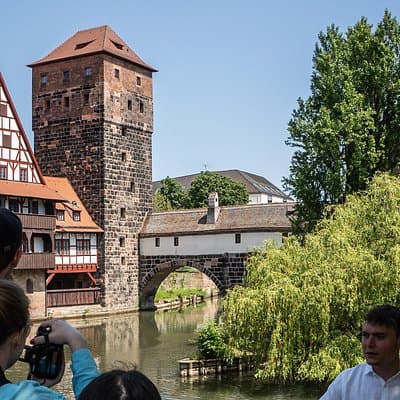
Túrák és árak a Viatortól (a Tripadvisor cége). Az árak dátumtól függően változnak. Foglalás esetén jutalékot kaphatunk, önnek ez nem kerül többe.
Nuremberg's food is hearty, historic, and proudly Franconian. It's a city of sausages, gingerbread, and unique beers, where centuries-old recipes are fiercely protected. Dining ranges from cozy, wood-paneled taverns (Bratwursthäusle) to innovative modern Franconian cuisine.
Meals are often served with 'Blaukraut' (red cabbage) and potato dumplings or sauerkraut. It's polite to say 'Guten Appetit' before eating.
The best Lebkuchen are 'Elisenlebkuchen' with a high nut content. They make excellent edible souvenirs and are available year-round.
In beer gardens, it's common to share tables. A 'Mass' is a one-liter mug. Tip by rounding up the bill or leaving small change.
For a trendy breakfast or brunch, explore the cafes in the Gostenhof district, which open earlier than traditional restaurants.
Spring sees the city awakening with blooming flowers in the castle gardens and along the Pegnitz River. Days become pleasantly mild, perfect for walking the city walls without summer crowds.
Pros:
Cons:
Warm, sunny days ideal for beer gardens, lake swimming at Dutzendteich, and open-air festivals like the Bardentreffen music festival. The Altstadt is vibrant and bustling.
Pros:
Cons:
A golden, crisp season where the castle grounds and surrounding forests turn beautiful colors. A great time for hiking in the nearby Franconian Switzerland and enjoying harvest festivals.
Pros:
Cons:
Cold and often snowy, winter is dominated by the magical Christkindlesmarkt from late November. The city is festively decorated, and the smell of mulled wine fills the air, but it can be bitterly cold.
Pros:
Cons:
Hasonlítsd össze a vonatok, buszok és repülők árait Nuremberg városába
Add meg az indulási várost az árak megtekintéséhez

45 min by regional train
A UNESCO World Heritage town famed for its stunning medieval and baroque architecture built on seven hills, and its unique smoked beer (Rauchbier) brewed in historic breweries.
1 hour 15 min by train (change in Steinach)
The quintessential, perfectly preserved medieval German town, appearing straight from a storybook, complete with intact walls, towers, and cobblestone lanes.
40-60 min by car or bus
A picturesque region of forested hills, dramatic limestone cliffs, and over 1000 caves. It's a paradise for hikers, rock climbers, and beer lovers, with countless rural breweries.
Nuremberg is moderately priced for Germany. The Altstadt is more expensive, but good value can be found in surrounding districts. Major costs are accommodation (especially during the Christmas Market) and sit-down meals.
Budget
€60-80 per day for budget travelers (hostel dorm, supermarket meals, limited paid attractions, walking/public transport)
per day
Mid-Range
€120-180 per day for mid-range (private hotel room, meals at mid-range restaurants, museum entries, some taxis)
per day
Luxury
€250+ per day for luxury (4/5-star hotel, fine dining, private tours, premium experiences)
per day
A contemporary art gallery housed deep within a massive WWII air-raid bunker in the Altstadt.
The contrast of cutting-edge art within the raw, historic concrete bunker creates a uniquely powerful atmosphere few tourists discover.
Two historic, park-like cemeteries located just outside the city walls in St. Johannis, filled with ornate graves from the Renaissance and Baroque periods.
They are serene, beautiful green spaces where you can find the graves of Albrecht Dürer and other notable citizens, away from the tourist bustle.
A charming, narrow lane in the Altstadt, considered one of Germany's most beautiful streets, lined with perfectly preserved, colorful half-timbered houses.
While the street is known, few visitors explore its small courtyards and artisan shops, offering the most photogenic slice of medieval Nuremberg without the main square crowds.
A Renaissance palace and garden museum belonging to the historic Tucher patrician family, with an original 16th-century festival hall.
It provides an intimate look at the lavish lifestyle of Nuremberg's merchant elite, a stark contrast to the imperial and common history highlighted elsewhere.
A small, unassuming footbridge over the Pegnitz River near the Kettensteg, adorned with whimsical stone cat sculptures.
It's a delightful piece of local folklore and public art often missed by tourists rushing between major sites, perfect for a quirky photo.
Nuremberg culture is defined by a deep sense of history, both proud and penitent, combined with down-to-earth Franconian Gemütlichkeit (coziness). Locals are generally reserved but polite and proud of their unique traditions, from sausage specifications to the Christkind. The city has a strong civic identity focused on human rights, stemming from its postwar legacy.
Absolutely, but plan strategically. Visit on a weekday morning for smaller crowds, explore the smaller satellite markets, and focus on the atmosphere, mulled wine (Glühwein), and unique handcrafted ornaments. The opening ceremony with the Christkind is a magical experience.
A minimum of two full days is ideal. Dedicate one day to the medieval Altstadt, castle, and museums, and a second day to the Nazi Party Rally Grounds and Documentation Center. Add a third day if you plan a day trip to Bamberg or Rothenburg.
On foot within the walled Altstadt. For longer distances or to reach the Rally Grounds, use the efficient U-Bahn and tram system. Purchase a day ticket (TagesTicket) from the VGN app or ticket machines for unlimited travel.
No. English is widely spoken in tourist areas, hotels, and restaurants. However, learning a few basic German phrases (Guten Tag, Danke, Bitte) is appreciated and enhances your experience, especially in smaller local establishments.
Nürnberg is the German name, Nuremberg the English one. They refer to the same city. You'll see both used, with 'Nürnberg' on local signs and transport.
Yes. Courtroom 600, where the trials were held, is located in the Nuremberg Palace of Justice. It is still an active courtroom, but you can visit the adjacent Memorium Nuremberg Trials museum, which includes viewing access to the courtroom when it's not in session.
The Nürnberger Rostbratwurst is non-negotiable. These small, spiced sausages must be grilled over beechwood and are traditionally served as 'Drei im Weggla' (three in a roll) with horseradish or with sauerkraut and potato salad.
Yes, if you plan to visit several museums and use public transport. For €33 (2-day validity), it includes entry to almost all major attractions (Castle, Dürer House, DB Museum, etc.) and unlimited public transport in the entire city network (Zone A). It typically pays for itself after 2-3 museum visits.
Jellemző napi költségek egy főre, az országos átlagárak alapján (Germany).
| Takarékos | Közepes | Kényelmes | |
|---|---|---|---|
| Szállás (éjszakánként) | 18 000 Ft | 42 000 Ft | 70 000 Ft |
| Étel és ital (naponta) | 6400 Ft | 14 000 Ft | 28 000 Ft |
| Látnivalók és programok (naponta) | 3200 Ft | 8800 Ft | 20 000 Ft |
| Összesen naponta | 27 600 Ft | 64 800 Ft | 118 000 Ft |
A becslések nem tartalmazzák a repülőjegyet és a távolsági közlekedést. Napi költségek összehasonlítása városonként
Szállodák a központ közelében (Nürnberg), a pénztárcabaráttól a luxusig. Az árak az utolsó ellenőrzéskor jellemző éjszakai árak.
 Olcsó
 Olcsó
 Középkategória
 Középkategória
 Felső kategória
 Felső kategória
A szállodaárak a Travelokától származnak (utolsó ellenőrzés: 2026. február 4.), és az időponttól függően változnak. Ha a linkjeinken keresztül foglalsz, jutalékot kaphatunk, neked ez nem jelent többletköltséget.
Népszerű vonat-, busz- és repülőjáratok menetidőkkel és árakkal.
Hagyd, hogy az AI megtervezze a tökéletes útvonalat Nürnberg utazásodhoz. Csak írd le, mit szeretnél átélni.
Nürnberg utazás tervezése