5 Tage in Salvador
Pelourinho Historic Center und Lacerda Elevator an Tag 1, Bonfim Church und Farol da Barra Beach an Tag 2 und Mercado Modelo und São Francisco Church an Tag 3. Die übrigen 2 Tage bringen einen Ausflug nach Praia do Forte und Barra. Übernachte in Pelourinho (Centro Histórico), dem Viertel am nächsten an den Stationen des Plans.
Kostet etwa 555 € pro Person in der Mittelklasse oder 230 € mit kleinem Budget.
Tag 1: Pelourinho Historic Center und Lacerda Elevator
The historic heart and soul of Salvador, a UNESCO site bursting with colorful colonial architecture, lively plazas, and constant cultural performances.
Morgens
Pelourinho Historic Center
By day it's a museum-like open-air gallery; by night, the squares fill with music and dining.
Essen
Street Food & Snacks
Acarajé comes with a spicy paste (vatapá), shrimp, and salad. Specify 'sem pimenta' if you don't want it spicy.
Wohin: Acarajé da Dinha (Rio Vermelho), Acarajé da Cira (Rio Vermelho), Bolinhos de estudante (fried dough) from market stalls
Nachmittags
Lacerda Elevator
In Pelourinho.
Abends
Solar do Unhão & Museu de Arte Moderna (MAM)
A beautiful 17th-century sugar plantation complex on the bay, now home to the Museum of Modern Art and a renowned sunset samba session.
Tag 2: Bonfim Church und Farol da Barra Beach
Morgens
Bonfim Church
Visit the Bonfim Church on a Thursday to see the Lavagem do Bonfim washing ritual or on Sunday for mass with live music.
Essen
Traditional Bahian
Moqueca is meant to be shared. Order it for two with a side of pirão (manioc flour gravy) and rice.
Wohin: Casa de Tereza (Rio Vermelho) for moqueca, Restaurante do SENAC (Pelourinho) for a buffet of local classics, Paraíso Tropical (Lauro de Freitas)
Nachmittags
Farol da Barra Beach
Abends
Igreja e Convento de Santa Teresa
A serene, less-visited 17th-century convent in the historic center with a beautiful cloister and a small sacred art museum.
Tag 3: Mercado Modelo und São Francisco Church
Morgens
Mercado Modelo
Essen
Seafood
The 'barracas' on Rio Vermelho beach are perfect for a casual sunset dinner of grilled fish and cold beer.
Wohin: Barraca do Loro (Rio Vermelho beach kiosk), Soho (Porto da Barra for upscale seafood), Restaurante Amado (Comércio)
Nachmittags
São Francisco Church
In Pelourinho.
Abends
Dique do Tororó
A large, scenic artificial lake surrounded by parks and featuring giant sculptures of Orixás (Candomblé deities) standing in the water.
Tag 4: Ausflug nach Praia do Forte
80 km north, 1.5 hours by car or bus.
A charming, eco-friendly beach village known for its sea turtle conservation project (TAMAR), pristine beaches, and a picturesque ruined castle. It's a perfect escape from the city bustle.
Höhepunkte: Projeto TAMAR Sea Turtle Sanctuary, Castle Garcia d'Ávila ruins, Sauipe Beach, Village shops and restaurants
Tag 5: Barra und Forte de Santo Antônio da Barra
Morgens
Barra
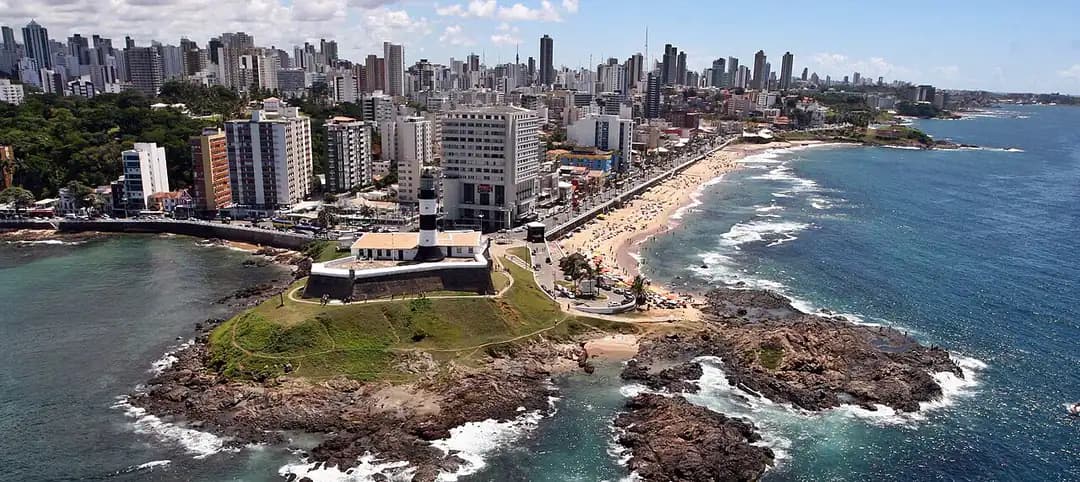
A vibrant, upscale coastal neighborhood centered around the iconic Farol da Barra lighthouse and fortress. It's a hub for beach life, sunset watching, trendy bars, and the starting point for the famous Carnival circuit.
Außerdem hier: Farol da Barra Lighthouse & Fort, Porto da Barra Beach, Museu Náutico da Bahia, Barra's Carnival Circuit
Nachmittags
Forte de Santo Antônio da Barra (Nautical Museum)
Brazil's oldest fortress, located at the tip of the Barra neighborhood, housing the Nautical Museum of Bahia.
Abends
Ladeira da Misericórdia & Elevador Taboão
A steep, picturesque street and a little-known public elevator connecting the upper city (Pelourinho area) to the lower commercial district.
Vor der Reise
Vom Flughafen
From Deputado Luís Eduardo Magalhães International Airport (SSA) to the city center (e.g., Barra): The official airport taxi (Coometas) costs a fixed R$120-150 to Barra. The more affordable option is the Executive Aeroporto bus (R$18), which runs to Praça da Sé in the historic center. Ride-hailing apps (Uber/99) are also available and cost around R$70-90.
Unterwegs in der Stadt
The historic Pelourinho district is very walkable but hilly with cobblestones. Other neighborhoods like Barra and Rio Vermelho are also pedestrian-friendly in their cores, but distances between neighborhoods require transport.
Tipps von Einheimischen
- Wear comfortable, closed-toe shoes for Pelourinho's steep, uneven cobblestone streets—heels are a recipe for disaster.
- For the best acarajé, look for the baianas (women in traditional white dresses) with long lines of locals, like Dinha or Cira in Rio Vermelho.
- Carry small bills (R$10, R$20) as many small vendors, taxi drivers, and market stalls struggle with change for larger notes.