Beirut en 3 días
National Museum of Beirut, Mohammad Al-Amin Mosque y Corniche Beirut el día 1, Pigeon Rocks at Raouché y Gemmayzeh & Mar Mikhael el día 2 y una excursión a Byblos el día 3.
Mejor época: marzo, abril o noviembre.
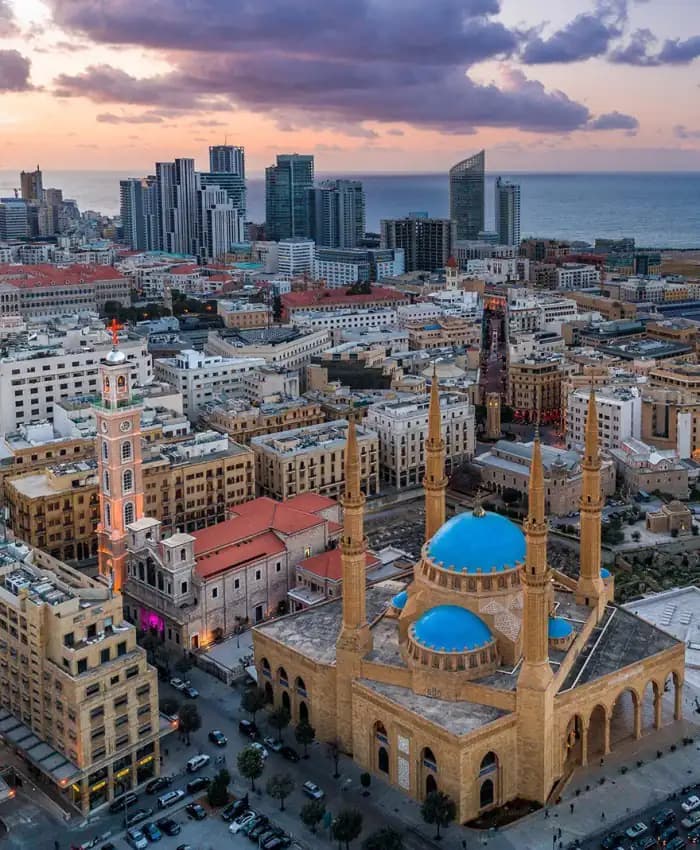
Día 1: National Museum of Beirut, Mohammad Al-Amin Mosque y Corniche Beirut
Mañana
National Museum of Beirut
Media mañana
Mohammad Al-Amin Mosque
En Downtown.
Para comer
Traditional Mezze
Go with a group to sample as many dishes as possible. Don't fill up on bread—pace yourself for the 20+ plates that may arrive.
Dónde ir: Em Sherif (full experience), Tawlet (farm-to-table collective), Le Chef (iconic, no-frills spot in Gemmayzeh)
Tarde
Corniche Beirut
Noche
AUB Archaeological Museum
A small but exquisite museum on the American University of Beirut campus, housing one of the region's most important collections of Levantine artifacts.
En Hamra.
Día 2: Pigeon Rocks at Raouché y Gemmayzeh & Mar Mikhael
Mañana
Pigeon Rocks at Raouché
Para comer
Street Food & Bakeries
Try 'kaak' from a street vendor for breakfast—it's a sesame bread ring often filled with cheese or za'atar, perfect for eating on the go.
Dónde ir: Barbar (for manousheh and shawarma), Furn Al Sabaya (for kaak sesame bread rings), Semsom (for fresh falafel sandwiches)
Tarde
Gemmayzeh & Mar Mikhael
The epicenter of Beirut's hipster renaissance, these adjacent districts are a maze of narrow streets, Ottoman-era houses, and vibrant street art.
Noche
Bourj Hammoud Flea Market
A sprawling, chaotic market district across the river from Achrafieh, known as Beirut's 'Little Armenia'.
Día 3: excursión a Byblos
40 min by car/taxi north.
One of the oldest continuously inhabited cities in the world, Byblos is a UNESCO site where Phoenician, Roman, Crusader, and Ottoman ruins sit beside a picturesque fishing harbor and souk.
Lo principal: Crusader Castle, Ancient Phoenician ruins, Old Souk for shopping, St. John the Baptist Church
Con un día más: Baalbek
1.5-2 hours by car/taxi east. No entra en los 3 días: dedícale un día entero en lugar de meterlo con calzador en uno de ellos.
Home to the most impressive Roman ruins in the Middle East, the colossal temples of Jupiter and Bacchus at Baalbek are a breathtaking testament to imperial Roman engineering and ambition.
Lo principal: Temple of Jupiter, Temple of Bacchus, The Stone of the Pregnant Woman, Nearby Temple of Venus
Antes de ir
Desde el aeropuerto
Beirut–Rafic Hariri International Airport (BEY) is 9km south of the city. A pre-booked private taxi costs $15-25. Official airport taxis charge $20-30. There is no direct train or reliable bus service; taxis are the standard option.
Cómo moverse
Central neighborhoods like Gemmayzeh, Mar Mikhael, Hamra, and Downtown are very walkable and best explored on foot. Distances between these districts may require a short taxi ride.
Consejos de la zona
- Carry cash (USD and LBP). Lebanon's economy is heavily cash-based, and while cards are accepted in some places, USD is widely preferred and often gives a better rate.
- Download the 'Bolt' or 'Careem' app for taxis. Negotiate the fare before getting in a regular taxi, or use these ride-hailing apps for fixed, fair prices.
- Tipping ('baksheesh') is customary. Round up taxi fares, leave 10% in restaurants if service isn't included, and tip small change to porters and bathroom attendants.