Why Train Over Plane
City-center to city-center travel eliminates airport transfers. No security theater, no baggage fees, no weather delays. Trains run frequently—miss one, catch the next. Journeys under 4-5 hours are often faster than flying when you count total travel time. And the scenery is spectacular.
Booking Platforms Explained
Trainline aggregates most European operators in one app with English support. Omio (formerly GoEuro) compares trains, buses, and flights. National sites (SNCF, DB, Trenitalia) sometimes offer exclusive deals but have clunky interfaces. Book 2-3 months ahead for the cheapest fares.
Pro Tip: Split ticketing saves money on long routes. Paris-Barcelona might be cheaper as Paris-Montpellier + Montpellier-Barcelona.
Rail Passes: Worth It?
Eurail Global Pass suits ambitious multi-country trips (5+ countries in 3+ weeks). Point-to-point tickets are usually cheaper for fixed itineraries. The math: If your total point-to-point bookings exceed the pass cost, get the pass. Use the Eurail trip planner to calculate.
High-Speed Networks
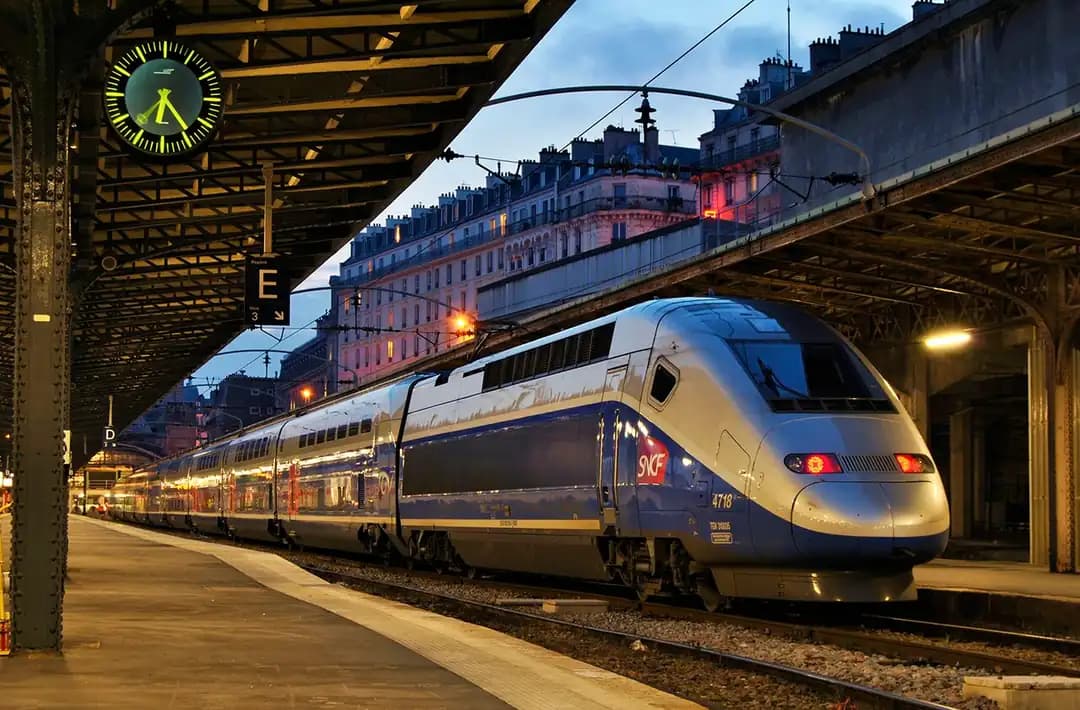
France's TGV hits 320 km/h (Paris-Lyon in 2 hours). Germany's ICE connects major cities. Spain's AVE runs Madrid-Barcelona in 2.5 hours. Italy's Frecciarossa rivals airlines. Eurostar links London to Paris (2h15) and Brussels (2h). These require reservations and seat selection.
Regional and Night Trains
Regional trains are cheaper, slower, and rarely require reservations. They connect smaller towns and offer flexibility. Night trains are making a comeback—the Nightjet network covers Austria, Germany, Italy, and Switzerland. You save a hotel night while covering distance.
Luggage and Comfort
No weight limits on European trains. Bring what you can carry onto the platform—overhead racks and luggage areas accommodate large bags. First class offers more space and quiet; second class is perfectly comfortable. Bring headphones, snacks, and a phone charger.
Practical Tips
Validate tickets before boarding where required (Italy, France for some tickets). Seat reservations are mandatory on high-speed trains. Platform assignments often appear only 20 minutes before departure—check screens, not printed tickets. Train stations have free bathrooms, unlike airports.
Pro Tip: Download train apps (DB Navigator, SNCF Connect, Trenitalia) for live platform updates and delays.