Meteora Sunset with Monastery & Hermit Caves Tour in Small Group
4.9732 értékelés4h
14 000 Ft-tól
Elérhetőség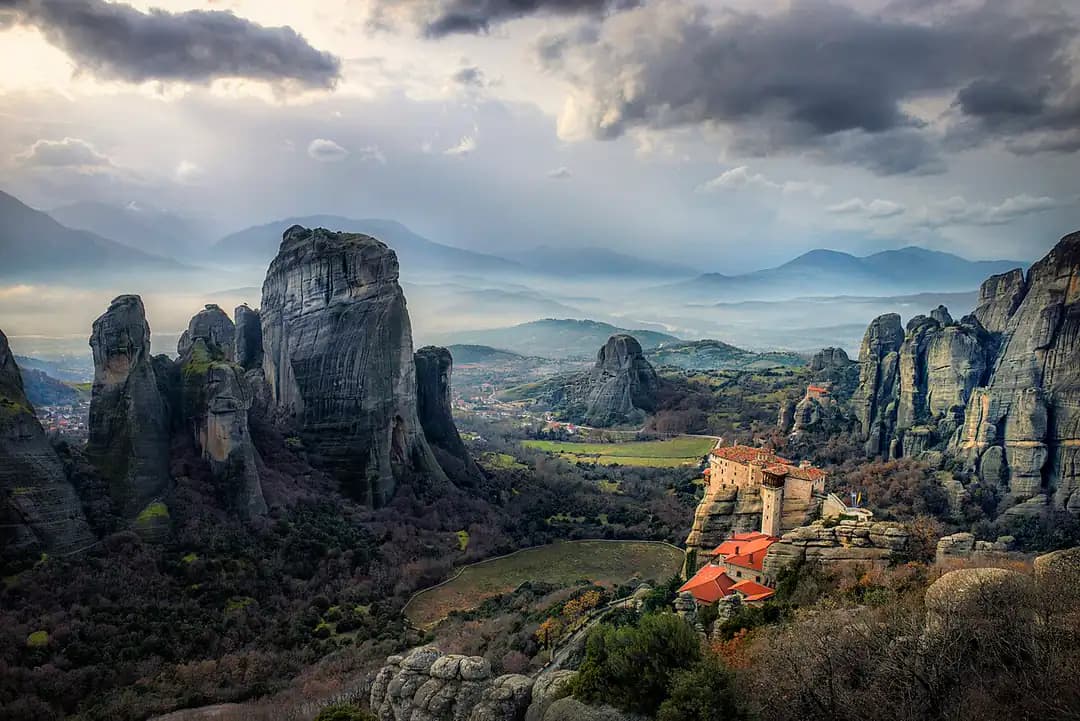
Greece
Meteora isn't just a destination; it's a geological and spiritual marvel where the earth reaches for the heavens. Imagine colossal sandstone pillars, sculpted by 60 million years of wind and water, piercing the Thessalian sky, each crowned with a Byzantine monastery accessible only by rope ladders until the 1920s. This UNESCO World Heritage site is a testament to human faith and endurance, where monks sought solitude among the clouds, leaving behind breathtaking frescoes and a palpable sense of serenity.
Today, you can walk the ancient paths between the six active monasteries, like the Great Meteoron—the largest and oldest—or the iconic Holy Trinity, famously featured in James Bond films. The experience is multisensory: the scent of incense in dimly lit chapels, the panoramic views from Varlaam's balcony, and the profound quiet that descends at sunset when the rocks glow a fiery orange. It's a landscape that demands to be explored on foot, with hiking trails weaving through the pillars, connecting you directly to its mystical history.
Witness a unique fusion of geology and spirituality at the cliff-top monasteries, where you can see 16th-century frescoes at Varlaam and peer into the original net hoist used for supplies at Rousanou.
Experience world-class hiking on trails like the path from Kastraki to the Holy Trinity Monastery, offering intimate, ground-level perspectives of the rock towers that bus tours miss.
Capture legendary photography, especially at sunrise from the Psaropetra lookout or sunset from the Meteora Panorama viewpoint, where light transforms the pillars into golden sentinels.
Explore a living monastic community; attend a service at St. Stephen's Nunnery to hear Byzantine chant and observe the daily rhythms of monastic life that continue uninterrupted.
Discover exceptional Byzantine art and relics, including the intricate frescoes of the Transfiguration at the Great Meteoron and the skulls of monastery founders displayed in the sacristy.
Base yourself in the charming gateway towns of Kalambaka and Kastraki, where you can enjoy traditional tavernas with views of the rocks and visit the Byzantine Church of the Assumption of Virgin Mary in Kalambaka.
Készen állsz felfedezni Meteorák-t?
The bustling main gateway to Meteora, nestled directly at the foot of the rock formations. This town offers all essential services, a vibrant central square, and a mix of tourist shops and authentic local life, with the majestic rocks forming a constant, dramatic backdrop.
Highlights:
Best for:
A quieter, more picturesque stone-built village clinging to the lower rocks. It has a more traditional, rustic feel than Kalambaka, with narrow lanes, guesthouses boasting incredible balcony views, and direct access to hiking trails.
Highlights:
Best for:
Not a traditional neighborhood, but the interconnected area along the paved road looping the plateau. This is the core experience, where you move between the six accessible monasteries, each with its own character, perched on separate rock pillars.
Highlights:
Best for:
The less-visited southern sector of the Meteora complex, offering wilder landscapes and solitude. This area is dominated by impressive pillars like Adrachti and is crisscrossed by older, more rugged footpaths used by hermits.
Highlights:
Best for:
A legtöbbet foglalt túrák és jegyek, a Viator értékeléseivel.
14 000 Ft-tól
Elérhetőség
14 000 Ft-tól
Elérhetőség
14 000 Ft-tól
Elérhetőség
14 000 Ft-tól
ElérhetőségTúrák és árak a Viatortól (a Tripadvisor cége). Az árak dátumtól függően változnak. Foglalás esetén jutalékot kaphatunk, önnek ez nem kerül többe.
Meteora's cuisine is hearty Thessalian fare, focused on grilled meats, slow-cooked stews, and fresh local produce from the plains below. Meals are social events, best enjoyed at a taverna with a view of the rocks, accompanied by local tsipouro.
Order a 'meze' platter to sample multiple local specialties alongside your tsipouro.
Go for the mixed grill platter to taste various meats, and don't skip the hand-cut fries.
Try bougatsa for breakfast—a filo pastry filled with sweet custard or savory cheese.
Book a table for sunset to combine exquisite food with the most dramatic natural light show.
Spring (April to June) is arguably the best time. The landscape is lush and green, wildflowers bloom in the valleys, and temperatures are perfect for hiking.
Pros:
Cons:
Summer (July-August) is hot, dry, and busy. The rocks can shimmer in the heat, and midday sun is intense, but long days allow for early morning and late evening exploration.
Pros:
Cons:
Autumn (September to October) rivals spring. The summer heat dissipates, crowds thin, and the landscape takes on golden hues, with clear skies perfect for photography.
Pros:
Cons:
Winter (November to March) is cold and quiet, with a chance of snow dusting the rock pillars, creating a magical, ethereal scene. Some monasteries have reduced hours.
Pros:
Cons:
Hasonlítsd össze a vonatok, buszok és repülők árait Meteora városába
Add meg az indulási várost az árak megtekintéséhez

Travel time and method (e.g., '45 min by train')
2-3 sentences about why to visit
30-40 minutes by car or bus
A vibrant, youthful city built around the Lithaios River, known as the 'first smart city in Greece.' It offers a charming contrast to Meteora's serenity with its Byzantine castle, riverside cafes, and the unique 'Koursoum' Mosque.
1.5 hours by car
A stunning artificial lake high in the Agrafa mountains, often called 'Little Switzerland.' It's a year-round resort area offering outdoor activities amidst forests and mountain villages, with the lake's reflective surface creating breathtaking scenery.
2.5 - 3 hours by car
For a full-day historical immersion, drive to the 'navel of the world.' This major UNESCO site, home of the ancient Oracle, sits on the slopes of Mount Parnassus and offers awe-inspiring ruins and a superb museum.
Meteora is moderately priced for Greece. Costs are higher than typical Greek islands but reasonable for a mainland UNESCO site. The biggest expenses are accommodation and car rental, while food and monastery entry remain affordable.
Budget
€40-60 per person for dorm beds, self-catering, local buses, and street food.
per day
Mid-Range
€80-120 per person for a private room in a guesthouse, taverna meals, occasional taxis, and car rental split between two.
per day
Luxury
€200+ per person for boutique hotels with views, fine dining, private guided tours, and premium car rentals.
per day
A cluster of ancient hermit caves carved into the base of a rock face near Kastraki, once accessible only by rope ladders.
It offers a raw, unfiltered look at the ascetic origins of Meteora's monastic life, far from the polished monasteries above, and is rarely visited.
A tiny chapel tucked inside a cave on the Adrachti rock, dedicated to St. George.
Locals have a unique tradition of leaving behind a shirt (mandilas) for good luck, and the chapel walls are covered in these colorful offerings, creating a moving and photogenic scene.
A cave just outside Kalambaka with a man-made stone wall dated to 23,000 years ago, among the oldest known structures.
It provides a staggering timeline perspective, showing human presence in the area for 130,000 years, long before the monasteries were even conceived.
A small, family-run museum and workshop where traditional Greek weaving techniques are still practiced.
You can see artisans at work and purchase authentic, high-quality textiles directly from the source, supporting local craft.
A steep, overgrown hiking trail leading to the abandoned and ruined Ypapanti Monastery, built inside a large cave.
It's an adventurous hike to a truly atmospheric and forgotten site, offering a sense of discovery and haunting beauty you won't find at the maintained monasteries.
Meteora's culture is deeply rooted in Greek Orthodox monasticism and the resilient spirit of the Thessalian plains. It's a place where profound reverence for the sacred sites coexists with warm, rural Greek hospitality. Life moves at a slower pace here, dictated by the seasons and the liturgical calendar.
A minimum of two days is ideal. Spend one day visiting the main monasteries via the circuit road, and a second day hiking the trails between the rocks and exploring Kalambaka or Kastraki. This allows time for both the iconic sights and the quieter, more immersive experiences.
Yes. Kalambaka is reachable by train from Athens or Thessaloniki. From town, you can use the local bus to the monasteries, join a guided tour, hire a taxi for a half-day circuit, or hike from Kastraki village. A car offers more flexibility but is not strictly necessary.
With planning, yes. The monasteries involve steep staircases, but St. Stephen's and Rousanou have the easiest access. The circuit road is drivable, allowing you to park at each. For the elderly or those with mobility issues, a private taxi tour is recommended. Many trails are strenuous for young children.
Modest dress is required for all visitors: shoulders must be covered, and skirts or trousers must cover the knees. Women are given wrap-around skirts at the entrance if needed. Wear comfortable, sturdy shoes as the monastery paths and staircases are often uneven.
Yes, numerous local companies offer half-day and full-day tours from Kalambaka, ranging from large bus tours to small-group hiking or photography tours. Booking in advance is recommended during peak season. Guides provide invaluable historical and religious context.
Sunrise and sunset are magical. For sunrise, head to the Psaropetra lookout. For sunset, the official Sunset Viewing Point gets crowded; the Meteora Panorama spot offers a similar view with fewer people. The low-angle light creates deep shadows and highlights the texture of the rocks.
No, tourists cannot stay overnight in the active monasteries. However, the monks of the Great Meteoron Monastery used to offer very basic hospitality to male pilgrims in the past, but this is not a regular tourist service. All visitors stay in hotels or guesthouses in Kalambaka or Kastraki.
Yes, each monastery charges a €3 entrance fee per person. However, you can buy a single €3 ticket at the first monastery you visit, which is then validated and grants you entry to all the others. Keep this ticket safe for your entire visit.
Jellemző napi költségek egy főre, az országos átlagárak alapján (Greece).
| Takarékos | Közepes | Kényelmes | |
|---|---|---|---|
| Szállás (éjszakánként) | 14 000 Ft | 34 000 Ft | 60 000 Ft |
| Étel és ital (naponta) | 5600 Ft | 12 000 Ft | 23 200 Ft |
| Látnivalók és programok (naponta) | 2800 Ft | 7200 Ft | 16 800 Ft |
| Összesen naponta | 22 400 Ft | 53 200 Ft | 100 000 Ft |
A becslések nem tartalmazzák a repülőjegyet és a távolsági közlekedést. Napi költségek összehasonlítása városonként
Szállodák a központ közelében (Meteorák), a pénztárcabaráttól a luxusig. Az árak az utolsó ellenőrzéskor jellemző éjszakai árak.
 Olcsó
 Olcsó
 Középkategória
 Középkategória
 Felső kategória
 Felső kategória
 Luxus
A szállodaárak a Travelokától származnak (utolsó ellenőrzés: 2026. február 4.), és az időponttól függően változnak. Ha a linkjeinken keresztül foglalsz, jutalékot kaphatunk, neked ez nem jelent többletköltséget.
Hagyd, hogy az AI megtervezze a tökéletes útvonalat Meteorák utazásodhoz. Csak írd le, mit szeretnél átélni.
Meteorák utazás tervezése