
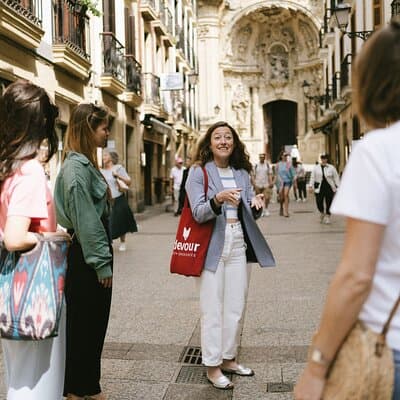
Pintxos und Weintour in der Altstadt von San Sebastian
4.91.305 Bewertungen3h
ab 103 €
Verfügbarkeit prüfen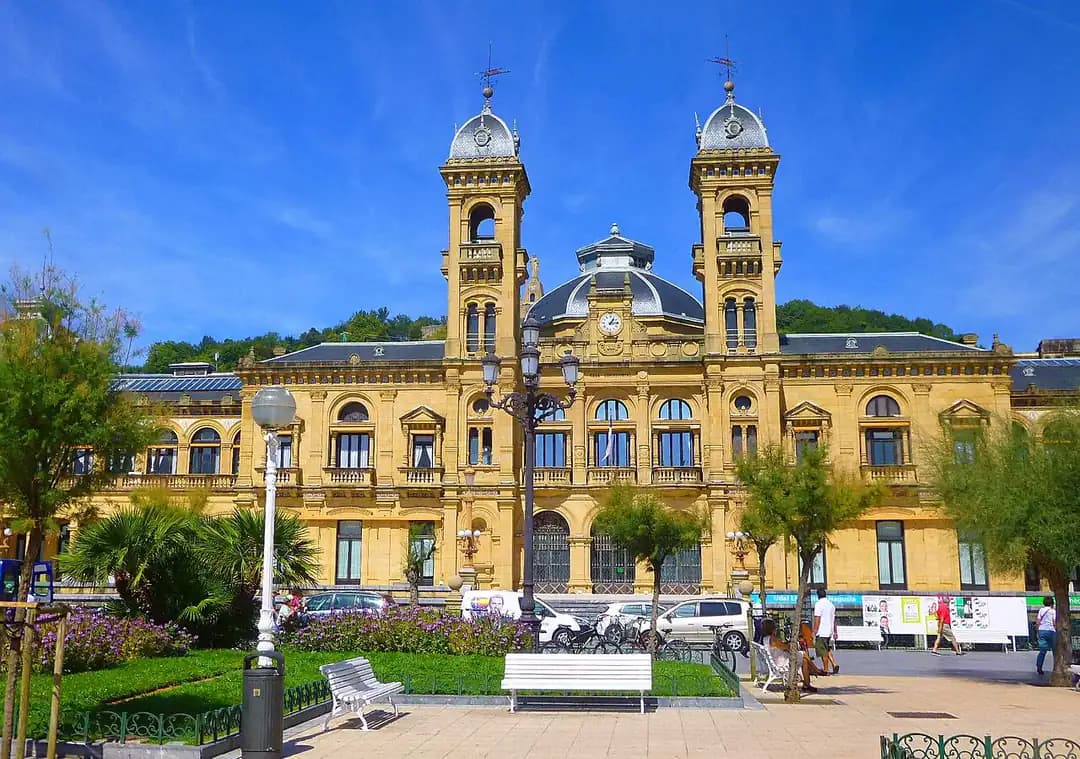
Spain
San Sebastián (Donostia in Basque) isn't just a city; it's a sensory masterpiece where culinary artistry meets breathtaking natural beauty. The iconic La Concha Bay, cradled by Monte Urgull and Monte Igueldo, creates a perfect urban beachfront where locals and visitors alike stroll the elegant promenade, swim in the gentle Cantabrian Sea, and watch the sunset paint the sky from the historic Peine del Viento sculptures. This sophisticated Basque gem holds the highest concentration of Michelin stars per square meter in Europe, yet its true soul is found in the bustling pintxos bars of the Parte Vieja, where culinary innovation is a way of life.
Beyond the beaches and bars, San Sebastián pulses with a unique cultural identity. The Basque language (Euskera) echoes through the streets, the San Telmo Museum delves into regional history within a stunning former convent, and the annual International Film Festival transforms the city into a cinematic capital. From the funicular ride up Monte Igueldo for panoramic views to the surf culture at Zurriola Beach, San Sebastián offers a compelling blend of Belle Époque elegance, cutting-edge gastronomy, and vibrant local tradition that feels both timeless and thrillingly contemporary.
A Culinary Pilgrimage: Experience the world's best pintxos culture, hopping between legendary bars like Gandarias and La Cuchara de San Telmo in the Parte Vieja, and book a table at Michelin-starred temples like Arzak or Mugaritz for a once-in-a-lifetime tasting menu.
Europe's Most Beautiful Urban Beach: Spend days on the golden sands of La Concha Beach, framed by its iconic bay and elegant promenade, or catch waves with the locals at the more rugged Zurriola Beach in the Gros district.
Breathtaking Panoramas: Ride the century-old funicular up Monte Igueldo for a postcard-perfect view of the bay, or hike through history up Monte Urgull to the Castillo de la Mota and its giant Sacred Heart statue.
Deep Basque Culture: Immerse yourself in unique traditions at the San Telmo Museum, hear the ancient Euskera language in the streets, and witness the power of the 'txalaparta' (traditional percussion) or Basque pelota.
Festival Fever: Time your visit for the prestigious San Sebastián International Film Festival (September) or the explosive Tamborrada drum festival on January 20th, which turns the city into a 24-hour street party.
Sophisticated Coastal Lifestyle: Embrace the 'paseo' (evening stroll) along the Concha promenade, enjoy an aperitif on the terrace of the Hotel María Cristina, and soak in the city's Belle Époque architecture and relaxed yet refined vibe.
Bereit, Donostia-San Sebastián zu entdecken?
The historic and culinary heart of the city, a dense grid of narrow, lively streets packed with over 100 pintxos bars, traditional shops, and historic churches. The energy here is infectious, especially from late morning until the early hours.
Highlights:
Best for:
The modern commercial and administrative center, offering a contrast to the Old Town with wider avenues, high-end shopping, and elegant architecture. It's more local and residential, with a calmer pace.
Highlights:
Best for:
The trendy, youthful neighborhood across the River Urumea, known for its surf culture, vibrant pintxos scene, and more alternative vibe. It's centered around the powerful waves of Zurriola Beach.
Highlights:
Best for:
A largely residential area stretching east from La Concha, offering a quieter, local atmosphere with beautiful seafront walks, the Ondarreta Beach, and access to the city's most famous landmarks.
Highlights:
Best for:
Die Touren und Tickets, die Reisende am häufigsten buchen, mit Bewertungen von Viator.
ab 103 €
Verfügbarkeit prüfen
ab 49 €
Verfügbarkeit prüfenTouren und Preise von Viator, einem Tripadvisor-Unternehmen. Preise ändern sich je nach Datum. Wir erhalten eventuell eine Provision, wenn Sie buchen – ohne Mehrkosten für Sie.
San Sebastián is a global gastronomic capital where food is a religion. It's defined by two pillars: the unparalleled pintxos culture of inventive small bites in casual bars, and a constellation of world-renowned Michelin-starred restaurants pushing culinary boundaries. The quality of local ingredients—from Idiazabal cheese to Txakoli wine—is paramount.
Go between 12-2 PM or 8-10 PM for the freshest selection and hottest atmosphere.
These often have a daily menu board; don't be shy to ask the bartender for recommendations.
Look for 'menú del día' at lunch for a fantastic multi-course meal at a great price (€25-€40).
Reservations are essential, often months ahead. Consider lunch for a slightly more affordable tasting menu experience.
Spring (April-May) is delightful, with mild temperatures, blooming flowers, and fewer crowds. The city wakes up from winter, and outdoor terraces begin to fill.
Pros:
Cons:
Summer (June-September) is peak season, with warm, sunny days perfect for beach life, packed festivals, and a vibrant, energetic atmosphere throughout the city.
Pros:
Cons:
Autumn (October-November) offers a golden, tranquil beauty. The weather remains mild early on, the summer crowds dissipate, and it's a prime time for food-focused travel.
Pros:
Cons:
Winter (December-March) is quiet, cool, and often rainy, but has a cozy, local charm. It's the time for hearty cuisine, cultural events, and experiencing the famous Tamborrada festival.
Pros:
Cons:
Vergleiche Preise für Züge, Busse und Flüge nach San Sebastián
Gib deine Abfahrtsstadt ein, um Preise zu sehen

30 min by bus or car
Cross the border into France to experience the charming fishing village of Hondarribia's colorful casco antiguo, then continue to the glamorous resort of Biarritz and the stunning cliffs of Saint-Jean-de-Luz.
1 hour 15 min by bus or train
Visit the dynamic industrial capital of the Basque Country, transformed by the iconic Guggenheim Museum. Explore its revitalized riverfront, atmospheric Casco Viejo, and thriving culinary scene.
20 min by bus, then boat/bus
Discover the working fishing port of Pasaia, best explored by a short boat taxi between its two sides, and then hike or drive along the breathtaking Zumaia-Deba coastline to see the dramatic Flysch rock formations.
San Sebastián is one of Spain's more expensive cities, primarily due to its gourmet reputation and luxury appeal. However, it's possible to visit on a range of budgets by focusing on pintxos, public transport, and free activities like the beaches and hikes.
Budget
€60-€90 per person for dorm beds, pintxos for meals, bus travel, and free attractions.
per day
Mid-Range
€120-€200 per person for a private room in a mid-range hotel, mix of pintxos and sit-down meals, some taxis, and paid attractions.
per day
Luxury
€300+ per person for luxury hotels, Michelin-starred dining, private tours, and premium experiences.
per day
A coastal headland east of the city, offering rugged cliffs, hidden coves, and panoramic hiking trails far from the crowds of Urgull and Igueldo.
It's a peaceful natural escape with stunning views back towards the city and along the coast, popular with locals for walking and running.
A compact but fascinating museum located in the port area, detailing the Basque Country's rich maritime history, shipbuilding, and whaling traditions.
It provides crucial context to the region's identity and is often overlooked by visitors heading straight for the pintxos bars.
A authentic, still-working fishing port divided into two villages (San Pedro and San Juan), connected by a frequent pedestrian boat taxi.
It feels like stepping back in time, with crumbling colorful houses, boatyards, and the Albaola museum where a 16th-century whaling ship is being rebuilt.
A small, atmospheric Protestant cemetery on the slopes of Monte Urgull, with ornate tombs and views over the bay.
A serene, historical spot with a unique story, offering a different perspective and a quiet moment away from the city bustle.
A vast former tobacco factory in Gros transformed into a vibrant public cultural center with free exhibitions, a cinema, workshops, and a fantastic rooftop terrace.
It's a hub for cutting-edge art and culture with a fantastic, free viewpoint over the city, often missed by tourists.
San Sebastián's culture is deeply rooted in Basque identity, expressed through its unique language (Euskera), strong culinary traditions, and a calendar of vibrant festivals. There's a palpable pride in local customs, from cider house rituals to pelota matches, coexisting with a sophisticated, internationally-minded outlook.
While both are small plates, pintxos (pronounced 'pin-chos') are typically more elaborate, often skewered with a toothpick ('pincho' means spike). They are artistic creations displayed on the bar, whereas tapas in other parts of Spain are often simpler and may be served in a small dish. In San Sebastián, the culture of hopping from bar to bar sampling them is a dedicated social ritual.
No. Everyone speaks Spanish (Castellano), and in tourist areas, many speak English. However, Basque (Euskera) is the co-official language and widely used. Learning a few basic phrases like 'kaixo' (hello) and 'eskerrik asko' (thank you) is a great sign of respect and will be warmly received.
Yes, it is one of the most expensive cities in Spain, particularly for accommodation and fine dining. However, you can manage costs by enjoying the incredible but affordable pintxos culture, using public transport, staying in neighborhoods like Gros, and visiting in the shoulder seasons. The beaches and many hikes are free.
Head to the Parte Vieja (Calle 31 de Agosto, Fermín Calbetón) or Gros (Calle Zabaleta). Go to busy bars, order a drink, and either point to cold pintxos on the bar or ask for the hot specials ('calientes'). Have one or two items and a drink per bar before moving on. Keep your toothpicks for the bill or tell the server what you had.
Absolutely. La Concha and Ondarreta beaches have gentle, sheltered waters perfect for swimming from June through September. Zurriola Beach in Gros has stronger waves and is better for surfing. The water is coldest in winter and spring (around 12-15°C), warming up to about 21-22°C in late summer.
A minimum of 2-3 full days is ideal. This allows one day for exploring the Old Town and a pintxos crawl, one day for the beaches and Monte Urgull/Igueldo, and a third for museums, shopping, or a day trip. Foodies or those wanting a more relaxed pace should consider 4-5 days.
Pack layers! The weather is changeable, even in summer. Bring a light jacket, comfortable walking shoes, swimwear, and smart-casual outfits for nicer restaurants. An umbrella or raincoat is advisable outside of peak summer. Don't forget sunscreen for the beach.
Yes, it is an extremely safe city with very low crime rates. Normal precautions apply: watch your belongings in crowded pintxos bars and on the beach. The city is welcoming and easy to navigate at all hours.
Typische Tageskosten für eine Person, basierend auf Durchschnittspreisen in Spain.
| Günstig | Mittelklasse | Komfort | |
|---|---|---|---|
| Unterkunft (pro Nacht) | 40 € | 100 € | 170 € |
| Essen und Trinken (pro Tag) | 15 € | 32 € | 62 € |
| Sehenswürdigkeiten und Aktivitäten (pro Tag) | 8 € | 20 € | 45 € |
| Gesamt pro Tag | 63 € | 152 € | 277 € |
Die Schätzungen enthalten keine Flüge und keinen Fernverkehr. Tageskosten verschiedener Städte vergleichen
Hotels nahe dem Zentrum von Donostia-San Sebastián, von günstig bis luxuriös. Die Preise sind typische Übernachtungspreise zum Zeitpunkt unserer letzten Prüfung.
 Günstig
 Günstig
 Mittelklasse
 Mittelklasse
 Gehoben
 Gehoben
 Luxus
Die Hotelpreise stammen von Traveloka, zuletzt geprüft am 4. Februar 2026, und ändern sich je nach Reisedatum. Wenn du über unsere Links buchst, erhalten wir möglicherweise eine Provision – für dich ohne Mehrkosten.
Beliebte Zug-, Bus- und Flugverbindungen mit Reisezeiten und Preisen.
Lass KI den perfekten Reiseplan für deinen Trip nach Donostia-San Sebastián erstellen. Beschreibe einfach, was du erleben möchtest.
Donostia-San Sebastián-Reise planen

