Brujas y Gante, ciudades de cuento de hadas de Bélgica - desde Bruselas
4.25068 opiniones10h 30m
desde 45 €
Ver disponibilidad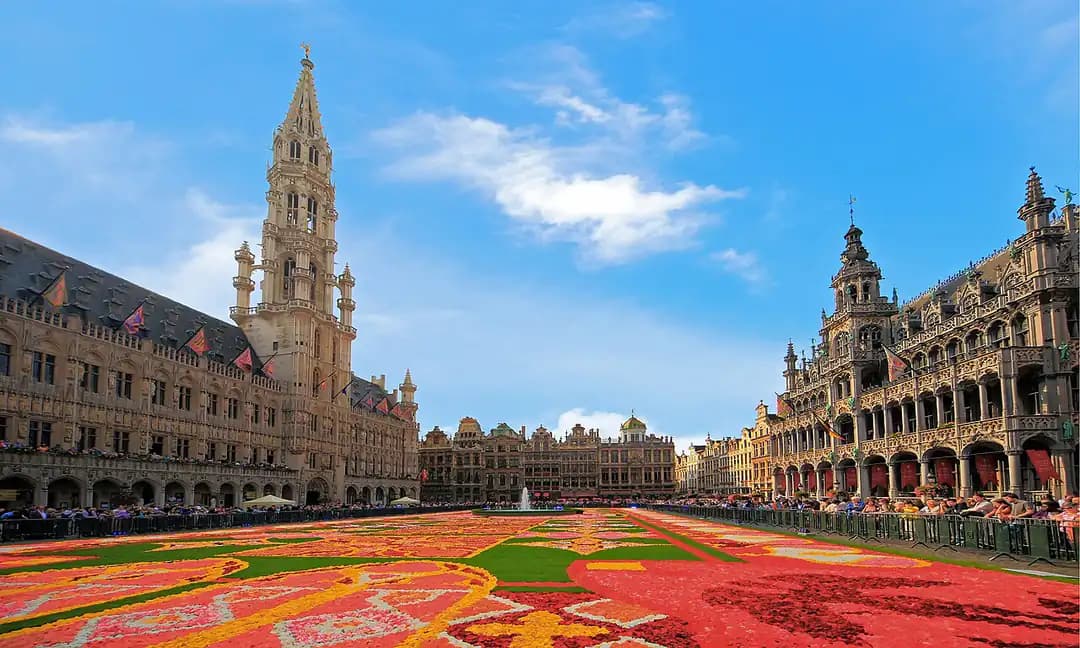
Belgium
Brussels is a city of delightful contradictions, where Gothic spires share the skyline with surrealist architecture like the Atomium, and the scent of artisan chocolate mingles with hops from centuries-old breweries. This isn't just the administrative heart of Europe; it's a living museum of Art Nouveau, with entire neighborhoods like Ixelles and Saint-Gilles showcasing the swirling ironwork and organic forms of Victor Horta's masterpieces. The city's soul is best felt in the Grand Place, a UNESCO World Heritage site whose gold-leafed guildhouses create a breathtaking theatrical stage, especially during the biennial Flower Carpet event.
Beyond the postcard icons lies a city obsessed with comic strips, with over 50 giant murals of Tintin, the Smurfs, and other beloved characters forming an open-air gallery across its streets. Brussels rewards the curious traveler: discovering a hidden *beguinage* courtyard, sampling a perfectly poured Gueuze at a traditional *estaminet* like À la Mort Subite, or finding the lesser-known Jeanneke-Pis statue after seeing her famous brother. It's a capital where you can debate EU policy over a plate of *moules-frites* and then get lost in the surreal Magritte Museum, all in a single afternoon.
Architectural Splendor: From the breathtaking Gothic and Baroque opulence of the Grand Place to the pioneering Art Nouveau townhouses of Victor Horta (like the Horta Museum and Hôtel Solvay), Brussels is an open-air architecture textbook. The surreal, futuristic Atomium offers panoramic city views from its 1958 World's Fair spheres.
A Capital of Culinary Craft: This is the global epicenter for chocolate, with legendary artisans like Pierre Marcolini, Neuhaus, and Mary offering praline tastings. Pair this with over 1,500 unique Belgian beers, from fruity Lambics to strong Trappist ales, and iconic street food like crispy Liège waffles and double-fried *frites*.
Quirky & Comic Culture: Brussels birthed the comic strip, celebrated along the Comic Book Route's giant wall murals and in the immersive Belgian Comic Strip Center. The city's irreverent humor is embodied by the ever-costumed Manneken Pis and his lesser-known counterparts, Jeanneke-Pis and Zinneke Pis.
The Heart of Europe: Witness democracy in action with tours of the European Parliament's hemicycle or visits to the Europa building. The European Quarter's modern architecture contrasts sharply with the historic core, offering a unique perspective on international governance.
World-Class Museums: Dive into diverse collections, from Old Masters like Bruegel and Rubens at the Royal Museums of Fine Arts to the surrealist wonders of the Magritte Museum. The Musical Instruments Museum (MIM) and the Art & History Museum at Cinquantenaire Park are also standout institutions.
Vibrant Neighborhood Vibes: Each district has its own character, from the trendy cafes and vintage shops of Saint-Géry and Dansaert to the upscale antique stores of the Sablon and the bustling, multicultural food scene of Matongé.
¿Listo para explorar Región de Bruselas-Capital?
The medieval heart of Brussels, enclosed by the inner ring road. This is where you'll find the iconic Grand Place, the Royal Palace, and a labyrinth of cobbled streets packed with tourists, chocolate shops, and traditional restaurants. The vibe is bustling, historic, and quintessentially Brussels.
Highlights:
Best for:
An area of elegant contrast. The Upper Sablon is sophisticated, known for its antique shops, art galleries, and the beautiful Notre-Dame du Sablon church. Just down the hill, the Marolles district is more bohemian and working-class, famous for its massive daily flea market at the Place du Jeu de Balle.
Highlights:
Best for:
A sprawling, trendy, and residential commune south of the center. It's characterized by its beautiful Art Nouveau buildings, the expansive Bois de la Cambre park, and vibrant, diverse neighborhoods like the African-themed Matongé and the upscale Avenue Louise. The vibe is cosmopolitan, artistic, and lively.
Highlights:
Best for:
The creative and hip epicenter of Brussels. Centered around the former covered market hall of Halles Saint-Géry, now a cultural venue and bar, this area is packed with design shops, concept stores, trendy cafes, and some of the city's best nightlife. The vibe is young, fashionable, and dynamic.
Highlights:
Best for:
Los tours y entradas que más reservan los viajeros, con valoraciones y opiniones de Viator.
desde 45 €
Ver disponibilidad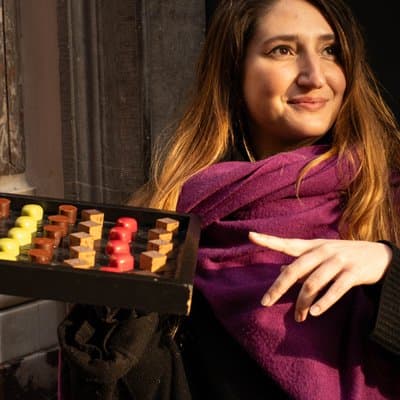
desde 99 €
Ver disponibilidad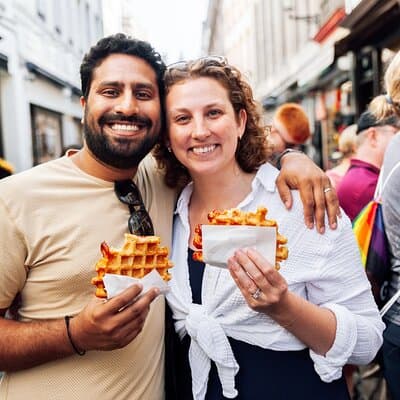
desde 35 €
Ver disponibilidad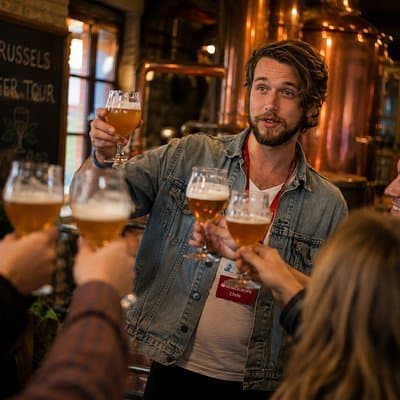
Tours y precios de Viator, una empresa de Tripadvisor. Los precios cambian según las fechas. Podemos recibir una comisión si reservas, sin coste extra para ti.
Brussels' food culture is a hearty blend of French finesse and Flemish comfort, centered around high-quality local produce. It's a city where Michelin-starred dining exists alongside legendary street food, and where beer is considered a key ingredient in cooking, from carbonnade flamande stew to beer-braised rabbit.
Mussels are in season from roughly July to April. Look for the 'Moules de bouchot' label for the best quality.
Always get your frites with a sauce. Mayo is classic, but try the slightly spicy 'Andalouse' or 'Samurai' for a local twist.
Order a 'dégustation' (tasting board) of beers to sample several styles. Many bars offer 3-4 small glasses for a set price.
Visit the flagship stores on the Place du Grand Sablon for the ultimate chocolate experience and free samples. Avoid buying from airport-style shops in the main tourist drags.
Spring sees the city awaken with blooming flowers in the parks and milder temperatures. The famous Royal Greenhouses of Laeken usually open to the public for a few weeks in April/May.
Pros:
Cons:
Warm, long days with average highs around 22°C (72°F). The city is vibrant with outdoor festivals, terrace cafes, and events like the Ommegang historical pageant and the biennial Flower Carpet in the Grand Place (even-numbered years).
Pros:
Cons:
Crisp air and beautiful fall foliage in parks like the Bois de la Cambre. The cultural season is in full swing, and the beer scene feels particularly cozy as the weather cools.
Pros:
Cons:
Cold and often gray, with temperatures around 5°C (41°F). The city transforms with Christmas markets, most notably the Winter Wonders event with an ice rink, light show, and market stalls around the Grand Place.
Pros:
Cons:
Compara precios de trenes, autobuses y vuelos a Brussels
Introduce tu ciudad de salida para ver precios

1 hour by train (frequent direct service from Brussels Central)
The quintessential medieval Flemish city, a UNESCO World Heritage site often called the 'Venice of the North' for its picturesque canals, cobbled lanes, and remarkably preserved Gothic architecture.
30-40 minutes by train (frequent direct service)
A vibrant university city with a stunning medieval core, Ghent offers a perfect mix of history, lively nightlife, and a less touristy atmosphere than Bruges. Its altarpiece, the Adoration of the Mystic Lamb, is a must-see masterpiece.
45 minutes by train (frequent direct service)
Belgium's fashion and diamond capital, a dynamic port city with a rich artistic heritage tied to Baroque master Peter Paul Rubens. It boasts a stunning cathedral, a magnificent railway station, and a cutting-edge fashion district.
Brussels is moderately priced for a Western European capital. While luxury options abound, it's very possible to enjoy the city on a budget, especially by focusing on free attractions, street food, and affordable public transport.
Budget
€50-80 per day for budget travelers (hostel dorm, street food, free sights, public transport)
per day
Mid-Range
€100-180 per day for mid-range (private hotel room, sit-down meals, paid attractions, some taxis)
per day
Luxury
€250+ per day for luxury (boutique hotels, fine dining, private tours, high-end shopping)
per day
A whimsical bookstore and cultural center entirely dedicated to children's and youth literature, with a cafe and regular storytelling events.
It's a magical, quiet escape in the city center that feels like stepping into a storybook, perfect for families or anyone young at heart.
A vast, triumphal arch-dominated park built for Belgium's 50th anniversary, housing the Art & History Museum and Autoworld.
Far less crowded than the central parks, it's perfect for a picnic, a run, or admiring the monumental architecture with stunning city views from the arch's rooftop.
A family-run, traditional lambic brewery in the Anderlecht district, operating since 1900 and open for self-guided tours.
This is a living museum of beer where you can see the spontaneous fermentation process up close and taste uniquely sour Gueuze and Kriek straight from the source.
An opulent, almost palatial town hall in the commune of Saint-Gilles, surrounded by stunning Art Nouveau and eclectic architecture.
It rivals the beauty of the Brussels City Hall but sees a fraction of the visitors. The surrounding streets are an Art Nouveau lover's paradise without the tour groups.
A small, unique museum located in a real, functioning sewer vault near the Porte de Hal, explaining Brussels' underground history and water management.
It's a genuinely unusual and educational experience that offers a literal 'underbelly' perspective of the city, and it's surprisingly not smelly!
Brussels culture is a pragmatic and often self-deprecating blend of French and Flemish influences, with a strong international overlay from the EU and diplomatic communities. It values good food, good beer, and a certain 'art de vivre' without taking itself too seriously, as evidenced by its famous irreverent statue. The city is bilingual (French/Dutch), but English is widely spoken.
Brussels is generally a safe city for tourists. Standard precautions apply: be aware of pickpockets in crowded tourist areas like the Grand Place, on the metro, and at major train stations. Avoid poorly lit areas late at night. The neighborhoods around the North Station (Gare du Nord) can feel sketchy after dark.
No. While the official languages are French and Dutch, English is widely spoken in tourist areas, hotels, restaurants, and by most younger residents. Learning a few basic French pleasantries (bonjour, merci) is appreciated but not necessary for getting by.
Walking is best for the compact historic center. For longer distances, the integrated STIB network of metro, trams, and buses is excellent. Purchase a single 'Jump' ticket (€2.50, valid 1 hour) or a 24-hour pass (€7.50). Taxis are available but expensive; Uber also operates in the city.
Two to three full days is ideal to see the major sights, explore a couple of neighborhoods, and enjoy the food scene at a relaxed pace. With four or five days, you can comfortably take one or two day trips to cities like Bruges or Ghent.
The Brussels Card can be worth it if you plan to visit several paid museums in a short time. It offers free entry to over 40 museums, discounts on attractions and tours, and includes free public transport for the 24, 48, or 72-hour duration. Calculate your planned entries first to see if it saves you money.
Yes, tap water in Brussels is safe and of high quality. It's common and environmentally friendly to refill a water bottle. Many restaurants will serve tap water if you ask for 'une carafe d'eau' (a carafe of water).
A Brussels waffle is rectangular, light, and crispy, made with a yeast-leavened batter. It's typically eaten as a dessert with toppings like whipped cream and fruit. A Liège waffle is oval, denser, and sweeter, made with a brioche-like dough studded with pearl sugar that caramelizes on the grill. It's often eaten plain as a handheld snack.
Brussels is perfect for rainy days. Dive into its world-class museums like the Magritte Museum, the Musical Instruments Museum (MIM), or the Royal Museums of Fine Arts. Explore the covered Galeries Royales Saint-Hubert for shopping, or spend a cozy afternoon sampling beers and chocolate in a traditional estaminet like À la Mort Subite.
Costes diarios habituales para un viajero, de económico a cómodo.
| Económico | Gama media | Cómodo | |
|---|---|---|---|
| Alojamiento (por noche) | 50 € | 120 € | 200 € |
| Comida y bebida (por día) | 18 € | 40 € | 78 € |
| Visitas y actividades (por día) | 10 € | 25 € | 55 € |
| Total por día | 78 € | 185 € | 333 € |
Las estimaciones no incluyen vuelos ni transporte de larga distancia. Compara los costes diarios entre ciudades
Hoteles cerca del centro de Región de Bruselas-Capital, de económicos a lujo. Los precios son tarifas por noche habituales en nuestra última consulta.
 Económico
 Económico
 Gama media
 Gama media
 Superior
 Superior
 Lujo
 Lujo
Los precios de hotel proceden de Traveloka, consultados por última vez el 4 de febrero de 2026, y varían según tus fechas. Podemos recibir una comisión si reservas a través de nuestros enlaces, sin coste adicional para ti.
Conexiones populares en tren, autobús y avión, con tiempos de viaje y tarifas.
Deja que la IA cree el itinerario perfecto para tu viaje a Región de Bruselas-Capital. Solo describe lo que quieres experimentar.
Planificar viaje a Región de Bruselas-Capital