Aspectos destacados de Busan : Grupo pequeño, recogida en el hotel & cápsula Sky
4.91766 opiniones8h
desde 72 €
Ver disponibilidad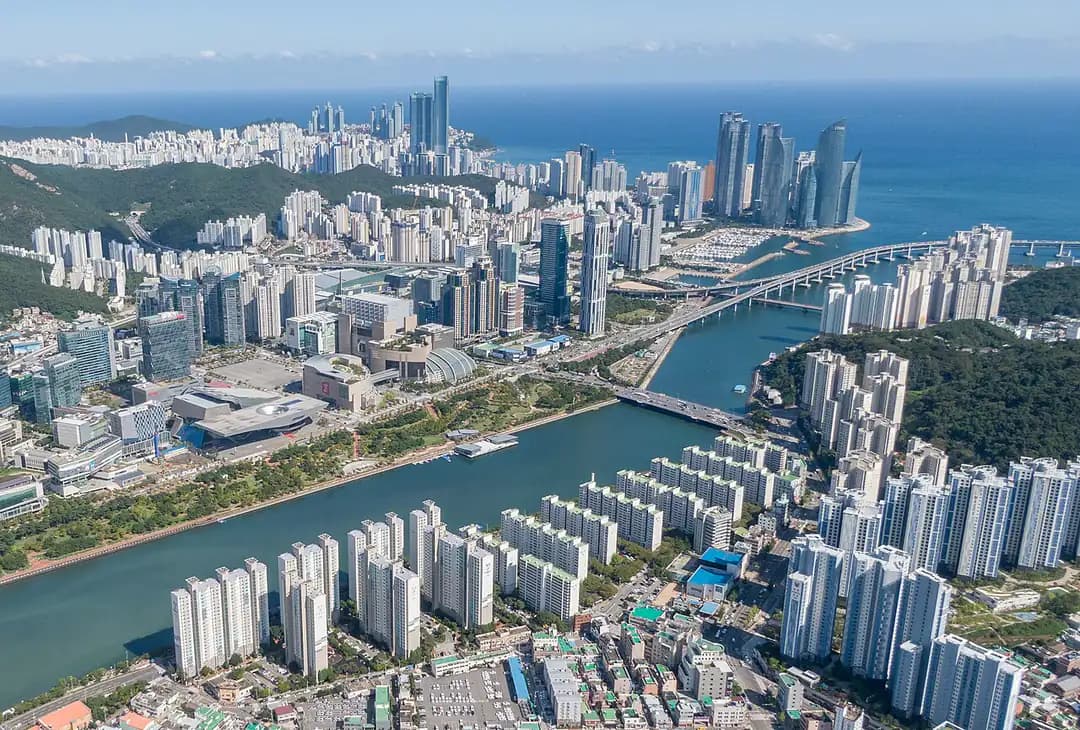
South Korea
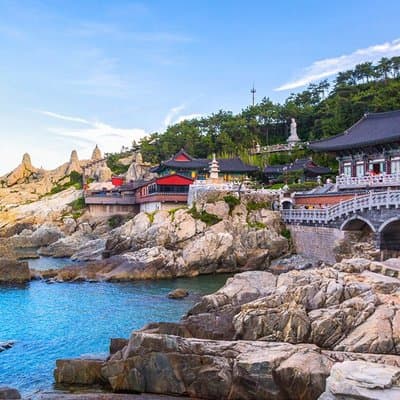
Busan isn't just a smaller Seoul—it's a coastal powerhouse with its own distinct, laid-back soul. Forget the frantic pace of the capital; here, life unfolds between mountain ridges and ocean waves. Your day could start with a predawn auction at the sprawling Jagalchi Fish Market, where octopus tentacles still writhe on ice, and end with a quiet moment at Haedong Yonggungsa Temple, the only major Korean temple built right on the rocky seashore, listening to the crash of waves against ancient pagodas.
The city's topography creates its magic: colorful houses cling to the steep slopes of Gamcheon Culture Village like a cascading waterfall of Lego blocks, while the endless sands of Haeundae Beach host a vibrant, cosmopolitan scene. Busan is a city of contrasts—the spiritual serenity of Beomeosa Temple nestled in Geumjeong Mountain versus the neon-lit energy of Gwangalli Beach's bridge views; the steaming bowls of milmyeon (wheat noodles) in a humble basement eatery versus the global glamour of the Busan International Film Festival. It’s this dynamic blend of deep tradition and modern verve, all framed by the deep blue sea, that makes Busan utterly unforgettable.
For Unparalleled Coastal & Mountain Scenery: Hike the dramatic cliffs of Igidae Coastal Walk for breathtaking views of the Oryukdo Islets, or take the cable car up to Geumjeongsan Fortress. The city is uniquely framed by the sea and mountains, offering vistas like the panoramic sweep from Busan Tower in Yongdusan Park.
For a World-Class Seafood Experience: Dive into the visceral, thrilling atmosphere of Jagalchi Fish Market, Asia's largest, where you can pick a live fish and have it prepared sashimi-style right at a rooftop restaurant. Don't miss the smaller but equally authentic Bupyeong Kkangtong Market for a more local vibe.
For Its Unique Artistic & Cultural Villages: Wander the labyrinthine alleyways of Gamcheon Culture Village, a former hillside slum transformed into a vibrant canvas of murals, sculptures, and quaint cafes. Explore the more residential yet equally photogenic Huinnyeoul Culture Village, with its cliffside views and hanok cafes.
For Iconic Temples in Stunning Settings: Visit Haedong Yonggungsa Temple, a 14th-century marvel uniquely situated on the coast where prayers are offered to the sea. For a mountain retreat, explore the serene Beomeosa Temple, a head temple of Korean Buddhism with stunning architecture and peaceful hiking trails.
For a Dynamic Festival & Film Culture: Experience the global spotlight during the Busan International Film Festival (BIFF) in October, transforming the Haeundae and Centum City areas into a cinephile's paradise. Year-round, explore the Star Street and handprint plaza at BIFF Square in Nampo-dong.
For Relaxed Beach Life & Hot Springs: Soak up the vibrant, festive atmosphere at Haeundae Beach or enjoy the trendy cafes and perfect views of Gwangan Bridge from Gwangalli Beach. Afterwards, rejuvenate at a traditional jjimjilbang (Korean spa) like Hurshimchung or one of the many hot spring resorts in Dongnae.
¿Listo para explorar Busan?
Busan's most famous and cosmopolitan beach district, buzzing with high-rise hotels, upscale shopping at Centum City (home to the world's largest department store), and a lively, international atmosphere. It's the epicenter of beach culture and major events.
Highlights:
Best for:
The historic heart and bustling commercial center of Busan. This area is a dense, energetic mix of traditional markets, modern shopping streets, and crucial cultural landmarks, all set against a backdrop of urban hills.
Highlights:
Best for:
The true downtown and transportation hub, known as the 'center of Busan.' A neon-lit maze of underground shopping centers, endless restaurants, cafes, and nightlife options catering primarily to a young, local crowd.
Highlights:
Best for:
A trendy, slightly more laid-back coastal area than Haeundae, famous for its stunning views of the diamond-lit Gwangan Bridge. The area is packed with chic cafes, waterfront bars, and the popular Millak Waterfront Park for raw fish picnics.
Highlights:
Best for:
Los tours y entradas que más reservan los viajeros, con valoraciones y opiniones de Viator.
desde 72 €
Ver disponibilidad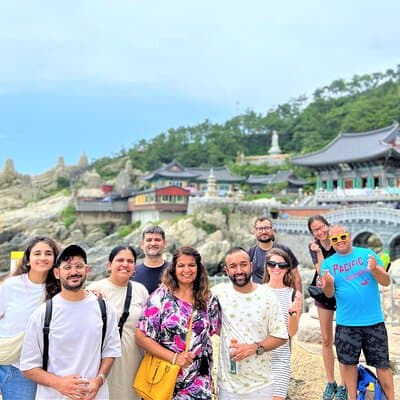
Tours y precios de Viator, una empresa de Tripadvisor. Los precios cambian según las fechas. Podemos recibir una comisión si reservas, sin coste extra para ti.
Busan's food identity is irrevocably tied to the sea, offering some of Korea's freshest and most adventurous seafood. Beyond the catch of the day, the city has developed its own beloved specialties, like pork soup and wheat noodles, creating a hearty, flavorful, and distinct culinary scene that stands apart from Seoul's.
At markets, don't be afraid to point and negotiate. For a set meal at a market restaurant, 'hoemuchim' (assorted raw fish platter) is a great choice for groups.
For dwaeji gukbap, add shrimp sauce ('saeujeot') and kimchi to the soup to taste. For milmyeon, you can ask for 'mul' (broth) or 'bibim' (spicy mixed) style.
BIFF Square is famous for its 'ssiat hotteok', a Busan variant stuffed with seeds and nuts. Be prepared to queue at the original stall.
Busan has a thriving cafe culture, especially with ocean views. Look for 'rooptu' (rooftop) cafes in areas like Gwangalli and Haeundae for stunning sunset drinks.
Spring (March-May) is arguably the best time to visit. The city shakes off the winter chill, with comfortable temperatures and the famous cherry blossoms blooming spectacularly in late March/early April, especially along Dalmaji-gil Road.
Pros:
Cons:
Summer (June-August) is hot, humid, and vibrant, transforming Busan into a full-blown beach resort. This is festival season, but also the rainy season ('jangma') in July, which brings heavy, persistent downpours.
Pros:
Cons:
Autumn (September-November) rivals spring with crisp, sunny days and stunning fall foliage in the mountains. The prestigious Busan International Film Festival (BIFF) in October draws a global crowd.
Pros:
Cons:
Winter (December-February) is cold and windy but generally milder than Seoul, with little snow. It's the low season, offering lower prices and a more local experience, centered around indoor spas and steaming hot soups.
Pros:
Cons:
Compara precios de trenes, autobuses y vuelos a Busan
Introduce tu ciudad de salida para ver precios

1.5 hours by intercity bus
A beautiful coastal city known as the 'Naples of Korea' for its stunning harbor dotted with islands. It's a paradise for fresh seafood, cable car rides, and exploring a more traditional, artistic maritime culture.
1 hour by KTX train
The ancient capital of the Silla Kingdom, offering a profound journey through Korea's history. It's an open-air museum filled with royal tombs, serene temples, and historic ruins set in a picturesque landscape.
1 hour by car/bus (via Busan-Geoje Bridge)
Korea's second-largest island, known for its dramatic coastal scenery, shipbuilding history, and beautiful beaches. It offers a mix of natural beauty and unique historical sites related to the Korean War.
Busan is generally more affordable than Seoul, especially for accommodation and seafood. While you can travel on a tight budget using markets and public transport, luxury options are plentiful in areas like Haeundae.
Budget
€35-55 per day (hostel dorm, street food/market meals, public transport only)
per day
Mid-Range
€80-130 per day (private hotel/guesthouse, restaurant meals, some taxis, paid attractions)
per day
Luxury
€200+ per day (beachfront hotel, fine dining, private tours, premium experiences)
per day
A quieter, more residential alternative to Gamcheon, this cliffside village in Yeongdo-gu offers stunning views of the harbor, narrow alleys, and charming hanok-style cafes.
It feels more authentic and lived-in than Gamcheon, with fewer crowds and breathtaking, unobstructed views of the Busan Port and Namhang Bridge from its coastal walkway.
A spectacular 4.7km hiking trail along the rocky coastline of the Igidae Park, offering some of the most dramatic ocean views in Busan.
It provides a challenging but rewarding escape into nature with postcard-perfect vistas of the Oryukdo Islets, Gwangan Bridge, and the city skyline, far from the urban bustle.
A museum complex in Dong-gu detailing Busan's crucial role as the provisional capital during the Korean War.
It offers a profound and often overlooked chapter of modern Korean history, providing essential context to understand the city's rapid development and resilient spirit.
A winding, tree-lined road in the hills above Haeundae, famous for its art galleries, sophisticated cafes, and cherry blossoms.
It's a peaceful, elegant retreat from the beach crowds below, offering gorgeous moon-viewing spots and a slice of Busan's artistic high culture.
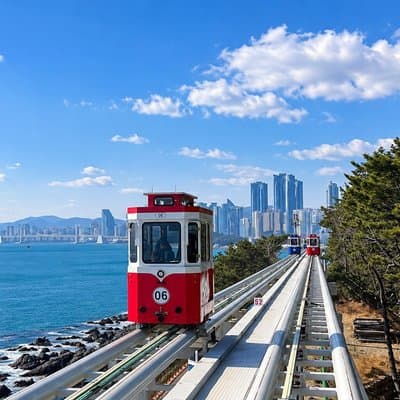
A coastal park connected to the revived Songdo Beach by a stunning glass-bottomed cable car that soars over the ocean.
The cable car provides a unique, thrilling perspective of the coastline, and the park offers great hiking trails and views without the intense crowds of Haeundae.
Busan's culture is defined by its port city history—more open, direct, and relaxed than Seoul. The maritime influence is everywhere, from the reverence for fresh seafood to festivals praying for safe voyages. There's a strong sense of community resilience, shaped by its history as a wartime refuge.
Yes, Busan is considered very safe, even at night. Violent crime is rare. Standard precautions apply, like watching your belongings in crowded markets. The subway system is safe, clean, and well-lit for getting around.
Not at all. In tourist areas like Haeundae, Nampo-dong, and major subway stations, you'll find some English signage and staff who speak basic English. Learning a few key phrases is appreciated, but pointing, translation apps, and the kindness of locals will get you far.
The subway is best for traveling between major districts. Use local buses for coastal routes and harder-to-reach temples. For convenience, get a T-money card. Taxis are affordable for short trips within a neighborhood, especially if in a group.
Generally, no. Accommodation, especially mid-range and luxury options by the beach, can be pricey in peak season, but overall, food, transport, and activities tend to be slightly more affordable than in the capital.
Most hotels, department stores, and restaurants in tourist areas accept cards. However, it's essential to carry some cash (Korean Won) for traditional markets, street food stalls, small family-run eateries, and topping up your T-money card.
Dress modestly. Cover your shoulders and knees. At temples like Haedong Yonggungsa and Beomeosa, you may be asked to remove your shoes before entering certain halls, so wear shoes that are easy to slip on and off.
A minimum of 3 full days is recommended to cover the highlights: one for the beaches and Haeundae, one for the markets and Gamcheon Village, and one for a temple and coastal walk. With 4-5 days, you can add a day trip and explore more neighborhoods.
South Korea uses 220V/60Hz. The plug type is Type C (European two-round-pin) and Type F (Schuko). Most modern hotels have universal outlets, but bringing a travel adapter is advisable for Type A/B plugs from North America.
Costes diarios habituales para un viajero, según los precios medios de South Korea.
| Económico | Gama media | Cómodo | |
|---|---|---|---|
| Alojamiento (por noche) | 32 € | 75 € | 135 € |
| Comida y bebida (por día) | 13 € | 28 € | 55 € |
| Visitas y actividades (por día) | 7 € | 18 € | 40 € |
| Total por día | 52 € | 121 € | 230 € |
Las estimaciones no incluyen vuelos ni transporte de larga distancia. Compara los costes diarios entre ciudades
Hoteles cerca del centro de Busan, de económicos a lujo. Los precios son tarifas por noche habituales en nuestra última consulta.
 Económico
 Económico
 Gama media
 Gama media
 Superior
 Superior
 Lujo
Los precios de hotel proceden de Traveloka, consultados por última vez el 4 de febrero de 2026, y varían según tus fechas. Podemos recibir una comisión si reservas a través de nuestros enlaces, sin coste adicional para ti.
Deja que la IA cree el itinerario perfecto para tu viaje a Busan. Solo describe lo que quieres experimentar.
Planificar viaje a Busan