Tour privado de Chefchaouen con guía local | Blue City Walk
5.0261 opiniones2h
desde 35 €
Ver disponibilidad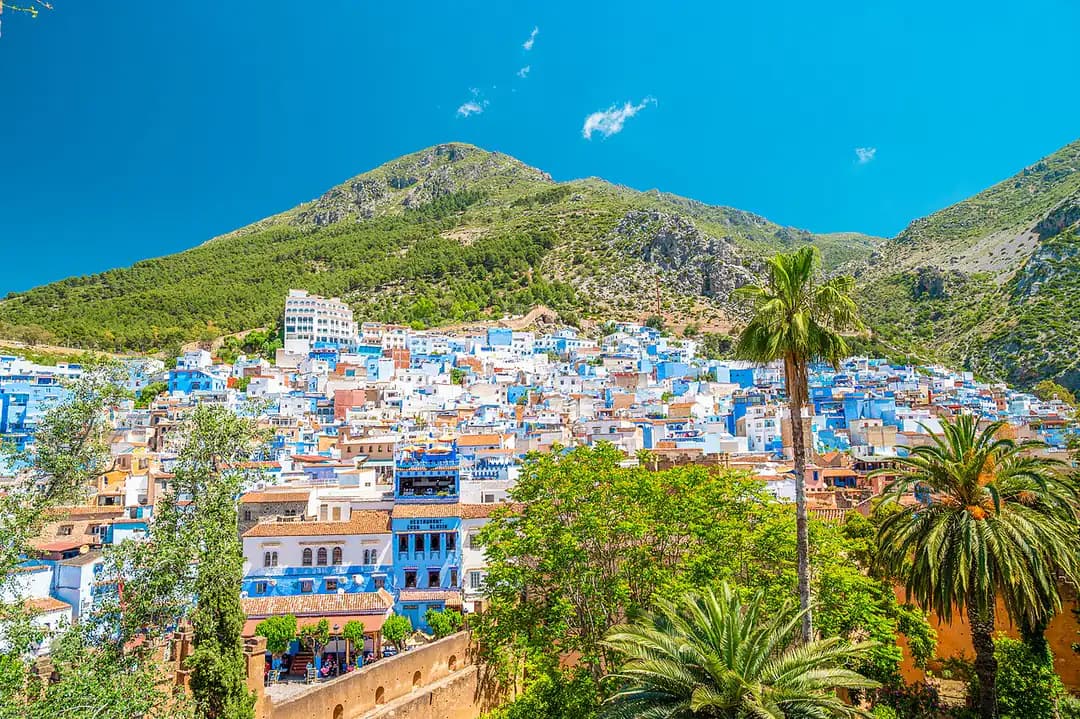
Morocco
Nestled in the Rif Mountains, Chefchaouen isn't just another Moroccan medina—it's a living canvas of indigo, cobalt, and sky blue. The tradition of painting buildings blue, believed to have been introduced by Jewish refugees in the 1930s, creates an otherworldly atmosphere where every cobblestone alleyway feels like stepping into a dream. Unlike the sensory overload of Marrakech or Fes, Chefchaouen offers a serene, almost meditative pace, where the scent of cedar wood mingles with mint tea and the sound of trickling water from the Ras El Ma spring.
Beyond the iconic blue walls, the town reveals layers of history at the 15th-century Kasbah Museum and the bustling heart of Plaza Uta el-Hammam, where locals gather at cafes under the watchful gaze of the Grand Mosque's octagonal minaret. This is a place for slow travel: hiking to the Spanish Mosque at sunset for panoramic views, tasting fresh goat cheese from nearby farms, and discovering handwoven wool rugs in artisan workshops tucked away from the main tourist paths. Chefchaouen's magic lies in its ability to feel both timeless and profoundly photogenic, a mountain retreat that rewards those who wander beyond the first blue doorway.
The Blue Medina - An immersive visual experience where every corner offers photographic magic, from the gradient blues of Derb El Hammar Street to the iconic staircase of Rue El Kharrazin, creating endless opportunities for unique shots.
Mountain Hiking Adventures - Access to the Rif Mountains with trails ranging from gentle walks to the Spanish Mosque to challenging day hikes through Talassemtane National Park to see the God's Bridge natural rock arch.
Authentic Artisan Culture - Discover traditional craftsmanship in family-run workshops producing wool blankets, leather goods, and pottery using techniques passed down through generations in the Medina's quieter quarters.
Culinary Specialties - Taste unique regional products like jben (fresh goat cheese), honey from mountain apiaries, and savory tagines infused with local herbs unavailable elsewhere in Morocco.
Historical Depth - Explore the 15th-century Kasbah with its ethnographic museum, prison cells, and lush gardens, plus the distinctive octagonal minaret of the Grand Mosque reflecting Andalusian influence.
Relaxed Atmosphere - Experience Morocco without the intense hustle found in larger cities, with friendly shopkeepers, peaceful tea houses, and evenings spent in Plaza Uta el-Hammam watching local life unfold.
¿Listo para explorar Xauen?
The historic heart of Chefchaouen, a labyrinth of winding alleys where every building is washed in varying shades of blue. This pedestrian-only zone feels like walking through a living painting, with artisan shops, small guesthouses, and hidden courtyards around every corner.
Highlights:
Best for:
The northeastern gateway to the Medina, centered around the natural spring that supplies the town with water. This area is noticeably cooler and greener, with water mills, laundry areas, and cafes overlooking the flowing streams and waterfalls.
Highlights:
Best for:
The bustling commercial zone just outside the Medina walls, where locals shop for daily necessities. This area offers more modern amenities while maintaining traditional character, with hardware stores, bakeries, and transportation hubs.
Highlights:
Best for:
The hillside area surrounding the abandoned Spanish Mosque, offering the town's best panoramic views. This peaceful residential district features newer construction with traditional architecture and easy access to hiking trails.
Highlights:
Best for:
Los tours y entradas que más reservan los viajeros, con valoraciones y opiniones de Viator.
desde 35 €
Ver disponibilidad
desde 72 €
Ver disponibilidad
Tours y precios de Viator, una empresa de Tripadvisor. Los precios cambian según las fechas. Podemos recibir una comisión si reservas, sin coste extra para ti.
Chefchaouen's cuisine reflects its mountain setting with hearty Berber influences, featuring locally sourced goat cheese, wild honey, and herbs from the Rif Mountains. Dining here is simpler than in Morocco's imperial cities but offers unique regional specialties in family-run establishments.
Traditional restaurants often don't display menus - ask for the 'plat du jour' for the freshest, most authentic meal
Visit the Monday market for the best selection of local cheeses, honey, and olives directly from producers
Street food is safest in the morning when turnover is high and ingredients are freshest
Book terrace tables in advance for sunset dining, especially at restaurants with Medina views
Spring brings mild temperatures (15-25°C) and blooming wildflowers in the surrounding mountains. The Medina is vibrant but not overcrowded, perfect for photography and hiking.
Pros:
Cons:
Summer sees warmer days (up to 28°C) but remains cooler than Moroccan lowlands. Mornings are pleasant for exploration, while afternoons can feel warm in the sun-exposed Medina.
Pros:
Cons:
Autumn offers similar conditions to spring with crisp air and clear skies. This is peak tourist season with optimal conditions for all activities, though popular spots get crowded.
Pros:
Cons:
Winter brings cooler temperatures (5-15°C) and occasional rain, with possible snow dusting the surrounding mountain peaks. The Medina is quiet and atmospheric.
Pros:
Cons:
Compara precios de trenes, autobuses y vuelos a Chefchaouen
Introduce tu ciudad de salida para ver precios

1-2 hours by shared taxi or organized tour
A protected biosphere reserve in the Rif Mountains featuring unique fir forests, dramatic gorges, and the famous natural rock formation known as God's Bridge. Perfect for serious hikers and nature enthusiasts.
1.5 hours by shared taxi or bus
A UNESCO World Heritage city known as Morocco's 'White Dove' with strong Andalusian influences. Offers a contrast to Chefchaouen with its white buildings and different architectural heritage.
1.5 hours by shared taxi
Where the Rif Mountains meet the Mediterranean Sea, offering a complete change of scenery from the blue city. Black sand beaches and fishing villages provide coastal relaxation.
Chefchaouen is moderately priced compared to other Moroccan destinations. While more expensive than rural areas, it remains affordable by European/North American standards, with significant savings possible by eating locally and avoiding peak season.
Budget
€25-40 for budget travelers (hostels, street food, walking)
per day
Mid-Range
€60-100 for mid-range (riad hotels, restaurant meals, some tours)
per day
Luxury
€150+ for luxury (boutique hotels, private guides, fine dining)
per day
A series of traditional grain mills powered by the natural springs, still occasionally used by local families.
Most tourists stop at the waterfall but miss these functioning historical structures showing traditional Rif Mountain technology.
A hillside Muslim cemetery offering panoramic Medina views without the crowds of the Spanish Mosque.
Respectful visitors find incredible photography angles here, especially at golden hour, with almost no other tourists.
A cultural center hosting rotating exhibitions of Moroccan and international artists in a restored traditional house.
Offers cultural depth beyond shopping and photography, with opportunities to meet working artists.
A traditional public bath used primarily by locals rather than tourists.
Authentic cultural experience at 1/4 the price of tourist hammams, with separate hours for men and women.
Weekly market where Rif Mountain farmers trade goats, sheep, and produce outside the Medina walls.
Fascinating glimpse into rural life completely untouched by tourism, operating as it has for generations.
Chefchaouen blends Berber mountain traditions with Andalusian influences from Spanish refugees. The community is conservative but welcoming to respectful visitors. Islam shapes daily life, with calls to prayer echoing through the blue streets five times daily.
The tradition likely began with Jewish refugees in the 1930s who used blue (tekhelet) as a spiritual color representing the sky and heaven. Muslims continued the practice, with some believing blue repels mosquitoes or keeps houses cool. Today, residents repaint annually, maintaining the iconic look.
Yes, Chefchaouen is generally safe with low crime rates. However, dress conservatively, avoid walking alone in empty alleys at night, and consider staying in a reputable riad rather than isolated accommodation. Harassment is less common than in larger Moroccan cities but can occur.
Alcohol is rarely available due to religious and cultural norms. Some higher-end hotels may serve it discreetly to guests, but don't expect bars or public drinking. This contributes to the town's peaceful atmosphere compared to other tourist destinations.
2-3 days is ideal. Spend one day exploring the Medina and Kasbah, another hiking to the Spanish Mosque or nearby trails, and a third visiting Ras El Ma or taking a day trip. The town's relaxed pace rewards slower exploration.
Not necessary - the Medina is small enough to explore independently. However, a local guide (200-300 MAD for 2-3 hours) can provide historical context, help with photography spots, and introduce you to authentic artisan workshops you might otherwise miss.
CTM or Supratours buses from Tangier (2.5 hours), Fes (4 hours), or Casablanca (6 hours) are most reliable. Shared grand taxis are faster but less comfortable. Private transfers are expensive but convenient for groups. There's no train station in Chefchaouen.
Limited acceptance - bring cash (Moroccan Dirhams). Some hotels and higher-end restaurants accept cards, but most shops, cafes, and taxis require cash. ATMs are available near Bab El Ain and Plaza Uta el-Hammam.
Unfortunately no - the Medina's steep, uneven steps and narrow alleys make wheelchair access impossible. Some hotels outside the Medina walls may have better access, but the blue city itself presents significant mobility challenges.
Costes diarios habituales para un viajero, según los precios medios de Morocco.
| Económico | Gama media | Cómodo | |
|---|---|---|---|
| Alojamiento (por noche) | 22 € | 55 € | 120 € |
| Comida y bebida (por día) | 8 € | 18 € | 38 € |
| Visitas y actividades (por día) | 5 € | 15 € | 35 € |
| Total por día | 35 € | 88 € | 193 € |
Las estimaciones no incluyen vuelos ni transporte de larga distancia. Compara los costes diarios entre ciudades
Hoteles cerca del centro de Xauen, de económicos a lujo. Los precios son tarifas por noche habituales en nuestra última consulta.
 Económico
 Gama media
 Gama media
 Superior
 Superior
 Lujo
Los precios de hotel proceden de Traveloka, consultados por última vez el 4 de febrero de 2026, y varían según tus fechas. Podemos recibir una comisión si reservas a través de nuestros enlaces, sin coste adicional para ti.
Deja que la IA cree el itinerario perfecto para tu viaje a Xauen. Solo describe lo que quieres experimentar.
Planificar viaje a Xauen