
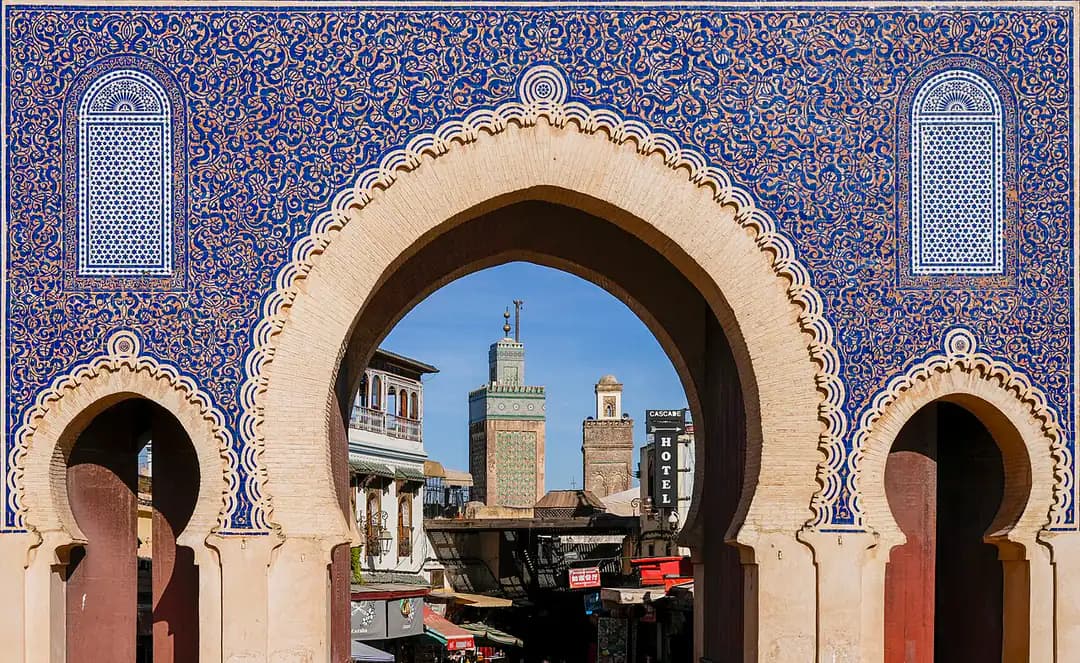
Discover Fez
Fes isn't just a city; it's a living, breathing medieval manuscript. As you step through the Bab Bou Jeloud gate into Fes el-Bali, the world's largest car-free urban area, you're transported into a 9th-century labyrinth where donkeys are the primary transport and the scent of cedarwood, spices, and tanned leather guides your way. This is the cultural and spiritual heart of Morocco, home to Al-Qarawiyyin, the world's oldest continuously operating university founded in 859 AD by a woman, Fatima al-Fihri.
Beyond the iconic Chouara Tannery vats, the true magic lies in getting lost in the 9,400 alleyways of the medina, a UNESCO World Heritage site. Discover hidden fondouks (caravanserais) where artisans hammer intricate zellij tilework, listen to the call to prayer echo from a thousand minarets, and sip mint tea on a rooftop overlooking a sea of terracotta rooftops. Fes offers an authenticity rarely found in modern travel—a place where history isn't preserved behind glass but is woven into the daily fabric of life.
Why Visit Fez?
To navigate the world's most complex medieval labyrinth: Fes el-Bali medina is a 1,200-year-old puzzle of over 9,000 alleys, home to hidden madrasas like Bou Inania, ancient water clocks, and the iconic blue gate of Bab Bou Jeloud.
To witness ancient craftsmanship in action: From the pungent, multi-colored vats of the Chouara Tannery to the hammering of copper in the Seffarine Square and the delicate painting of ceramics in the Nejjarine Quarter, Fes is a living museum of artisan traditions.
To study at the intellectual heart of the Islamic world: Visit the Al-Qarawiyyin University and Library, founded in 859 AD, which houses priceless ancient manuscripts and set the stage for centuries of scholarly exchange.
To experience profound spiritual heritage: Discover the serene beauty of the Zaouia of Moulay Idriss II, the city's patron saint, and the intricate stucco and cedar carvings of the Attarine Madrasa, masterpieces of Marinid architecture.
To savor Morocco's most authentic culinary traditions: Feast on hand-rolled pastilla (pigeon pie) in the medina, sample camel meat tagine from a family-run restaurant, and taste the city's unique salted, fermented butter called 'smen'.
To step into a time capsule of Moroccan royalty: Explore the opulent 19th-century Dar Batha Museum with its Hispano-Moorish architecture and collection of traditional arts, and the sprawling, restored Royal Palace with its stunning golden doors.
Fez es Conocida por
¿Listo para explorar Fez?
Fez Neighborhoods
Fes el-Bali (The Old Medina)
The historic, walled heart of the city and a UNESCO World Heritage site. This dense, labyrinthine quarter is a sensory overload of sounds, smells, and sights, where life continues much as it has for centuries. It's the world's largest contiguous car-free urban area.
Highlights:
Best for:
Fes el-Jdid (The New Medina)
Founded in the 13th century by the Marinid dynasty, this 'new' city is home to the vast Royal Palace (Dar el-Makhzen) and the historic Mellah (Jewish Quarter). It feels more spacious and organized than Fes el-Bali, with wider streets and a palpable royal presence.
Highlights:
Best for:
Ville Nouvelle (The New City)
Built by the French during the Protectorate era, this modern district offers a stark contrast to the medinas. Characterized by wide boulevards, art deco architecture, cafes, and contemporary shops, it provides a glimpse into 20th-century Fes.
Highlights:
Best for:
Andalusian Quarter (Foundouk el-Andalous)
A distinct, often quieter district within Fes el-Bali, founded by Muslim refugees from Andalusia in the 9th century. Known for its elegant architecture, the beautiful Al-Andalus Mosque, and a concentration of artisan workshops specializing in fine embroidery and textiles.
Highlights:
Best for:
Principales Atracciones
Local Tips & Insider Knowledge
- •Hire an official, licensed guide for your first medina exploration. The maze is notoriously disorienting, and a good guide provides context and navigates you to key sights efficiently.
- •Visit the Chouara Tannery early in the morning when the dye pits are most vibrant and the smell is less intense. Vendors will offer mint leaves to hold under your nose.
- •For the best panoramic views of the medina, head to the Merenid Tombs on the hillside at sunset. The view of thousands of satellite dishes and minarets is unforgettable.
- •Learn a few key directional phrases in Arabic or French. Asking 'Where is Bab Bou Jeloud?' ('Fin Bab Bou Jeloud?') can help you reorient if lost.
- •Carry small change (coins and 10-20 MAD notes) for small purchases, tips, and using public bathrooms, which often have a 2-5 MAD fee.
- •Dress conservatively, especially in the medina. Cover shoulders and knees to show respect for local customs and to avoid unwanted attention.
- •Don't be afraid to bargain in the souks, but do so respectfully. Start at about 50-60% of the asking price and negotiate with a smile.
- •For a unique experience, visit a local hammam (public bathhouse). The ones in the medina are authentic and inexpensive, but know the etiquette or go with a guide.
- •Eat where the locals eat. If a tiny restaurant in the medina is packed with Fassis, the food is likely excellent and authentic.
- •Be wary of 'helpful' strangers who offer to guide you for free—they will almost always expect payment at the end. A polite but firm 'No, thank you' ('La, shukran') usually works.
Fez Food Scene
Fassi cuisine is considered the most refined and sophisticated in Morocco, with centuries-old recipes passed down through generations. Dining is a central social ritual, characterized by complex spice blends, slow-cooked tagines, and sweet-and-savory flavor combinations unique to the city.
Must-Try Dishes
Traditional & Family-Run
- • Restaurant Dar Hatim (for Mechoui and Tagines)
- • Cafe Clock (for Camel Burger & cultural events)
- • Restaurant Palais La Medina (for fine dining in a restored palace)
Many of the best traditional restaurants are unmarked doors in the medina. Ask your riad host for their personal recommendation.
Street Food & Markets
- • Grilled meats & merguez at Bab Bou Jeloud stalls
- • Fresh sfenj from carts near the tanneries
- • Steamed snails (Babbouche) from the evening market near Bab Rcif
Look for vendors with high turnover and locals lining up. Drink bottled water with street food.
Cafe & Tea Culture
- • Mint tea at Cafe Nejjarine overlooking the square
- • Traditional breakfast at Cafe La Noria
- • Coffee and people-watching on Avenue Hassan II in Ville Nouvelle
Mint tea is poured from a height to create foam. It's polite to accept at least one glass if offered.
Sweets & Patisserie
- • Briouats (filled pastry triangles) from Patisserie Bennis Habous
- • Kaab el Ghazal (Gazelle Horns) from any medina bakery
- • Fresh fruit and nuts from the Marché Central
The best traditional sweets are often found in unassuming local bakeries, not fancy patisseries.
Popular Entre
Best Time to Visit Fez
Spring
Spring (March to May) is arguably the perfect time to visit. The weather is mild and sunny, with blooming flowers in the gardens and comfortable temperatures for exploring the medina on foot.
Pros:
- + Pleasant temperatures (15-25°C)
- + Landscape is green and blooming
- + Ideal for long days of sightseeing
Cons:
- - Can be busy during Easter holidays
- - Occasional rain showers
Summer
Summer (June to August) is hot and dry, with intense sun and temperatures often soaring above 35°C. The medina can feel stifling, but it's a good time for deals on accommodation.
Pros:
- + Long daylight hours
- + Lower hotel prices
- + Vibrant evening street life
Cons:
- - Extreme heat, especially in the medina
- - Strong sun requires serious protection
- - Not ideal for extensive walking tours
Autumn
Autumn (September to November) mirrors spring with warm, comfortable days and cooler evenings. The summer heat dissipates, and the light is beautiful for photography.
Pros:
- + Excellent weather (20-28°C)
- + Harvest season for local produce
- + Post-summer lull in tourism
Cons:
- - Temperatures can drop sharply in late November
- - Days get shorter
Winter
Winter (December to February) is cool and can be rainy, with temperatures dropping to around 5-12°C. The Atlas Mountains nearby may have snow. It's the low season for tourists.
Pros:
- + Fewest crowds
- + Atmospheric, moody skies for photos
- + Great for cultural immersion without the heat
Cons:
- - Chilly, damp weather
- - Some riads can be cold at night
- - Shorter days
Encuentra transporte barato a Fes
Compara precios de trenes, autobuses y vuelos a Fes
Introduce tu ciudad de salida para ver precios

Reserva Actividades en Fes
Salta la cola con tours y atracciones reservadas
Day Trips from Fez
Meknes
1 hour by train or grand taxi
The former imperial capital of Sultan Moulay Ismail, Meknes is a more relaxed and spacious UNESCO World Heritage city. Explore monumental gates, vast granaries, and the impressive Royal Stables.
The Roman Ruins of Volubilis
1.5 hours by grand taxi or combined tour with Meknes
One of the Roman Empire's most remote outposts, these remarkably preserved ruins feature stunning mosaics still in situ. It's a fascinating contrast to the Islamic history of Fes.
Ifrane & the Middle Atlas Mountains
1 hour by car or grand taxi
Escape to the 'Switzerland of Morocco.' Ifrane's alpine architecture and cedar forests are a world away from Fes. Spot Barbary macaques in the nearby Azrou Forest.
Fez Budget Guide
Fes is generally affordable for travelers, especially compared to Western Europe. Costs are lowest in the medina and rise in the Ville Nouvelle and for luxury riads. Haggling in the souks is expected.
Budget
€30-50 / $35-55 for budget travelers (dorm bed, street food, public transport)
per day
Mid-Range
€70-120 / $75-130 for mid-range (private riad room, restaurant meals, guided tours, taxis)
per day
Luxury
€200+ / $220+ for luxury (5-star palace hotel, fine dining, private driver, premium shopping)
per day
Money-Saving Tips
- •Stay in a traditional riad in the medina for the best value and experience.
- •Eat 'menu du jour' lunches at local restaurants for a complete, inexpensive meal.
- •Use petit taxis for short trips; always insist they use the meter ('compteur').
- •Bargain for everything in the souks except for fixed-price food items.
- •Carry cash (Moroccan Dirhams) as many smaller medina shops and cafes don't accept cards.
Fez Hidden Gems
The Medersa el-Attarine
A 14th-century theological college located deep in the spice and perfume souk, often overshadowed by the larger Bou Inania Madrasa.
Its interior is a masterpiece of Marinid architecture, with some of the most exquisite and finely detailed stucco carvings, zellij tilework, and carved cedar wood in the entire city, and it's usually much quieter.
The Belghazi Museum
A private museum housed in a beautiful 19th-century palace in the medina, showcasing a vast collection of Moroccan artifacts.
It feels like exploring a wealthy Fassi family's home, with rooms dedicated to jewelry, textiles, weapons, and manuscripts. It's more intimate and less crowded than Dar Batha.
The Pottery Hill (Colline des Potiers) in Ain Nokbi
The actual workshops and kilns where the famous Fes blue pottery is made, located just outside the medina walls.
You can watch the entire process—from throwing clay to hand-painting intricate patterns—without the sales pressure of the showrooms in the medina. It's the authentic behind-the-scenes view.
Jnan Sbil Gardens
A historic 19th-century Andalusian-style garden located just outside the walls of Fes el-Bali, near Bab Bou Jeloud.
It's a serene, green oasis of fountains, exotic plants, and shaded paths—a perfect, peaceful escape from the sensory intensity of the medina, frequented by locals.
The Mellah Cemetery & Habarim Synagogue
The historic Jewish cemetery and a small, recently restored synagogue in the Mellah (Jewish Quarter) of Fes el-Jdid.
It offers a poignant and often overlooked chapter of Fes's history. The cemetery's white tombs on a hillside provide a unique and quiet vantage point overlooking the quarter.
Fez Culture & Customs
Fassi culture is deeply traditional, proud, and intellectual, shaped by over twelve centuries of history as a religious and scholarly capital. Family, hospitality, and respect for craft and learning are paramount. Daily life is intertwined with Islamic rituals and a strong sense of community.
Cultural Etiquette
- •Always greet people with 'Salam alaykum' (Peace be upon you). Handshakes are common, but some conservative men may not shake hands with women.
- •Use your right hand for eating, shaking hands, and giving/receiving items, as the left is considered unclean.
- •Dress modestly, covering shoulders and knees, especially when visiting religious sites (mosques are generally closed to non-Muslims, but you can admire from doors).
- •When invited to a home, it's polite to bring a small gift like pastries, fruit, or sweets. Remove your shoes before entering.
- •Be respectful when taking photos of people. Always ask for permission first ('mumkin sura?'). Never photograph military or police installations.
Useful Phrases
Frequently Asked Questions about Fez
Is Fes safe for tourists?
Yes, Fes is generally very safe for tourists. Violent crime is rare. The main concerns are petty scams and persistent vendors in the medina. Exercise normal precautions: be aware of your surroundings, don't flash valuables, and be firm but polite with unwanted guides.
Do I need a guide for the Fes medina?
For a first visit, a licensed guide is highly recommended. The medina is an incredibly complex maze with over 9,000 alleys. A good guide provides historical context, navigates efficiently, and helps you interact with artisans. You can hire one officially at tourist offices or through your riad.
Can non-Muslims enter the Al-Qarawiyyin Mosque?
No, non-Muslims are not permitted to enter the prayer hall of the Al-Qarawiyyin Mosque or most active mosques in Morocco. However, you can admire the stunning exterior and the famous gate, and you may be able to peek into the courtyard from the entrance.
What should I wear in Fes?
Dress modestly to respect local culture. For both men and women, this means covering shoulders and knees. Loose, lightweight cotton or linen clothing is ideal for the heat and culture. Women may attract less attention with a scarf to cover hair in very conservative areas.
How do I handle the smell at the tanneries?
The smell from the natural dye and tanning process is strong. Vendors at surrounding leather shops will offer you fresh mint leaves to hold under your nose. Visiting in the morning when the pits are freshly stirred can mean a stronger smell, but also more vibrant colors.
Is it okay to drink tap water in Fes?
It is not recommended for tourists to drink tap water in Fes. Stick to bottled water, which is inexpensive and widely available. Ensure the seal is intact. Use bottled water for brushing your teeth as well to avoid stomach issues.
What's the best way to get around the city?
Within the medina, you walk. For longer distances between districts (e.g., medina to Ville Nouvelle), use the ubiquitous blue petit taxis. Always ensure the driver turns on the meter ('compteur') at the start of your journey to avoid overcharging.
How many days do I need in Fes?
A minimum of two full days is essential to scratch the surface: one for a guided tour of the main medina highlights and another to explore deeper, visit museums, and perhaps a day trip. Three to four days allows for a more immersive and relaxed experience.
Fez Itinerarios
Guías de Viaje

Comparar con Otras Ciudades
¿Cuánto cuesta un viaje a Fez?
Costes diarios habituales para un viajero, según los precios medios de Morocco.
| Económico | Gama media | Cómodo | |
|---|---|---|---|
| Alojamiento (por noche) | 22 € | 55 € | 120 € |
| Comida y bebida (por día) | 8 € | 18 € | 38 € |
| Visitas y actividades (por día) | 5 € | 15 € | 35 € |
| Total por día | 35 € | 88 € | 193 € |
Las estimaciones no incluyen vuelos ni transporte de larga distancia. Compara los costes diarios entre ciudades
Dónde alojarse en Fez
Hoteles cerca del centro de Fez, de económicos a lujo. Los precios son tarifas por noche habituales en nuestra última consulta.
 Económico
 Gama media
 Gama media
 Superior
 Superior
 Lujo
 Lujo
Los precios de hotel proceden de Traveloka, consultados por última vez el 4 de febrero de 2026, y varían según tus fechas. Podemos recibir una comisión si reservas a través de nuestros enlaces, sin coste adicional para ti.
Cómo llegar y salir de Fez
Conexiones populares en tren, autobús y avión, con tiempos de viaje y tarifas.
A Fez
Planifica tu aventura en Fez
Deja que la IA cree el itinerario perfecto para tu viaje a Fez. Solo describe lo que quieres experimentar.
Planificar viaje a Fez