
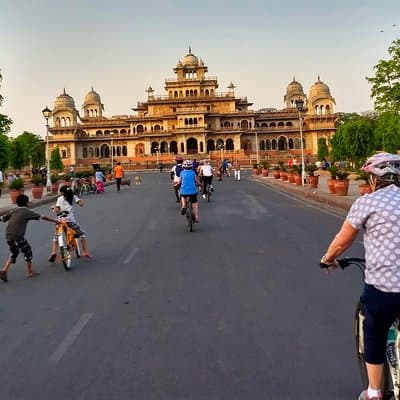
Tour de 3 horas por la mañana en bicicleta por Jaipur
5.01440 opiniones3h 10m
desde 29 €
Ver disponibilidad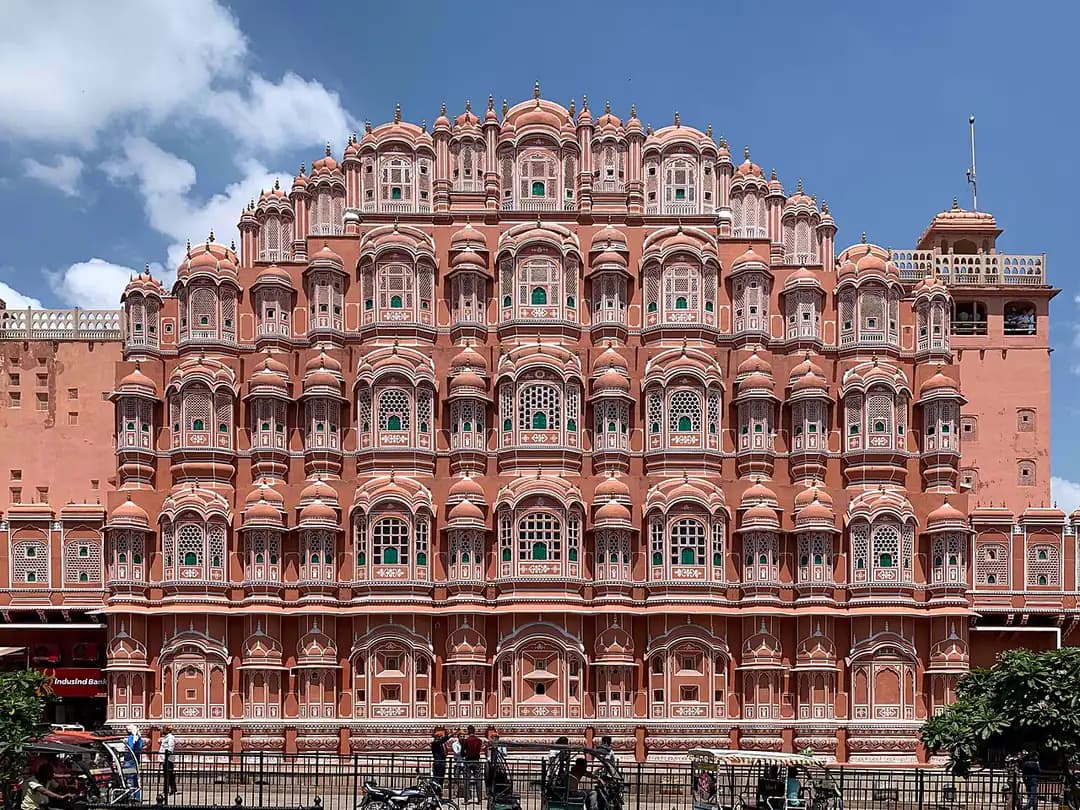
India
Jaipur, the 'Pink City,' is not just a color but a living story of Rajput valor and artistic genius. Its identity was sealed in 1876 when the entire old city was painted terracotta pink to welcome the Prince of Wales, a tradition maintained to this day. Walking through the chaotic, colorful lanes of the Johari Bazaar, past the honeycombed facade of Hawa Mahal, you're immersed in a world where camels share the road with motorbikes and the scent of rose incense mixes with sizzling street food.
Beyond the iconic forts and palaces, Jaipur's magic lies in its craft traditions. This is a city where you can watch master block printers create intricate textile patterns passed down for generations, see gem-cutters shape raw stones into dazzling jewels in the back alleys of the old city, and hear the rhythmic hammering of Thatheras (metal craftsmen) creating copper utensils, a craft recognized by UNESCO. The grandeur of the City Palace and the astronomical precision of Jantar Mantar are complemented by the everyday spectacle of life in its vibrant, noisy, and utterly captivating markets.
Architectural Marvels: Witness the fusion of Rajput and Mughal styles at the sprawling Amber Fort, where you can ascend by elephant or jeep. Explore the geometric genius of the Jantar Mantar observatory, home to the world's largest stone sundial. Don't miss the fairy-tale Jal Mahal (Water Palace) seemingly floating in the middle of Man Sagar Lake.
A Shopper's Paradise: Dive into specialized bazaars for authentic treasures. Hunt for silver jewelry in Johari Bazaar, vibrant textiles and block prints in Bapu Bazaar, and handcrafted leather mojaris (shoes) in Nehru Bazaar. The city is also a global hub for precious and semi-precious gemstones.
Royal Living History: Experience the opulence of the Rajput era at the City Palace, still home to the royal family. Stay in a heritage haveli-turned-hotel, dine in a former palace, and attend a cultural evening with traditional Kalbeliya dance and folk music at Chokhi Dhani.
Unique Cultural Experiences: Participate in a hands-on workshop for block printing, blue pottery, or gemstone cutting. Take a heritage walking tour through the Pink City's gates (pols) to discover hidden temples and havelis. Witness the evening Aarti ceremony at the Govind Dev Ji Temple.
Incredible Rajasthani Cuisine: Savor a rich culinary heritage beyond the famous dal baati churma. Try laal maas (fiery mutton curry), gatte ki sabzi (gram flour dumplings in yogurt gravy), and ker sangri (a desert bean and berry dish). End with sweet treats like ghewar and mawa kachori.
Photographer's Dream: Capture the perfect shot of the Palace of Winds (Hawa Mahal) at sunrise when its 953 windows glow golden. Find panoramic city views from Nahargarh Fort, and photograph the stunning mirrored interior of the Sheesh Mahal (Mirror Palace) within Amber Fort.
¿Listo para explorar Jaipur?
The historic heart of Jaipur, enclosed within crenellated walls and painted a uniform pink. This area is a bustling maze of narrow lanes, grand bazaars, and historic landmarks, radiating chaotic energy and timeless charm. It's where the city's commercial and cultural life pulses most intensely.
Highlights:
Best for:
A peaceful, upscale residential area known for its wide, tree-lined streets and a high concentration of heritage hotels and guesthouses set in beautiful old havelis. It offers a tranquil retreat from the city center while remaining well-connected.
Highlights:
Best for:
The modern commercial and shopping hub of Jaipur, characterized by broad avenues, government buildings, brand-name stores, and contemporary restaurants. MI Road is the main thoroughfare, buzzing with traffic, mid-range hotels, and popular eateries.
Highlights:
Best for:
Located on the outskirts near the Aravalli Hills, this area is dominated by the majestic Amber Fort and is more rustic and village-like in feel. It offers stunning hilltop views and a closer connection to the region's fortification history.
Highlights:
Best for:
Los tours y entradas que más reservan los viajeros, con valoraciones y opiniones de Viator.
desde 29 €
Ver disponibilidad
desde 189 €
Ver disponibilidad
desde 15 €
Ver disponibilidadTours y precios de Viator, una empresa de Tripadvisor. Los precios cambian según las fechas. Podemos recibir una comisión si reservas, sin coste extra para ti.
Jaipur's food is a royal legacy, characterized by rich, hearty dishes designed for the desert climate, with a generous use of ghee, millet, gram flour, and spices. From lavish palace feasts to bustling street food stalls, the cuisine is an integral part of the city's identity.
Eat hot items fresh from the fryer for the best taste and to ensure hygiene.
Go with an empty stomach; thalis are unlimited and come with numerous small dishes.
Book well in advance, especially for dinner, and observe a smart casual dress code.
These are great spots for a relaxed break, good Wi-Fi, and a break from heavy traditional food.
Late February to March marks the end of the cool season. Days become warm and sunny, while nights remain pleasant. Flowers are in bloom, making gardens and parks particularly attractive.
Pros:
Cons:
April to June is intensely hot and dry, with temperatures regularly soaring above 40°C (104°F). The sun is relentless, and sightseeing during midday hours is challenging.
Pros:
Cons:
October to November sees the monsoon retreat, leaving clear skies and gradually cooling temperatures. The humidity drops, and the weather becomes perfect for exploration.
Pros:
Cons:
December to February is the peak season, with cool, sunny days (around 15-25°C) and chilly nights, sometimes dropping to 5°C. The air is crisp and clear.
Pros:
Cons:
Compara precios de trenes, autobuses y vuelos a Jaipur
Introduce tu ciudad de salida para ver precios

2.5 hours by car or train
A spiritual journey to two of Rajasthan's most sacred towns. Ajmer is home to the revered Dargah Sharif Sufi shrine, while nearby Pushkar is a holy Hindu pilgrimage site centered around a serene lake and the only Brahma Temple in the world.
3-4 hours by car
One of India's best places to see the majestic Bengal tiger in the wild. The park is set around the dramatic ruins of the Ranthambore Fort, creating a unique backdrop for wildlife safaris.
3 hours by car
A less crowded alternative to Ranthambore for tiger spotting, combined with the historical charm of Alwar city. The reserve is nestled in the Aravalli hills and includes ancient temples and a palace.
Jaipur is a very affordable destination by international standards, offering excellent value. Costs can range from backpacker hostels to ultra-luxurious palace hotels, with food and local transport being particularly inexpensive.
Budget
€20-35 or $22-38 for budget travelers (hostel, street food, public transport)
per day
Mid-Range
€70-150 or $75-165 for mid-range (3-4 star hotel, restaurant meals, taxis, entry fees)
per day
Luxury
€250+ or $275+ for luxury (5-star palace hotel, fine dining, private guides & drivers)
per day
A beautifully symmetrical, centuries-old stepwell located near Amber Fort, used for water conservation and community gatherings.
It's an architectural marvel of geometric precision, far less crowded than the fort, and offers incredible photo opportunities without the crowds.
A small, beautifully curated museum housed in a restored haveli in Amer, dedicated to the art of traditional and contemporary hand block printing.
It provides a deep, educational insight into a craft Jaipur is famous for, in a serene and historic setting away from the bazaar hustle.
An ancient Hindu pilgrimage site complex located in a narrow valley in the Aravalli hills, featuring temples, pavilions, and natural springs.
Known for its population of friendly monkeys and the stunning view of the painted temples from the hilltop, it offers a unique, slightly wild spiritual experience.
A distinctive temple dedicated to Lord Ganesha, shaped like a Scottish castle and situated on a small hill overlooking the city.
It's a local favorite with a fascinating architectural contrast, and visiting during evening Aarti (prayer ceremony) is a powerfully spiritual experience.
A beautiful, tiered garden palace built for a queen, located on the road to Agra, featuring painted pavilions, fountains, and lush greenery.
A peaceful oasis of Mughal-style gardens, often overlooked by tourists, perfect for a quiet stroll and seeing exquisite frescoes depicting Radha-Krishna legends.
Jaipur's culture is a proud tapestry of Rajput martial traditions, exquisite artistry, and deep-rooted religious customs. Respect for royalty, elders, and social hierarchy is evident. The city is deeply religious, with Hinduism being the predominant faith, and daily life is punctuated by temple rituals, festivals, and colorful attire.
In 1876, Maharaja Sawai Ram Singh II had the entire old city painted terracotta pink (a color associated with hospitality) to welcome the Prince of Wales (later King Edward VII). A law was later passed requiring all buildings in the historic center to maintain the pink facade, which is still enforced today.
Jaipur is generally safe for solo female travelers who take standard precautions. Dress conservatively, avoid isolated areas at night, use reputable taxis (like Uber/Ola), and book accommodations in well-reviewed areas like Bani Park or C-Scheme. Be firm but polite with unwanted attention.
A minimum of 2-3 full days is recommended to see the major highlights at a comfortable pace. This allows one day for Amber Fort, Jaigarh, and Nahargarh; one day for the Pink City (City Palace, Jantar Mantar, Hawa Mahal, bazaars); and an extra day for museums, workshops, or a day trip.
No, you should not drink tap water. Always drink sealed, bottled water. Use bottled water for brushing your teeth as well. Avoid ice in drinks from street stalls and ensure food from restaurants is freshly cooked and hot.
For sightseeing, hiring a car with a driver for the day is most efficient. Within the city, use auto-rickshaws (negotiate fare or use Uber/Ola auto) or taxis. The Pink City core is walkable. Public buses are cheap but not tourist-friendly.
While not mandatory, a licensed guide is highly recommended at Amber Fort and City Palace to understand the rich history, symbolism, and stories behind the architecture. Hire only government-approved guides at the official ticket counters.
Top souvenirs include block-printed textiles and clothing, blue pottery, silver jewelry (especially from Johari Bazaar), handcrafted leather mojaris (shoes), lac bangles, miniature paintings, and Rajasthani puppets. Always bargain in the markets.
Absolutely. Rajasthan has a strong vegetarian tradition due to its arid climate and religious beliefs. You will find an immense variety of delicious and affordable vegetarian food everywhere, from street stalls to fine-dining restaurants. Many restaurants are purely vegetarian.
Costes diarios habituales para un viajero, de económico a cómodo.
| Económico | Gama media | Cómodo | |
|---|---|---|---|
| Alojamiento (por noche) | 15 € | 35 € | 85 € |
| Comida y bebida (por día) | 5 € | 12 € | 28 € |
| Visitas y actividades (por día) | 4 € | 12 € | 28 € |
| Total por día | 24 € | 59 € | 141 € |
Las estimaciones no incluyen vuelos ni transporte de larga distancia. Compara los costes diarios entre ciudades
Hoteles cerca del centro de Jaipur, de económicos a lujo. Los precios son tarifas por noche habituales en nuestra última consulta.
 Económico
 Económico
 Gama media
 Gama media
 Superior
 Superior
 Lujo
 Lujo
Los precios de hotel proceden de Traveloka, consultados por última vez el 4 de febrero de 2026, y varían según tus fechas. Podemos recibir una comisión si reservas a través de nuestros enlaces, sin coste adicional para ti.
Deja que la IA cree el itinerario perfecto para tu viaje a Jaipur. Solo describe lo que quieres experimentar.
Planificar viaje a Jaipur

