Naxos destaca passeio de ônibus com tempo livre para almoço em Apeiranthos
4.81.439 avaliações8h
a partir de € 30
Ver disponibilidade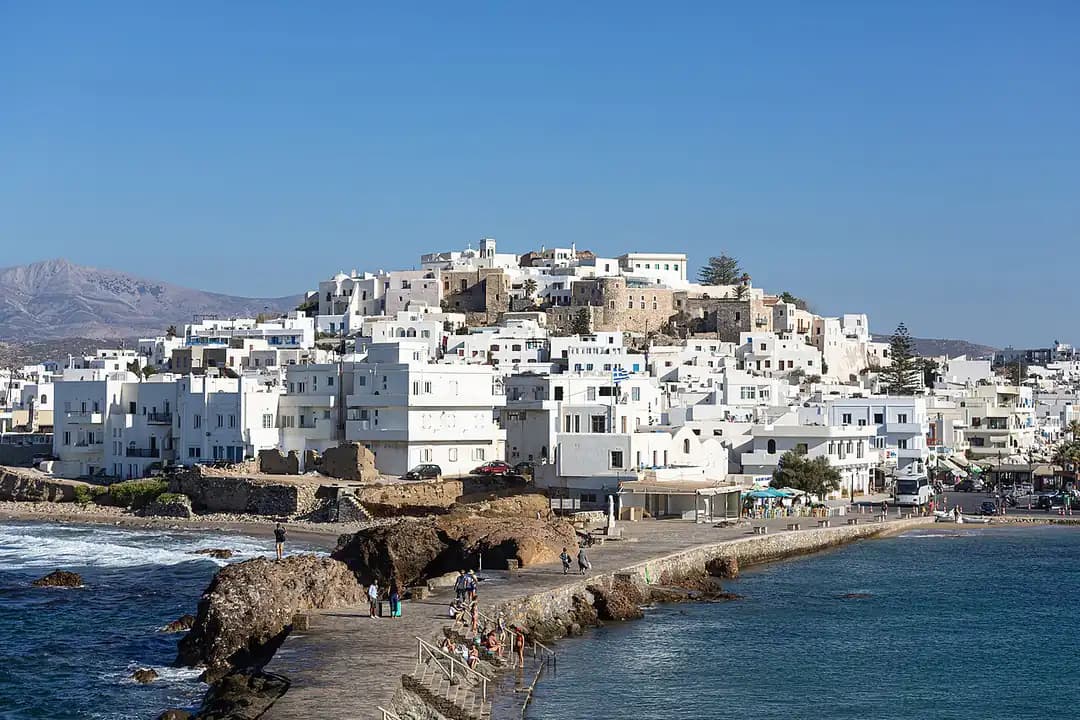
Greece
Naxos, the largest and most fertile of the Cyclades, is an island of profound contrasts and authentic Greek spirit. While its iconic Portara, the marble gateway to an unfinished temple of Apollo, frames legendary sunsets over the Aegean, the island's true heart lies inland. Here, you'll find the towering peak of Mount Zas, the mythical birthplace of Zeus, terraced olive groves, and ancient marble quarries that supplied stone for masterpieces across the ancient world.
Unlike its more touristic neighbors, Naxos retains a deeply agricultural soul, evident in its prized potatoes, graviera cheese, and fragrant kitron liqueur distilled from local citron leaves. The experience oscillates between the endless golden sands of Plaka and Agios Prokopios beaches and the labyrinthine, Venetian-era alleyways of Naxos Town (Chora), where Byzantine churches hide behind medieval castle walls. This is an island for those who want to experience the Cyclades beyond the postcard, where village festivals (panigiria) in Apeiranthos or Filoti are as much a highlight as a day at the beach.
Unrivaled Beaches for Every Taste: From the endless, organized sands of Plaka and Agios Prokopios with their crystal-clear, shallow waters perfect for families, to the wild, windswept beauty of Mikri Vigla for kitesurfers and the secluded coves near Abram.
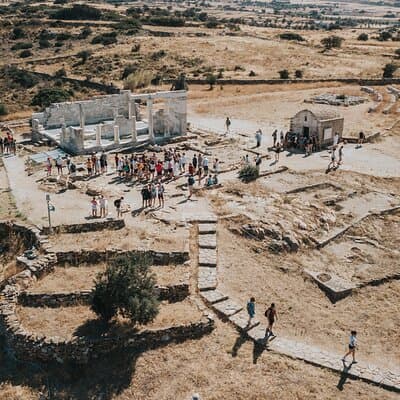
A Living Tapestry of History: Walk through the monumental Portara, explore the 6th-century BC Temple of Demeter at Sangri, and get lost in the Kastro (Castle) of Naxos Town, a living Venetian fortress neighborhood still inhabited by descendants of the original Catholic families.
Authentic Mountain Village Life: Discover the stone-built villages of the Tragea valley like Halki, Filoti, and Apeiranthos, with their marble-paved streets, ancient towers (pirgi), and local tavernas serving slow-cooked lamb and local cheese.
A Culinary Powerhouse: Savor the island's self-sufficiency through its famous Naxos graviera cheese, aromatic potatoes, fresh seafood, and unique citron-based products like kitron liqueur, best sampled at the Vallindras Distillery in Halki.
The Heart of Cycladic Mythology & Nature: Hike to the summit of Mount Zas, the highest point in the Cyclades, following the path of Zeus, and explore the lush green valleys and ancient olive groves that make Naxos surprisingly verdant.
A Hub for Authentic Adventures: Perfect for hiking through ancient paths (monopati), learning traditional pottery in the village of Damalas, windsurfing at Laguna Beach, or simply enjoying the relaxed, unpretentious pace of local life away from the crowds.
Pronto para explorar Naxos?
The bustling capital and port, a mesmerizing maze where the modern ferry port meets a medieval Venetian castle town. The lower Bourgos area is alive with shops and tavernas, while the upper Kastro is a serene, historic citadel.
Highlights:
Best for:
The epicenter of Naxos's famous beach life, featuring two of the island's longest and most stunning sandy beaches with incredibly clear, shallow waters. A mix of organized resorts, family-run studios, and lively beach bars.
Highlights:
Best for:
The lush, green heart of Naxos, dotted with picturesque stone villages like Halki, Filoti, and Damarionas. This area is known for its olive groves, Byzantine churches, and traditional way of life.
Highlights:
Best for:
A rugged, scenic region known for its dramatic coastline, quiet fishing villages, and ancient sites. It offers a more remote and tranquil Naxian experience.
Highlights:
Best for:
Os passeios e ingressos que os viajantes mais reservam, com avaliações da Viator.
a partir de € 30
Ver disponibilidade
a partir de € 100
Ver disponibilidade
a partir de € 30
Ver disponibilidade
a partir de € 100
Ver disponibilidadePasseios e preços da Viator, uma empresa Tripadvisor. Os preços mudam conforme as datas. Podemos receber uma comissão se você reservar, sem custo extra.
Naxian cuisine is a celebration of the island's fertile land and pastoral traditions. It's famously self-sufficient, producing its own cheese, meat, potatoes, and even its unique citron fruit. Meals are hearty, flavorful, and deeply connected to the seasons.
Go for lunch; many village tavernas are only open midday and are where locals eat.
Always ask for the price per kilo before ordering fish to avoid surprises.
Graviera tastes best when slightly room temperature. Buy a wedge to enjoy with bread and local honey.
Even modern places often have a 'Naxian Plate'—a great way to sample local specialties in one sitting.
April to June is idyllic, with wildflowers carpeting the mountains, comfortable temperatures, and vibrant green landscapes. The sea starts to warm up, and tourist crowds are minimal.
Pros:
Cons:
July and August bring hot, dry weather, crowded beaches, and a buzzing, festive atmosphere. This is peak season with all services open and frequent cultural events.
Pros:
Cons:
September and October offer a golden, relaxed period. The sea is at its warmest, the summer crowds have dissipated, and the weather remains sunny and pleasant.
Pros:
Cons:
November to March is quiet and local. Many tourist businesses shut down, but you experience authentic island life, stormy seas, and cozy village moments.
Pros:
Cons:
Compare preços de trens, ônibus e voos para Naxos
Digite sua cidade de partida para ver preços

1-1.5 hours by ferry
A journey to a simpler, more pristine Cycladic world. Koufonissia is actually two tiny islands (Pano and Kato) known for incredible turquoise waters, sandy beaches, and a laid-back, bohemian vibe.
1.5-2 hours by ferry (often a combined tour)
A pilgrimage to the sacred, uninhabited island of Delos, the mythical birthplace of Apollo and a UNESCO World Heritage site with breathtaking ruins. Often combined with a short stop in bustling Mykonos.
30-45 minutes by ferry to Paros
Visit the charming, polished neighbor of Paros, famous for its white marble and picturesque villages like Naoussa and Lefkes, with the option to take a short boat ride to the caverns of Antiparos.
Naxos is generally more affordable than neighboring Santorini or Mykonos, offering excellent value, especially for food and accommodation outside the peak July/August period. Self-catering and using local transport can keep costs low.
Budget
€50-70 per person for hostels, self-catering, buses, and cheap eats.
per day
Mid-Range
€100-180 per person for a comfortable studio/apartment, scooter/car rental, taverna meals, and some activities.
per day
Luxury
€250+ per person for boutique hotels, fine dining, private tours, and premium beach clubs.
per day
A giant, unfinished 6th-century BC marble statue of a young man (Kouros) lying in an ancient quarry near the village of Melanes.
It's a fascinating, rarely crowded archaeological site that lets you walk right up to the massive statue and see the tool marks, all in a peaceful garden setting.
A long, wild, and often completely deserted sandy beach on the southeast coast, backed by the ruins of a Venetian tower.
For true solitude and a sense of discovery. You'll likely have this dramatic, windswept beach all to yourself, with great views of the Small Cyclades.
A beautifully restored traditional olive press in the village of Eggares, now a small, free museum demonstrating old production methods.
It's a hands-on look at the agricultural history that defines Naxos, run by passionate locals. You can taste and buy exceptional local olive oil.
A striking, well-preserved 17th-century Venetian tower house near the village of Galanado, standing alone in a field.
It's one of the best-preserved towers on the island and offers a fantastic, off-the-beaten-path photo opportunity against the backdrop of Mount Zas.
A unique area where a fragrant cedar forest meets sand dunes and the ruins of an abandoned 1970s hotel complex, now covered in striking graffiti art.
It's a surreal and photogenic landscape combining nature, decay, and modern street art—unlike anything else in the Cyclades.
Naxian culture is a proud blend of ancient Greek heritage, Byzantine religious tradition, and a tangible Venetian aristocratic legacy, all grounded in a strong agricultural identity. Family, village community, and religious festivals (panigiria) remain central to social life.
A minimum of 3 full days is recommended to see the main town, a few key beaches, and explore some mountain villages. 5-7 days is ideal to fully relax, discover hidden gems, and take a day trip to the Small Cyclades.
Excellent. The island is safe, relaxed, and has many shallow, sandy beaches perfect for children (like Agios Prokopios and Plaka). The variety of activities—from beach time to easy village visits—caters well to all ages.
Yes, if you want to explore beyond the main town and nearby beaches efficiently. The bus service is reliable for major routes but infrequent to remote areas. A car or ATV unlocks the island's true beauty.
Kitron, a liqueur made from the leaves and fruit of the citron tree, which is unique to the island. It comes in three varieties: green (sweet), yellow (medium), and clear (strong). Visit the Vallindras Distillery in Halki to taste it.
Technically yes via ferry (about 1-2 hours), but it's not recommended. Naxos is large and deserves more time. You'd only scratch the surface of the port town, missing the beaches, villages, and essence of the island.
It can be, especially in July and August when the seasonal Meltemi winds blow from the north. The west/south coast beaches (Plaka, Agios Prokopios) are more sheltered. The north coast and Mikri Vigla are windier, making them popular for windsurfing.
This is subjective. For long, organized sands and amenities: Plaka or Agios Prokopios. For water sports: Mikri Vigla. For seclusion and beauty: Alyko or Kalantos. For families with small children: Agios Georgios (St. George) in town.
First-timers and those wanting nightlife: Naxos Town (Chora). Beach-focused travelers: Agios Prokopios or Agia Anna. For a quiet, authentic village experience: Halki or Filoti in the Tragea Valley. For solitude: the north coast near Apollonas.
Custos diários habituais para um viajante, com base nos preços médios em Greece.
| Econômico | Intermediário | Confortável | |
|---|---|---|---|
| Hospedagem (por noite) | € 35 | € 85 | € 150 |
| Comida e bebida (por dia) | € 14 | € 30 | € 58 |
| Passeios e atividades (por dia) | € 7 | € 18 | € 42 |
| Total por dia | € 56 | € 133 | € 250 |
As estimativas não incluem voos nem transporte de longa distância. Compare os custos diários entre cidades
Hotéis perto do centro de Naxos, do econômico ao luxo. Os preços são diárias habituais na nossa última consulta.
 Econômico
 Econômico
 Intermediário
 Intermediário
 Superior
 Superior
 Luxo
 Luxo
Os preços dos hotéis vêm da Traveloka, consultados pela última vez em 4 de fevereiro de 2026, e variam conforme as datas. Podemos receber uma comissão se você reservar pelos nossos links, sem custo adicional para você.
Conexões populares de trem, ônibus e avião, com tempos de viagem e tarifas.
Deixe a IA criar o roteiro perfeito para sua viagem a Naxos. Apenas descreva o que você quer experimentar.
Planejar viagem para Naxos