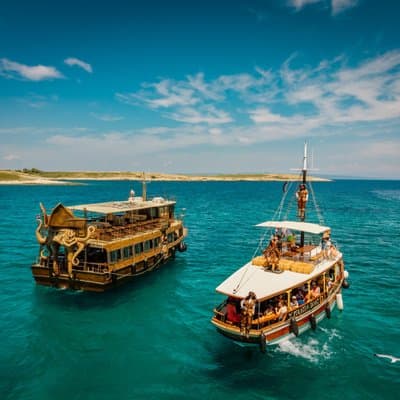
Medulin: Excursão de barco de piratas para Kamenjak Cave & Levan
4.82.512 avaliações5h
a partir de € 45
Ver disponibilidade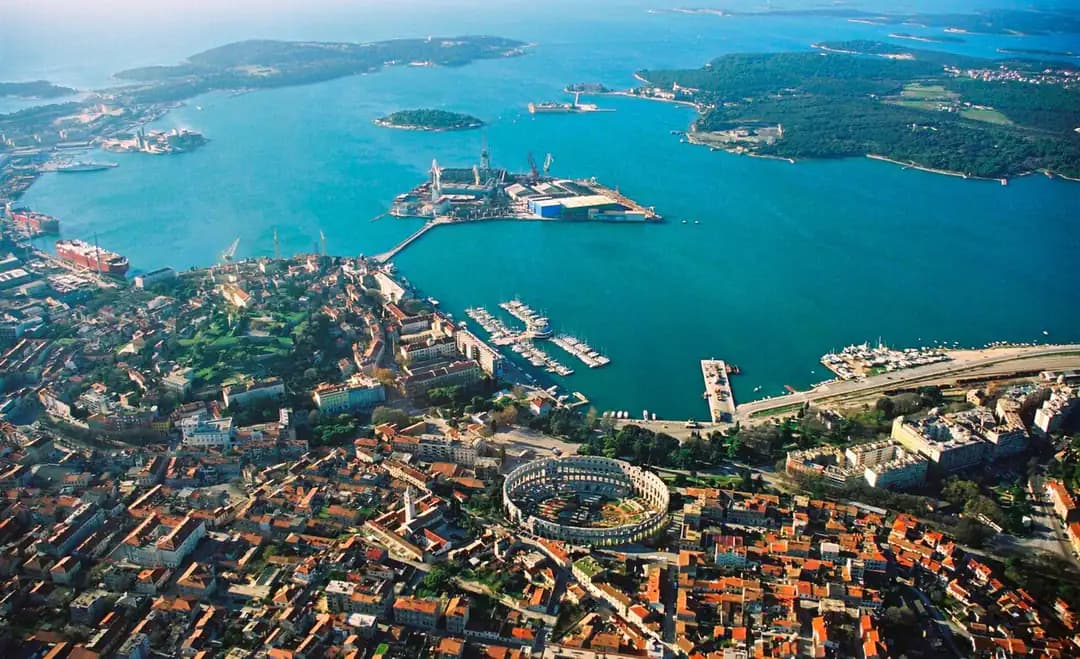
Croatia
Pula isn't just a city; it's a living Roman history book set against the stunning Adriatic. The colossal Arena, one of the six largest surviving Roman amphitheaters, isn't a relic behind glass—it's a vibrant venue for summer concerts and film festivals. This unique blend of ancient stones and modern life defines the city, where you can explore the underground Zerostrasse tunnels one hour and be swimming at the pebbly beaches of Stoja or Verudela the next.
Beyond the monumental architecture, Pula is the gateway to Istria's rich culinary heartland. The city's markets overflow with local truffles, world-class olive oils, and Malvasia wine, while the surrounding countryside is dotted with family-run konobas (taverns). From the serene Brijuni Islands National Park, once Tito's private retreat, to the vibrant cafe culture on the Forum, Pula offers a compelling mix of coastal relaxation, historical depth, and gastronomic adventure that feels distinctly authentic.
Walk Through a Working Roman City: Stand in the shadow of the perfectly preserved 1st-century Arena, then see the Temple of Augustus and the triumphal Arch of the Sergii, all within a compact city center that feels like an open-air museum.
A Foodie's Paradise with Istrian Soul: Indulge in world-renowned white truffles from the Motovun forest, taste award-winning olive oils, and sip crisp Malvasia wine at vineyards just a short drive from the city center.
Sun, Sea, and Unique Coastal Scenery: Enjoy a mix of pebble and concrete beaches like Havajsko and Histria, or explore the dramatic limestone cliffs and hidden coves of Kamenjak Nature Park at the southern tip of the peninsula.
Island Escape to a Presidential Retreat: Take a short boat ride to the Brijuni Islands, a national park archipelago where Roman villas, a safari park, and Tito's personal memorabilia create a uniquely fascinating day trip.
Vibrant Cultural Events in Ancient Settings: Experience the Pula Film Festival held inside the Roman Arena, or attend a summer concert where gladiators once fought, blending millennia of history with contemporary arts.
Discover Layers of History Underground: Explore the network of Zerostrasse tunnels, built as WWI shelters, which now host art exhibitions and offer a cool, fascinating perspective on the city's more recent past.
Pronto para explorar Pula?
The historic heart of Pula, centered around the ancient Roman Forum. This compact area is a maze of cobblestone streets lined with cafes, bars, and shops, all dominated by the city's iconic Roman monuments. The vibe is lively, tourist-friendly, and deeply atmospheric, especially in the evenings.
Highlights:
Best for:
A scenic peninsula south of the city center, known for its upscale hotels, beautiful beaches, and lush Mediterranean greenery. It's a resort area with a relaxed, family-friendly atmosphere, offering stunning coastal walks and calmer waters.
Highlights:
Best for:
A laid-back, primarily residential area west of the center, famous for its large, shaded Stoja Beach and campground. It has a local, unpretentious feel and is a favorite spot for swimming, picnics, and enjoying spectacular sunsets over the Adriatic.
Highlights:
Best for:
A green, hilltop residential neighborhood offering the best panoramic views of Pula's harbor, arena, and cityscape. It's quiet and peaceful, with villas and gardens, providing a escape from the bustle with easy walking access to the center.
Highlights:
Best for:
Os passeios e ingressos que os viajantes mais reservam, com avaliações da Viator.
a partir de € 45
Ver disponibilidade
a partir de € 45
Ver disponibilidade
a partir de € 45
Ver disponibilidade
a partir de € 35
Ver disponibilidadePasseios e preços da Viator, uma empresa Tripadvisor. Os preços mudam conforme as datas. Podemos receber uma comissão se você reservar, sem custo extra.
Pula's cuisine is a delicious reflection of Istria, blending Italian influence with Croatian heart. Fresh seafood from the Adriatic meets earthy treasures like truffles and wild asparagus from the interior. Meals are often accompanied by excellent local wines, particularly Malvasia and Teran.
Look for konobas slightly outside the main tourist drag for better prices and more authentic atmosphere.
Always ask for the 'dnevni menu' (daily menu) for the freshest catch and best value.
Don't just taste wine; Istrian olive oil is award-winning. Look for tasting sets that include both.
For a quick, cheap, and delicious lunch, grab a 'pljeskavica' (grilled meat patty) from a grill stand.
Spring (April-May) sees Pula blooming with mild, pleasant weather. The countryside is green, wildflowers are out, and truffle season is beginning. Crowds are minimal.
Pros:
Cons:
Summer (June-August) is peak season with hot, sunny days (avg 28°C), vibrant energy, and a full calendar of events. The sea is warm, and everything is open.
Pros:
Cons:
Autumn (September-October) is arguably the best time to visit. The sea remains warm, the summer crowds dissipate, and the region celebrates the grape and olive harvests.
Pros:
Cons:
Winter (November-March) is quiet, cool, and damp. While not a beach destination, the city has a local charm, and the Roman monuments are crowd-free.
Pros:
Cons:
Compare preços de trens, ônibus e voos para Pula
Digite sua cidade de partida para ver preços

40 min by car or bus
Often called Croatia's most romantic town, Rovinj is a picture-perfect fishing port with a labyrinth of cobbled streets leading up to the stunning St. Euphemia's Basilica. Its artistic vibe, excellent restaurants, and nearby Lim Bay make it a must-visit.
15 min by boat from Fažana (a 10-min drive from Pula)
This archipelago of 14 islands was the private summer residence of President Tito. Today, it's a unique national park combining Roman ruins, a safari park with exotic animals, Byzantine castles, and pristine nature.
1 hour by car
Venture inland to the magical hilltop towns of central Istria. Motovun, the most famous, is surrounded by forests rich with truffles and offers breathtaking views over the Mirna River valley.
Pula is generally more affordable than major Croatian destinations like Dubrovnik, but prices spike significantly in July and August. Shoulder seasons offer much better value.
Budget
€40-60 per person for hostels, self-catering, public transport, and free sights.
per day
Mid-Range
€80-120 per person for a private room or apartment, meals at mid-range konobas, some taxis, and paid attractions.
per day
Luxury
€200+ per person for 4-star hotels, fine dining, private tours, and car rental.
per day
A star-shaped Venetian fortress perched on a hill in the city center, offering fantastic views.
Often overlooked for the Arena, it houses a fascinating museum on local history and provides the best 360-degree panorama of Pula.
A small, secluded cove beach located between the city center and Verudela, surrounded by pine trees.
It's a favorite with locals for its calm, clear waters and natural shade, offering a peaceful alternative to the main concrete beaches.
The 6th-century mosaic floor of a Byzantine chapel, preserved inside a modern office building.
A stunning, unexpected piece of early Christian art hidden in plain sight, showcasing Pula's layered history beyond the Roman era.
A long, shallow inlet perfect for stand-up paddleboarding, kayaking, and windsurfing, located east of the center.
It's a serene, family-friendly aquatic playground protected from open sea waves, popular with locals for water sports.
The modest, overgrown ruins of a smaller Roman theatre tucked behind the Archaeological Museum.
Unlike the grand Arena, this site feels forgotten and atmospheric, offering a quiet moment of reflection away from the main tourist path.
Pula's culture is a laid-back blend of Italian 'dolce vita' and Croatian resilience, shaped by its long history. Life revolves around the sea, family, good food, and coffee. The pace is slower than in bigger cities, with a strong emphasis on enjoying the simple pleasures.
Absolutely. Pula offers a unique, less-crowded experience focused on remarkably intact Roman history rather than medieval walls. Its combination of a major ancient monument (the Arena), easy beach access, and proximity to Istria's food and wine heartland makes it a wonderfully diverse destination.
Two to three days is ideal. Spend one day exploring the Roman sights and Old Town, another on the beaches or Brijuni Islands, and a third on a day trip to Rovinj or the Istrian interior. This gives a great overview of the city and region.
Yes, the Adriatic is clean and clear. Be aware that most beaches near the city are pebble or concrete slabs (popular for sunbathing). For sandy areas, you'll need to visit nearby places like Medulin. The sea is warm enough for comfortable swimming from June through September.
It's not essential for staying within the city and visiting beaches, as buses are good. However, to truly explore the Istrian peninsula—its hill towns, remote vineyards, and coastal villages—renting a car is highly recommended and offers the most freedom.
Pula is generally more affordable than Split or Dubrovnik. Prices for food, accommodation, and attractions are reasonable, especially outside the peak July-August period. You can have a high-quality experience here on a moderate budget.
First, take a bus or drive 10 minutes to the town of Fažana. From Fažana's harbor, regular national park boats depart frequently. You must buy a ticket for both the boat transfer and the national park entrance, which usually includes a guided tour of the main island, Veliki Brijun.
Yes, especially in the tourism sector (hotels, restaurants, attractions). Younger generations almost universally speak English well. In more traditional, family-run konobas inland, you might encounter limited English, but menus are often multilingual and staff are friendly.
Head to the western side of the city. The Stoja area, particularly the waterfront near the campground or the pier at Sijana Bay, offers stunning, unobstructed views of the sun setting over the Adriatic Sea, often with the silhouette of the Brijuni Islands on the horizon.
Custos diários habituais para um viajante, com base nos preços médios em Croatia.
| Econômico | Intermediário | Confortável | |
|---|---|---|---|
| Hospedagem (por noite) | € 40 | € 95 | € 160 |
| Comida e bebida (por dia) | € 15 | € 32 | € 60 |
| Passeios e atividades (por dia) | € 8 | € 20 | € 45 |
| Total por dia | € 63 | € 147 | € 265 |
As estimativas não incluem voos nem transporte de longa distância. Compare os custos diários entre cidades
Hotéis perto do centro de Pula, do econômico ao luxo. Os preços são diárias habituais na nossa última consulta.
 Econômico
 Intermediário
 Intermediário
 Superior
 Superior
Os preços dos hotéis vêm da Traveloka, consultados pela última vez em 4 de fevereiro de 2026, e variam conforme as datas. Podemos receber uma comissão se você reservar pelos nossos links, sem custo adicional para você.
Conexões populares de trem, ônibus e avião, com tempos de viagem e tarifas.
Deixe a IA criar o roteiro perfeito para sua viagem a Pula. Apenas descreva o que você quer experimentar.
Planejar viagem para Pula