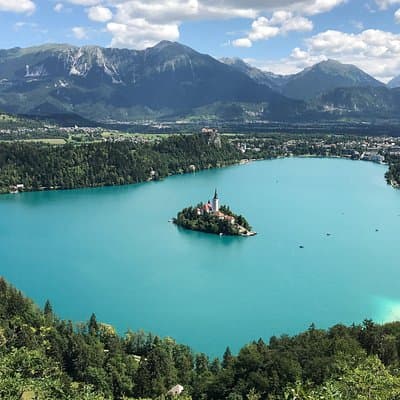
Excursão ao Lago Bled e Ljubljana saindo de Trieste
4.5224 avaliações7h
a partir de € 125
Ver disponibilidade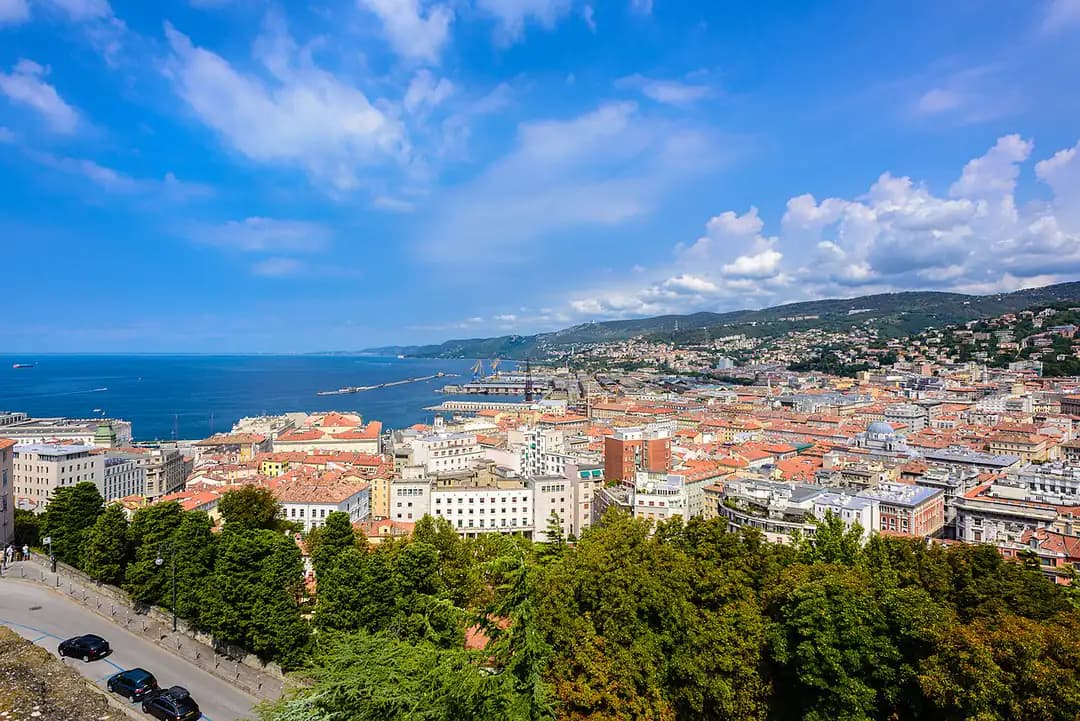
Italy
Trieste isn't just another Italian city; it's a captivating cultural crossroads where the Adriatic Sea meets the Karst plateau. Here, you'll sip espresso in grand Viennese-style cafés like Caffè San Marco, where James Joyce once wrote, and stroll through the immense Piazza Unità d'Italia, Europe's largest sea-facing square, feeling the ghost of the Austro-Hungarian Empire. The city's soul is a unique blend: Italian passion, Habsburg elegance, and Slavic influences, all set against a dramatic backdrop of white cliffs and deep blue water.
Beyond the grand architecture, Trieste's magic lies in its contrasts. Explore the Roman Theatre, a relic from the 1st century, then wander the Canal Grande lined with pastel-colored palaces. Venture just outside the city to the breathtaking Miramare Castle, perched on a cliff, or descend into the otherworldly Grotta Gigante, one of the world's largest tourist caves. This is a city for contemplative travelers who appreciate literature, complex history, and a coffee culture so serious it supplies beans to the Pope.
A Coffee Culture Capital: Experience the ritual of coffee in historic literary cafés like Caffè degli Specchi and Caffè Tommaseo, where ordering a 'nero' or 'capo' is a local art form. Trieste is home to Illy and numerous historic roasteries.
Unique Habsburg Grandeur: Wander through a Central European cityscape with neoclassical and Art Nouveau palaces, the monumental Piazza Unità d'Italia, and the majestic Miramare Castle, feeling the legacy of Empress Sissi and the Austro-Hungarian Empire.
Spectacular Karst Landscape: Discover the dramatic geological plateau surrounding the city, featuring the immense Grotta Gigante cave, scenic viewpoints like the Opicina Tramway route, and unique 'osmize' farmhouse wine taverns hidden in the hills.
A Literary & Historical Crossroads: Walk in the footsteps of James Joyce, Italo Svevo, and Umberto Saba. Explore the Roman Theatre, the medieval San Giusto Castle and Cathedral, and the poignant Risiera di San Sabba, a former Nazi concentration camp.
A Gateway to Diverse Cultures: Feel the Slavic and Central European influences in the language (Slovenian is co-official), cuisine with dishes like 'jota' (sauerkraut soup), and the architecture of neighborhoods like the Serbian Orthodox church of San Spiridione.
An Authentic, Uncrowded Italian Experience: Escape the tourist crowds of Venice and Florence. Trieste offers a relaxed, local pace, stunning sea views from the Barcola promenade, and a genuinely unique identity unlike any other place in Italy.
Pronto para explorar Trieste?
The historic heart of Trieste, a maze of narrow, medieval streets climbing the San Giusto hill. This area is dense with ancient Roman ruins, charming piazzas, and layers of history from its time as a Roman port.
Highlights:
Best for:
The elegant 18th-century district built under Empress Maria Theresa. Characterized by a rational grid of streets, grand canals, and neoclassical palaces, it's the city's commercial and cultural hub.
Highlights:
Best for:
A chic, residential waterfront area stretching north from the city center. Known for its long, scenic seaside promenade (the Barcola), rocky beaches, and stunning views, leading to the iconic Miramare Castle.
Highlights:
Best for:
A residential neighborhood perched on the edge of the Karst plateau, offering breathtaking panoramic views over the city and gulf. It's the gateway to the rural Karst landscape and its unique traditions.
Highlights:
Best for:
Os passeios e ingressos que os viajantes mais reservam, com avaliações da Viator.
a partir de € 125
Ver disponibilidade
a partir de € 125
Ver disponibilidade
a partir de € 7
Ver disponibilidade
Passeios e preços da Viator, uma empresa Tripadvisor. Os preços mudam conforme as datas. Podemos receber uma comissão se você reservar, sem custo extra.
Trieste's cuisine is a hearty reflection of its crossroads location, blending Italian, Austro-Hungarian, and Slavic influences. Expect comforting stews, fresh seafood, and Central European baked goods, all best enjoyed with a glass of local Carso wine.
Look for places with handwritten menus and a local crowd. 'Primo' often features hearty soups or pasta with Balkan influences.
The seafood is incredibly fresh. Don't miss 'moleche' (soft-shell crabs) when in season, typically spring and autumn.
Cafés are for lingering. Order a pastry with your coffee in the morning or enjoy a slice of strudel in the afternoon.
These are not formal restaurants. Bring cash, be respectful, and enjoy the rustic, convivial atmosphere. Check opening dates online or via the 'Frasca' app.
Spring (April-June) is lovely, with mild temperatures, blooming flowers in Miramare Park, and fewer crowds. The infamous Bora wind can still be strong, especially in April.
Pros:
Cons:
Summer (July-August) brings warm, sunny weather perfect for swimming at Barcola and enjoying the lively waterfront. This is peak tourist season and can be humid.
Pros:
Cons:
Autumn (September-October) is arguably the best time. The sea is still warm, the summer crowds have dispersed, and the Karst landscape takes on beautiful golden hues.
Pros:
Cons:
Winter (November-March) is cold, windy, and atmospheric. The Bora wind is at its strongest, but the city has a stark, literary beauty, and Christmas markets add cheer.
Pros:
Cons:
Compare preços de trens, ônibus e voos para Trieste
Digite sua cidade de partida para ver preços

20 min by bus (#36) or 8 km by car/taxi
The breathtaking 19th-century castle of Archduke Maximilian of Habsburg, perched on a cliff overlooking the Gulf of Trieste. Its pristine white facade, romantic history, and magnificent seaside park are unforgettable.
30-40 min by bus (#42) or car
Explore the dramatic limestone landscape surrounding Trieste. The highlight is the Grotta Gigante, the world's largest tourist cave, but the area is also dotted with rustic villages, wineries, and scenic walking paths.
1 hour by car or bus
Step back into ancient Roman history at the UNESCO site of Aquileia, home to spectacular early Christian mosaic floors. Then, continue to the charming lagoon island of Grado for a seafood lunch and a stroll through its medieval center.
Trieste is moderately priced for Italy, generally cheaper than major tourist hubs like Venice or Rome but with a higher cost of living than southern Italy. Costs are highest in summer and around major events.
Budget
€50-70 per day for budget travelers (hostel, street food, public transport)
per day
Mid-Range
€100-180 per day for mid-range (3-star hotel, restaurant meals, some taxis, museum entries)
per day
Luxury
€250+ per day for luxury (4/5-star hotel, fine dining, private tours, car rental)
per day
A former rice-husking factory turned Nazi concentration and extermination camp during WWII, now a stark and powerful national monument and museum.
It's a profoundly moving and important historical site that receives far fewer visitors than it should, offering crucial insight into a dark chapter of Trieste's and Europe's history.
A monumental lighthouse and mausoleum built in the 1920s on the Gretta hill, commemorating sailors lost at sea.
It offers one of the most spectacular 360-degree panoramic views over the entire Gulf of Trieste and the city, yet it's rarely visited by tourists.
Not to be confused with the monument, this is a small, excellent civic museum dedicated to the history of the camp and the Resistance.
It provides deeper context with photographs and documents, and its location in the city center makes it an easy but overlooked stop.
The 19th-century home of Baron Pasquale Revoltella, now part of the Revoltella Museum complex, with beautifully preserved interiors and a quiet garden.
While the modern art gallery is known, the original villa offers a glimpse into the opulent lifestyle of Trieste's 19th-century bourgeoisie and has a tranquil garden oasis.
A historic stone-paved path that winds through the Karst forest from Opicina down towards the sea, used for centuries by farmers and traders.
It's a beautiful, shaded hiking trail full of history and nature, offering a peaceful escape and a sense of the ancient landscape just minutes from the urban center.
Trieste's culture is defined by its border identity—simultaneously Italian, Central European, and Slavic. It's a reserved, intellectual city with a deep love for literature, coffee, and debate. Formality in initial interactions is common, giving way to warm hospitality.
Yes, Trieste is generally a very safe city, even at night. Standard precautions apply, such as being aware of your belongings in crowded areas. The city center and tourist areas are well-lit and patrolled.
While Italian is the main language, English is widely spoken in hotels, restaurants, and tourist attractions, especially by younger people. Learning a few basic Italian phrases is always appreciated and will enhance your experience.
Two to three full days is ideal to explore the city center, visit Miramare Castle, experience the coffee culture, and take one day trip (like to the Karst caves). It also makes a perfect base for a longer stay to explore the Friuli-Venezia Giulia region.
Yes, Italy uses the Euro (€). Credit and debit cards are widely accepted, but it's always wise to carry some cash for smaller establishments, markets, and especially for visiting the rural 'osmize' taverns.
The city center is best explored on foot. For longer distances (e.g., to Miramare, the airport, or Opicina), the public bus system is efficient and affordable. The historic Opicina Tramway is a must for the experience and views.
Trieste is moderately priced for Italy. It's more affordable than Venice or Rome but has a higher cost of living than southern Italy. You can manage costs by using public transport, enjoying 'aperitivo' buffets, and visiting in the shoulder seasons.
High-quality coffee beans from Illy, Hausbrandt, or a local roastery are the top choice. Also consider a bottle of local Terrano wine from the Karst, traditional pastries like Presnitz, or items related to the city's literary history.
Yes, the Bora can be extremely powerful, with gusts exceeding 100 km/h, especially in winter and spring. It's a defining feature of the city. Locals are used to it, but visitors should secure hats and be cautious near the waterfront when it's blowing.
Custos diários habituais para um viajante, com base nos preços médios em Italy.
| Econômico | Intermediário | Confortável | |
|---|---|---|---|
| Hospedagem (por noite) | € 45 | € 110 | € 190 |
| Comida e bebida (por dia) | € 17 | € 35 | € 70 |
| Passeios e atividades (por dia) | € 8 | € 22 | € 50 |
| Total por dia | € 70 | € 167 | € 310 |
As estimativas não incluem voos nem transporte de longa distância. Compare os custos diários entre cidades
Hotéis perto do centro de Trieste, do econômico ao luxo. Os preços são diárias habituais na nossa última consulta.
 Econômico
 Econômico
 Intermediário
 Intermediário
 Superior
 Superior
 Luxo
Os preços dos hotéis vêm da Traveloka, consultados pela última vez em 4 de fevereiro de 2026, e variam conforme as datas. Podemos receber uma comissão se você reservar pelos nossos links, sem custo adicional para você.
Conexões populares de trem, ônibus e avião, com tempos de viagem e tarifas.
Deixe a IA criar o roteiro perfeito para sua viagem a Trieste. Apenas descreva o que você quer experimentar.
Planejar viagem para Trieste