Passeio Guiado de Dia para os Lagos Plitvice a partir de Zadar com Ingressos
4.91.687 avaliações10h
a partir de € 45
Ver disponibilidade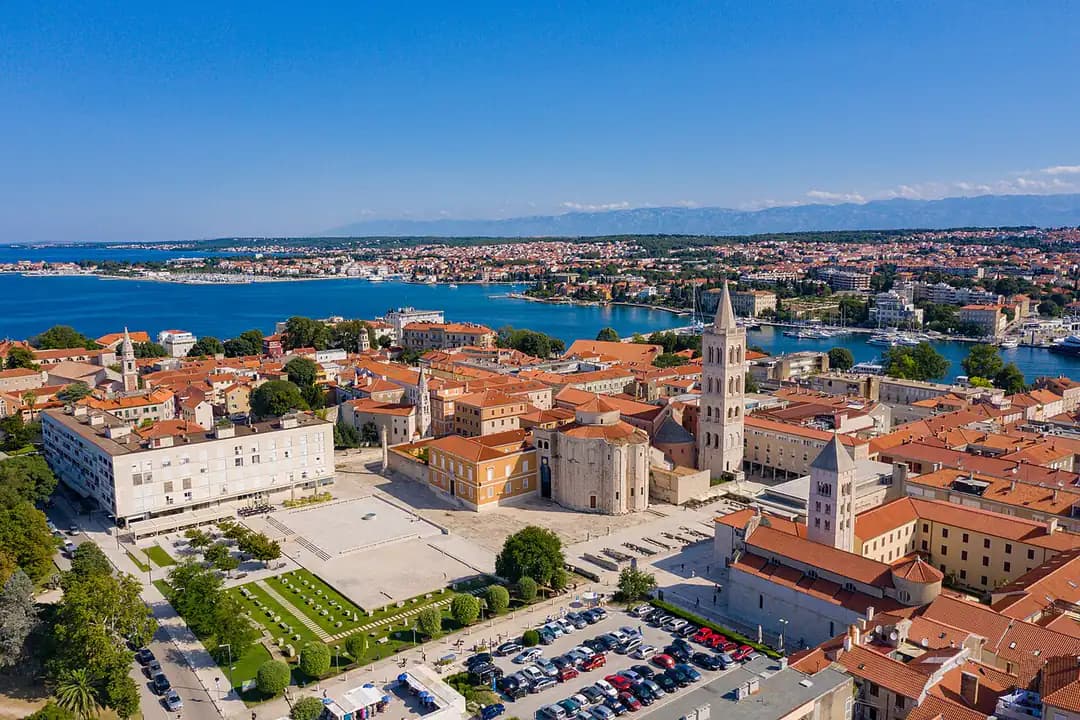
Croatia
Zadar isn't just another Croatian coastal city; it's a living timeline where ancient Roman stones whisper beneath your feet while the Adriatic Sea plays symphonies. Forget the generic 'hidden gem' label—this is where you'll find the world's only Sea Organ, a set of marble steps ingeniously designed to transform wave energy into haunting, ever-changing music, right next to the Sun Salutation, a solar-powered light show that dances across the waterfront at dusk. This is the city that captivated Alfred Hitchcock, who declared its sunset "the most beautiful in the world," a spectacle best witnessed from the Riva promenade, cocktail in hand, as the sky ignites over the Zadar Channel and the distant islands of the Kornati archipelago.
Beyond the famous installations, Zadar's soul lies in its compact, pedestrian-friendly Old Town, a peninsula layered with 3,000 years of history. You can sip coffee amidst the columns of the Roman Forum, then walk two minutes to the 9th-century St. Donatus Church, its cylindrical form a symbol of the city. Unlike the more crowded Dubrovnik or Split, Zadar retains a genuine, lived-in charm where locals outnumber tourists in many squares, and the pace feels refreshingly authentic. It's a city for curious travelers who want to experience cutting-edge art, touch ancient history, and witness legendary sunsets, all without breaking the bank.
Experience Architectural Alchemy: Where else can you hear a musical instrument played by the sea and watch a light installation powered by the sun? The modern Sea Organ and Sun Salutation on the Riva are globally unique artistic feats that interact directly with nature, offering a free, unforgettable sensory experience every day.
Walk Through Millennia in One Afternoon: Zadar's compact Old Town is an open-air museum. Stand on the original Roman pavement of the Forum, enter the pre-Romanesque St. Donatus Church, admire the gold and silver treasures in St. Simeon's Church, and stroll along 16th-century Venetian walls—all within a 15-minute walk.
Chase the World's Most Famous Sunset: Take Hitchcock's word for it. The daily ritual of watching the sun melt into the Adriatic from the western Riva promenade is a communal event. Join locals and travelers, find a spot on the steps or at a cafe like The Garden, and witness the sky perform in shades of orange, pink, and purple.
Gateway to Island Paradise: Zadar's archipelago is stunning. Use the city as a base for a day trip to the Kornati National Park, a sailor's dream of 89 barren, rocky islands, or hop on a short ferry to the serene beaches and olive groves of Ugljan and Pašman, known as "Zadar's green islands."
A Budget-Friendly Adriatic Alternative: Compared to Dubrovnik and Split, Zadar offers exceptional value. Enjoy fresh seafood dinners, quality local wine (like Pošip or Plavac Mali), and comfortable accommodation often at a fraction of the cost, making a Croatian coastal holiday more accessible.
A City of Authentic Vibes: Zadar feels real. In the evening, the squares like Narodni Trg come alive with families, students, and friends socializing over coffee or beer. You'll find fewer massive cruise ship crowds, allowing for a more relaxed exploration of its cafes, konobas (taverns), and hidden courtyards.
Pronto para explorar Zadar?
The historic heart of Zadar, situated on a compact peninsula. This entirely pedestrianized area is a maze of marble streets, ancient ruins, and medieval churches, all surrounded by imposing Venetian walls. The vibe is a captivating blend of historical weight and lively modern cafe culture.
Highlights:
Best for:
The vibrant waterfront promenade stretching along the western edge of the Old Town. This is the city's living room, especially at sunset. The vibe is social, scenic, and slightly magical, centered around the two famous modern installations.
Highlights:
Best for:
A relaxed, resort-style area located a short drive or bus ride north of the Old Town. Known for its long pebble beaches, pine tree shade, and numerous hotels and apartments. The vibe is laid-back, beach-focused, and perfect for a tranquil holiday base.
Highlights:
Best for:
Residential neighborhoods just west of the Old Town, across the small Jazine bay. These areas offer a glimpse into local life, with markets, neighborhood cafes (kafići), and excellent swimming spots less frequented by tourists. The vibe is authentic, local, and pleasantly unassuming.
Highlights:
Best for:
Os passeios e ingressos que os viajantes mais reservam, com avaliações da Viator.
a partir de € 45
Ver disponibilidade
a partir de € 20
Ver disponibilidade
a partir de € 20
Ver disponibilidade
a partir de € 20
Ver disponibilidadePasseios e preços da Viator, uma empresa Tripadvisor. Os preços mudam conforme as datas. Podemos receber uma comissão se você reservar, sem custo extra.
Zadar's cuisine is a delicious testament to its Dalmatian roots, emphasizing the freshest seafood, locally pressed olive oil, and vegetables from the hinterland. Dining is a relaxed, social affair, often in family-run konobas (taverns) where the day's catch is simply grilled and served with blitva (Swiss chard with potatoes).
Spring in Zadar is mild and blooming. Temperatures are pleasant (15-22°C), ideal for sightseeing without the summer heat. The sea is still cool for swimming, but the countryside is lush and green.
Pros:
Cons:
Summer is peak season, with hot, sunny days (averaging 27-30°C) and warm sea perfect for swimming. The city is vibrant, with all attractions, restaurants, and boat tours in full swing. Evenings are lively and long.
Pros:
Cons:
Early autumn (September-October) is arguably the best time to visit. The sea retains summer warmth, the air is still pleasant, and the summer crowds have dissipated. It's harvest season for grapes and olives.
Pros:
Cons:
Winter is quiet and mild (around 9°C), with a strong local feel. While not a beach holiday, it's a time for experiencing Zadar's cultural life, cozy cafes, and enjoying the city without tourists.
Pros:
Cons:
Compare preços de trens, ônibus e voos para Zadar
Digite sua cidade de partida para ver preços

1.5 - 2 hours by organized boat tour
A breathtaking archipelago of 89 mostly barren, rocky islands and islets. A day trip here is a journey into a stark, beautiful maritime landscape, perfect for sailing, swimming in crystal-clear coves, and hiking to cliff-top viewpoints.
30 minutes by car or bus
A historic town known as the first capital of the Croatian kings, set on a tiny island in a lagoon. Nearby lies its famous attraction: the vast, shallow Queen's Beach (Kraljičina plaža), perfect for families.
45 minutes by car
A dramatic contrast to the coast, Paklenica is a canyon carved into the Velebit mountain range. It's a paradise for hikers and climbers, offering stunning gorges, dense forests, and panoramic views of the Adriatic.
Zadar is one of the more affordable major destinations on the Croatian coast, offering good value, especially compared to Dubrovnik. Costs spike in July and August.
Budget
€40-60 per person for hostels, self-catering, street food, and public transport.
per day
Mid-Range
€80-120 per person for a private room/apartment, meals at mid-range konobas, museum entries, and occasional taxis.
per day
Luxury
€200+ per person for boutique hotels, fine dining, private boat tours, and premium experiences.
per day
Inside the unassuming St. Simeon's Church lies an astonishing treasure: the ornate silver-gilt chest (ark) of St. Simeon, a masterpiece of medieval goldsmithing.
Most visitors overlook this church for the more famous St. Donatus, but its interior holds one of the most valuable and artistically significant religious artifacts in Croatia.
A beautifully restored 18th-century Venetian arsenal that now houses a modern museum dedicated to ancient Roman glassmaking, with an active glassblowing workshop.
The building itself is a stunning piece of industrial heritage, and the museum's collection is world-class. Watching glassblowers create replicas using ancient techniques is mesmerizing.
A small, charming square tucked away behind the Roman Forum, centered around a beautiful old well and surrounded by picturesque stone buildings.
It's a peaceful, photogenic spot that feels like a secret courtyard, offering a quiet escape from the more crowded main streets just steps away.
A laid-back, rustic beach bar built into the rocks at the local-favorite Puntamika Beach, west of the Old Town.
It has a fantastic, unpretentious vibe, great cocktails, and direct access to clear water for a swim. It's where the cool locals go, not the tourists.
The tip of the Old Town peninsula, near the ancient Foša sea gate, where concrete platforms and ladders provide easy access to the deep, clear sea.
It's the closest proper swimming spot to the historic center, popular with locals for a quick, refreshing dip without needing to go to a formal beach.
Zadar's culture is a blend of Dalmatian laid-back charm and a deep, layered history. Life moves at a slower pace here, centered around family, good food, and socializing in cafes. The city takes immense pride in its Roman, medieval, and Venetian past, which is visibly woven into its urban fabric.
Two full days is ideal to see the main sights of the Old Town, experience the Sea Organ at sunset, and visit a museum. With three days, you can comfortably add a day trip to the Kornati Islands, Nin, or Paklenica National Park.
Yes, Zadar is very safe. Violent crime is extremely rare. Standard precautions apply: watch your belongings in crowded areas and be aware of your surroundings at night, but the Old Town and main areas are well-lit and populated until late.
Yes, Croatia adopted the Euro (€) in January 2023. All prices are now in Euros. Some smaller vendors might still quote in the old currency (Kuna) out of habit, but payment is exclusively in Euros.
Not for staying within the city. The Old Town is walkable, and buses serve beaches and nearby towns. A car is highly recommended if you want the freedom to explore the surrounding region, like Paklenica or the hinterland villages, at your own pace.
The passenger ferry (trajekt) from Zadar's main port goes to Preko on Ugljan island (25 min). For other islands like Dugi Otok or Silba, or for tours to Kornati, you need to take a catamaran or join an organized boat tour, which depart from the same port area.
Absolutely. The pedestrian Old Town is safe for kids, the Sea Organ is fascinating for all ages, and the nearby sandy Queen's Beach in Nin is perfect for young children. The Borik area offers family-friendly beaches and accommodation with pools.
The Sea Organ's sound depends on wave activity. It's most audible and impressive during higher winds and rougher seas, which create stronger waves. On a completely calm day, the sounds will be very faint.
The immediate Zadar area has mainly pebble and rock beaches. For sand, you need to take a short trip. The famous Queen's Beach (Kraljičina plaža) in Nin, about 30 minutes away, is a long, shallow sandy beach ideal for families.
Custos diários habituais para um viajante, com base nos preços médios em Croatia.
| Econômico | Intermediário | Confortável | |
|---|---|---|---|
| Hospedagem (por noite) | € 40 | € 95 | € 160 |
| Comida e bebida (por dia) | € 15 | € 32 | € 60 |
| Passeios e atividades (por dia) | € 8 | € 20 | € 45 |
| Total por dia | € 63 | € 147 | € 265 |
As estimativas não incluem voos nem transporte de longa distância. Compare os custos diários entre cidades
Hotéis perto do centro de Zadar, do econômico ao luxo. Os preços são diárias habituais na nossa última consulta.
 Econômico
 Econômico
 Intermediário
 Intermediário
 Superior
 Superior
 Luxo
Os preços dos hotéis vêm da Traveloka, consultados pela última vez em 4 de fevereiro de 2026, e variam conforme as datas. Podemos receber uma comissão se você reservar pelos nossos links, sem custo adicional para você.
Conexões populares de trem, ônibus e avião, com tempos de viagem e tarifas.
Deixe a IA criar o roteiro perfeito para sua viagem a Zadar. Apenas descreva o que você quer experimentar.
Planejar viagem para Zadar